Retirement isn’t about having a large savings balance—it’s about turning that savings into reliable, ongoing income.
Without a paycheck, your financial stability depends on how well you can convert your assets into a steady income stream that lasts for decades.
The goal is simple:
Create consistent income while protecting your savings from running out.
Let’s break down how to build a retirement income stream step by step.
What Is a Retirement Income Stream?
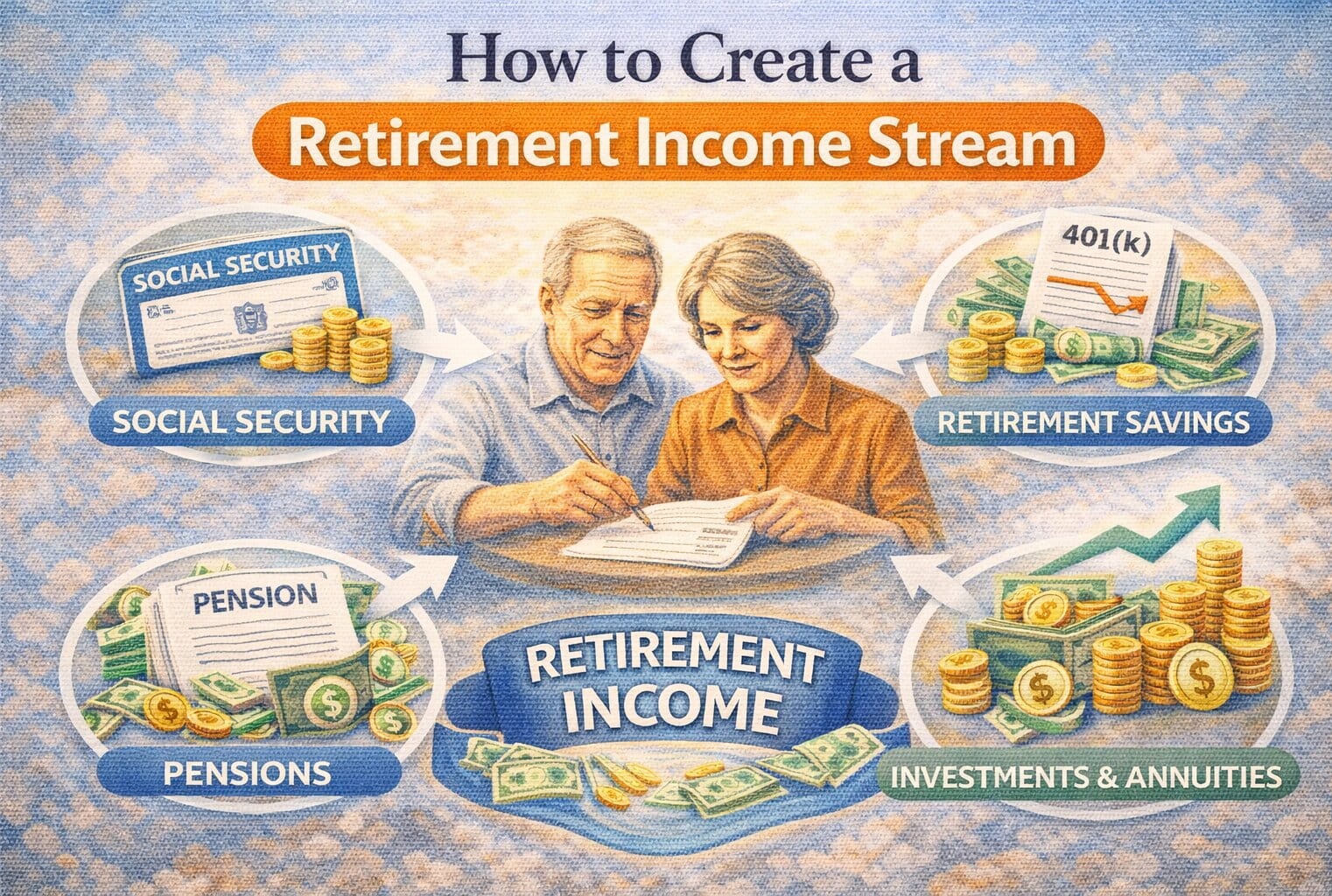
A retirement income stream is the combination of all sources that provide you with regular income after you stop working.
These sources typically include:
- Social Security
- Retirement account withdrawals
- Investments
- Passive income
The key is combining them in a way that is stable, tax-efficient, and sustainable.
Step 1: Estimate Your Income Needs
Before creating income, you need to know how much you’ll need.
A common approach:
- Replace 70%–80% of your pre-retirement income
Example:
- Pre-retirement income: $80,000
- Retirement need: ~$60,000/year
For detailed budgeting:
https://statush.com/retirement-planning/retirement-budget-planning-guide
Step 2: Identify Your Income Sources
Most retirees rely on multiple income streams.
Here’s a simple breakdown:
| Income Source | Stability | Flexibility |
|---|---|---|
| Social Security | High | Low |
| Retirement Accounts | Medium | High |
| Passive Income | Medium | Medium |
| Investments | Variable | High |
Diversifying your income sources reduces risk.
Step 3: Use the Safe Withdrawal Rule
Your savings need to generate income sustainably.
A common guideline:
- Withdraw around 4% annually
Example:
- $1 million portfolio → $40,000/year
To understand this rule:
https://statush.com/retirement-planning/safe-withdrawal-rate-explained
Step 4: Build Passive Income Streams
Passive income reduces reliance on withdrawals.
Examples include:
- Dividend stocks
- Rental income
- Bonds
Example:
- Passive income: $20,000/year
- Remaining need: $40,000
To explore options:
https://statush.com/retirement-planning/how-to-create-passive-income-for-retirement
Step 5: Plan Your Withdrawal Strategy
How you withdraw money matters.
General approach:
- Taxable accounts
- Tax-deferred accounts (IRA, 401k)
- Roth accounts
This helps minimize taxes.
To learn more:
https://statush.com/retirement-planning/best-withdrawal-strategy-for-retirement-accounts
Step 6: Time Your Social Security Benefits
Social Security provides a stable income base.
- Claim early → lower income
- Delay → higher income
Example:
- $2,000/month at 67
- ~$2,480/month at 70
To plan timing:
https://statush.com/retirement-planning/when-should-you-start-social-security
Step 7: Balance Growth and Income
Your portfolio should support both:
| Goal | Investment Type |
|---|---|
| Income | Bonds, dividends |
| Growth | Stocks |
| Stability | Cash |
This ensures your income grows over time while remaining stable.
Real-World Example
Case Study:
- Total savings: $1 million
- Income goal: $60,000/year
Income plan:
- Social Security → $25,000
- Dividends → $15,000
- Withdrawals → $20,000
This balanced approach:
- Reduces withdrawal pressure
- Provides stable income
Step 8: Adjust for Inflation
Your income needs will increase over time.
Example:
- $60,000 today → ~$90,000+ in 20 years
To manage inflation:
https://statush.com/retirement-planning/how-inflation-impacts-retirement-planning
Step 9: Protect Against Market Risk
Market downturns can impact your income.
Strategies:
- Maintain a cash reserve
- Use a diversified portfolio
- Adjust withdrawals during downturns
To protect your savings:
https://statush.com/retirement-planning/how-to-protect-retirement-savings-from-market-crashes
Step 10: Optimize Taxes
Taxes can reduce your income significantly.
Strategies:
- Use tax-efficient withdrawal order
- Combine taxable and tax-free income
- Consider Roth conversions
To reduce taxes:
https://statush.com/retirement-planning/how-to-reduce-taxes-in-retirement
Common Mistakes to Avoid
- Relying on a single income source
- Withdrawing too much early
- Ignoring taxes
- Not adjusting for inflation
For more insights:
https://statush.com/retirement-planning/retirement-mistakes-to-avoid
How It Fits Into Your Retirement Plan
Your income stream connects everything:
- Savings
- Investments
- Budget
- Lifestyle
Without a structured income plan, even large savings can be mismanaged.
To align your savings goals:
https://statush.com/retirement-planning/how-much-should-you-save-for-retirement-by-age
Final Thoughts
Creating a retirement income stream is about turning your savings into a reliable paycheck for life.
The best strategies combine:
- Stability (Social Security, bonds)
- Growth (stocks)
- Flexibility (Roth accounts, withdrawals)
With the right plan, you can enjoy retirement with confidence—knowing your income is steady, sustainable, and built to last.