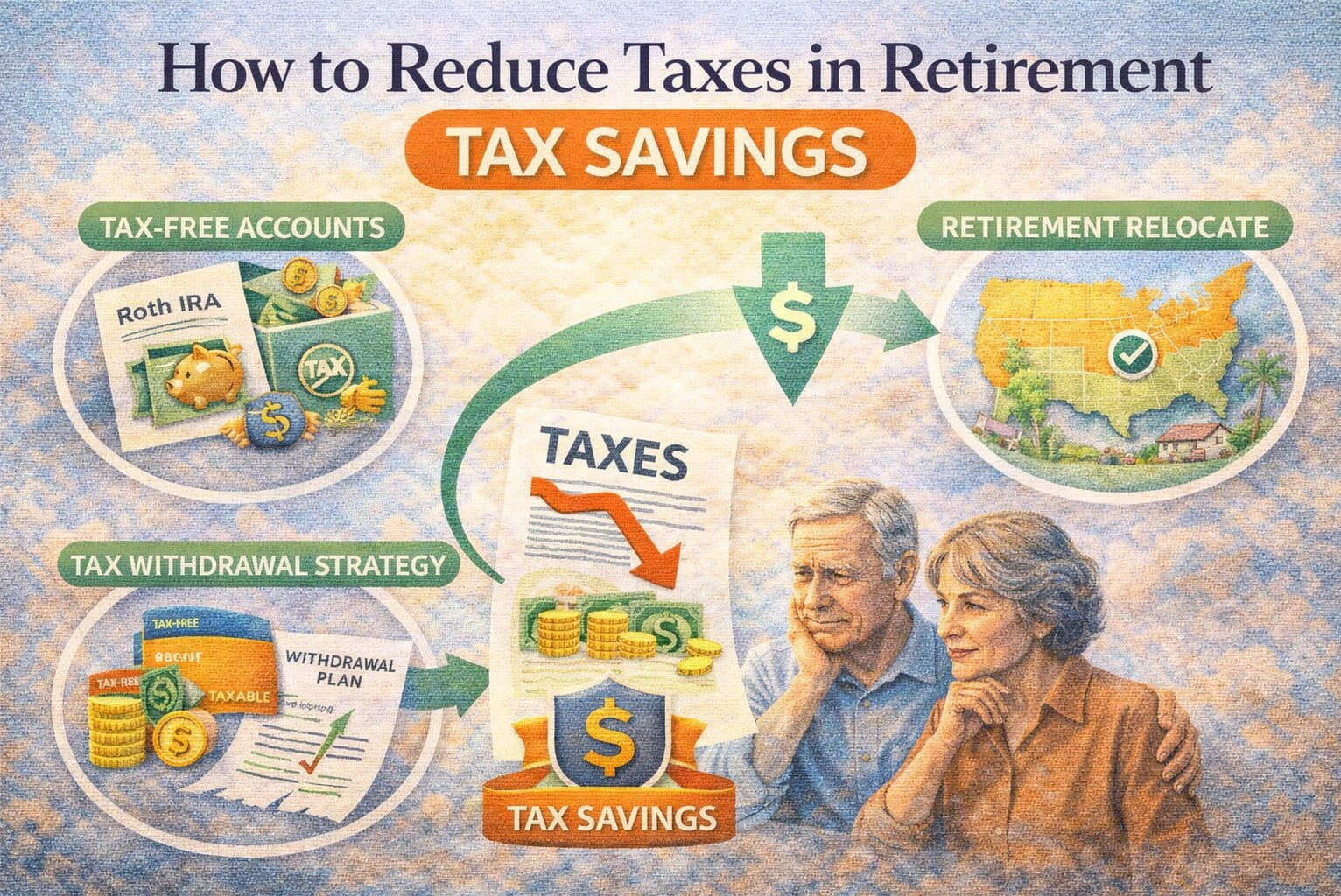
Taxes don’t stop when you retire—in many cases, they become even more important.
Without proper planning, a large portion of your retirement income can go to taxes instead of your lifestyle. But with the right strategies, you can significantly reduce what you owe and keep more of your money.
Let’s break down how taxes work in retirement—and how to manage them effectively.
Why Taxes Matter in Retirement
During your working years, taxes are automatically deducted. In retirement, you control how and when you take income, which directly affects your tax bill.
Your income may come from:
- Social Security
- Retirement accounts (IRA, 401(k))
- Investments
- Passive income
Each source is taxed differently.
How Retirement Income Is Taxed
Here’s a simple overview:
| Income Source | Tax Treatment |
|---|---|
| Traditional IRA / 401(k) | Fully taxable |
| Roth IRA | Tax-free |
| Social Security | Partially taxable |
| Dividends / Capital Gains | Taxed at different rates |
Understanding this mix is the foundation of tax planning.
Strategy 1: Diversify Your Tax Buckets
One of the most effective strategies is having money in different types of accounts:
- Tax-deferred (Traditional IRA, 401k)
- Tax-free (Roth IRA)
- Taxable accounts
Why it works:
You can control where your income comes from each year.
Example:
- Withdraw some from IRA (taxable)
- Some from Roth (tax-free)
This helps manage your tax bracket.
To understand account types:
https://statush.com/retirement-planning/best-retirement-accounts-usa
Strategy 2: Use Roth Conversions Strategically
A Roth conversion allows you to pay taxes now and avoid taxes later.
Example:
- Convert $30,000 in a low-income year
- Pay lower taxes now
- Withdraw tax-free later
Over time, this can reduce your total tax burden.
To learn more:
https://statush.com/retirement-planning/roth-conversion-strategy-explained
Strategy 3: Manage Your Tax Bracket
Your goal should be to stay within a lower tax bracket.
Example:
- Withdraw just enough to stay in the 12% or 22% bracket
- Avoid large lump-sum withdrawals
This requires careful planning each year.
Strategy 4: Delay Social Security
Delaying Social Security can reduce taxes in early retirement years.
Example:
- Use savings early
- Delay benefits to age 70
This can:
- Increase your benefit
- Reduce taxable income early
To understand timing:
https://statush.com/retirement-planning/when-should-you-start-social-security
Strategy 5: Withdraw from the Right Accounts First
The order in which you withdraw money matters.
General strategy:
- Taxable accounts
- Tax-deferred accounts (IRA, 401k)
- Roth accounts (last)
This helps minimize taxes over time.
To explore withdrawal strategies:
https://statush.com/retirement-planning/best-withdrawal-strategy-for-retirement-accounts
Strategy 6: Take Advantage of Capital Gains Tax Rates
Long-term capital gains are often taxed at lower rates than ordinary income.
Example:
- Selling investments strategically can reduce taxes
This is especially useful in taxable accounts.
Strategy 7: Minimize Required Minimum Distributions (RMDs)
Traditional retirement accounts require mandatory withdrawals starting in your 70s.
These withdrawals:
- Increase taxable income
- Can push you into higher tax brackets
Solution:
- Use Roth conversions before RMD age
To understand RMD rules:
https://statush.com/retirement-planning/traditional-ira-withdrawal-rules-explained
Strategy 8: Use Qualified Charitable Distributions (QCDs)
If you’re charitably inclined, QCDs allow you to:
- Donate directly from your IRA
- Reduce taxable income
This is a tax-efficient way to give.
Strategy 9: Consider Where You Live
State taxes can significantly affect your retirement income.
Some states:
- Have no income tax
- Don’t tax retirement income
Example:
Moving to a tax-friendly state can save thousands annually.
To explore options:
https://statush.com/retirement-planning/best-states-to-retire-in-the-usa
Simple Example
Case Study:
- Retirement income need: $70,000
Strategy:
- $30,000 from IRA
- $20,000 from Roth (tax-free)
- $20,000 from investments
Result:
- Lower overall tax burden
- Controlled tax bracket
Common Mistakes to Avoid
- Taking large withdrawals in one year
- Ignoring tax diversification
- Not planning for RMDs
- Claiming Social Security too early without strategy
For more pitfalls:
https://statush.com/retirement-planning/retirement-mistakes-to-avoid
How This Fits Into Your Retirement Plan
Tax planning is not separate—it’s part of your overall strategy.
It connects with:
- Income planning
- Investment strategy
- Withdrawal planning
To build a full plan:
https://statush.com/retirement-planning/retirement-income-planning-strategies
Final Thoughts
Reducing taxes in retirement isn’t about avoiding taxes—it’s about managing them intelligently.
The goal is to:
- Pay less over time
- Keep more of your income
- Maintain financial flexibility
With the right strategy, you can significantly improve your retirement outcome—without taking extra risk.
And when tax planning is done well, it becomes one of the most powerful tools in your retirement plan.