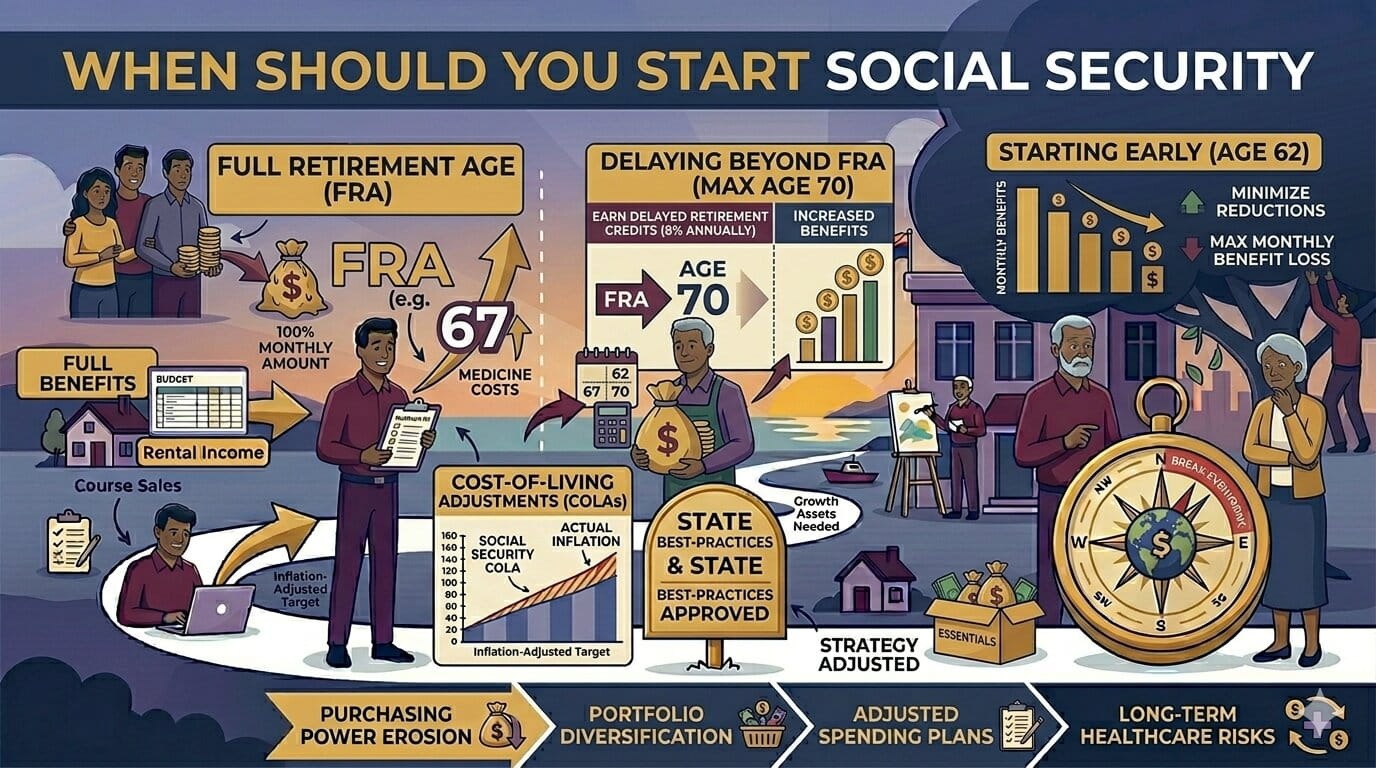
Deciding when to start Social Security is one of the most important—and often confusing—decisions in retirement planning.
You can claim benefits as early as 62, wait until full retirement age (around 67), or delay until 70. Each option has a significant impact on your monthly income and total lifetime benefits.
The right choice isn’t the same for everyone. It depends on your health, financial situation, and long-term goals.
Let’s break it down clearly so you can make an informed decision.
Why Timing Matters
The age you claim Social Security directly affects how much you receive each month.
- Claim early → smaller monthly payments
- Claim later → larger monthly payments
But there’s a trade-off:
Do you want money sooner, or more money later?
Social Security Claiming Ages Explained
Here’s a simple breakdown:
| Age | What Happens |
|---|---|
| 62 | Earliest eligibility, reduced benefits |
| 67 | Full retirement age (FRA), full benefits |
| 70 | Maximum benefits (delayed credits) |
How Much Difference Does It Make?
Let’s look at a practical example:
| Claiming Age | Monthly Benefit |
|---|---|
| 62 | $1,400 |
| 67 | $2,000 |
| 70 | $2,480 |
That’s a huge difference over time.
- Claim early → less per month, longer payout
- Delay → more per month, shorter payout
Option 1: Claiming at Age 62
This is the earliest you can start receiving benefits.
Pros:
- Immediate income
- Useful if you need money early
- More total payments (over time)
Cons:
- Permanent reduction (~25–30%)
- Lower lifetime income if you live longer
Best for:
- Those with shorter life expectancy
- People who need income immediately
Option 2: Claiming at Full Retirement Age (67)
This is considered the standard option.
Pros:
- Full benefit amount
- Balanced approach
- No early reduction
Cons:
- You wait longer to receive income
Best for:
- People with average life expectancy
- Those who want a middle-ground strategy
Option 3: Delaying Until Age 70
Delaying increases your benefit significantly.
- Benefits grow ~8% per year after FRA
Pros:
- Highest monthly income
- Better protection against inflation
- Strong long-term strategy
Cons:
- Delayed income
- Requires other income sources in early retirement
Best for:
- People in good health
- Those expecting longer lifespans
Break-Even Point: When Delaying Pays Off
There’s a point where delaying benefits becomes more profitable.
Example:
- Claim early → more payments initially
- Claim later → higher payments over time
Typically, the break-even age is around:
- 78–82 years old
If you live beyond that, delaying often results in more total income.
Real-World Example
Case Study:
- Maria, age 62
- Benefit at 62: $1,500/month
- Benefit at 70: $2,600/month
If she lives into her 80s:
- Delaying could result in significantly higher total income
Factors That Affect Your Decision
1. Health and Life Expectancy
- Shorter lifespan → claim earlier
- Longer lifespan → delay benefits
2. Financial Situation
- Need income now → claim early
- Have other income → delay
3. Work Status
If you’re still working:
- Benefits may be reduced if claimed early
4. Spousal Benefits
Married couples can optimize benefits by coordinating claiming strategies.
Social Security and Taxes
Your benefits may be taxable depending on your income.
Example:
- Higher income → up to 85% of benefits taxable
Planning withdrawals carefully can reduce taxes.
To learn more:
https://statush.com/retirement-planning/how-to-reduce-taxes-in-retirement
How Social Security Fits Into Your Retirement Plan
Social Security should be part of a larger income strategy.
Example:
- Expenses: $60,000/year
- Social Security: $25,000
- Remaining need: $35,000
This reduces reliance on your savings.
To build a full plan:
https://statush.com/retirement-planning/retirement-income-planning-strategies
Common Mistakes to Avoid
- Claiming too early without a plan
- Ignoring long-term impact
- Not considering spouse benefits
- Overlooking tax implications
For more insights:
https://statush.com/retirement-planning/retirement-mistakes-to-avoid
Practical Strategies
- Delay if you can afford to
- Use other income sources early
- Consider your health and family history
- Coordinate with your spouse
- Plan for taxes
How It Connects to Your Savings Goals
The timing of Social Security affects how much you need to save.
- Early claim → need more savings
- Delayed claim → less pressure on savings
To align your savings strategy:
https://statush.com/retirement-planning/how-much-should-you-save-for-retirement-by-age
Final Thoughts
There’s no universal “best age” to start Social Security.
The right choice depends on your personal situation—your health, finances, and long-term goals.
But one thing is clear:
- Claiming early gives you income sooner
- Delaying gives you more income later
The key is finding the balance that works for your life.
With the right strategy, Social Security can become a powerful foundation for a secure and comfortable retirement.