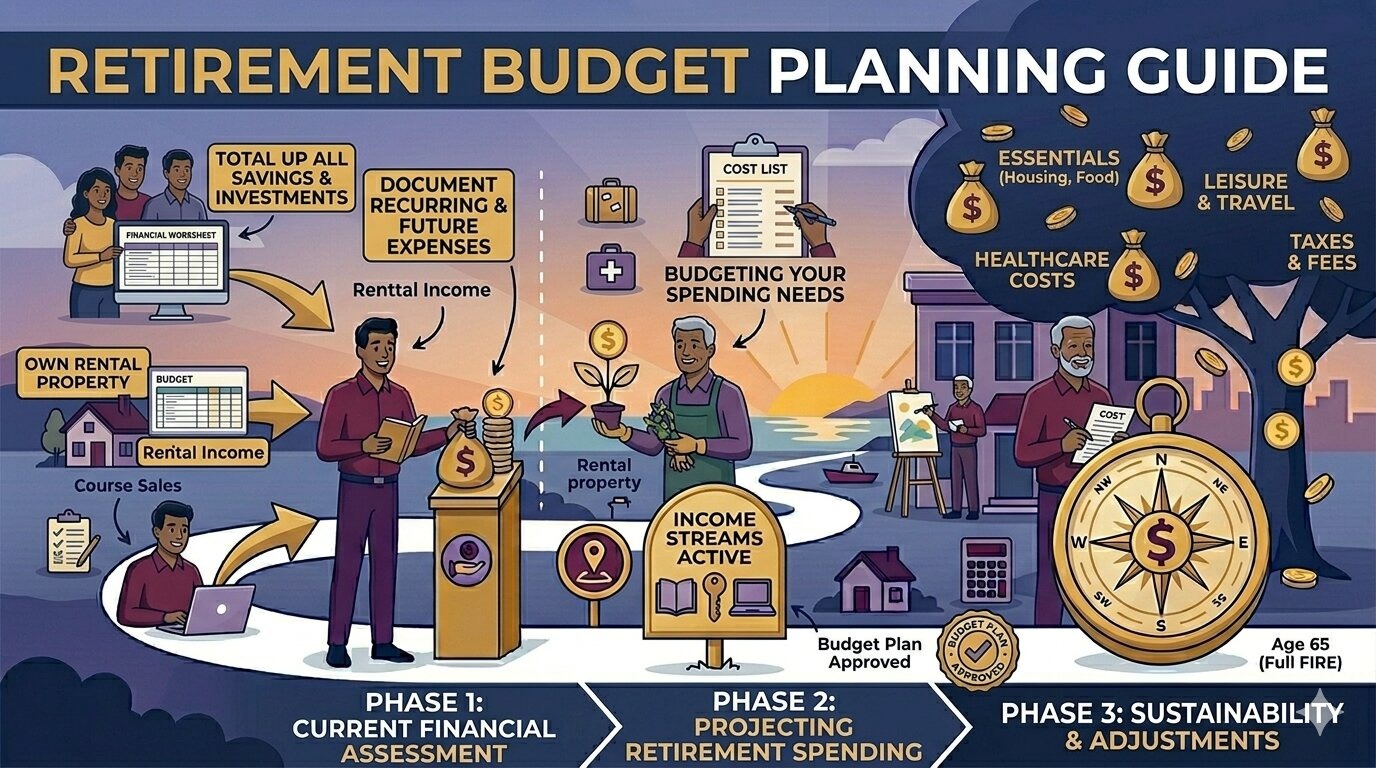
Saving for retirement is only half the equation. The other half—often overlooked—is how you plan to spend that money.
A solid retirement budget helps you answer one of the most important questions:
Will your money last as long as you do?
Without a clear plan, even a large retirement portfolio can run into trouble. But with the right structure, you can create a budget that balances comfort, flexibility, and long-term sustainability.
Let’s walk through how to build a retirement budget step by step.
Why Retirement Budgeting Matters
During your working years, income is predictable. In retirement, it’s not.
You’re relying on:
- Savings
- Investments
- Social Security
- Passive income
A retirement budget helps you:
- Control spending
- Avoid running out of money
- Adjust to market changes
- Plan for unexpected costs
Step 1: Estimate Your Retirement Expenses
Start by understanding how much you’ll actually spend.
Here’s a simple breakdown:
| Expense Category | Examples |
|---|---|
| Housing | Rent, mortgage, property tax |
| Healthcare | Insurance, medications |
| Food & Groceries | Daily living expenses |
| Transportation | Car, fuel, maintenance |
| Lifestyle | Travel, hobbies, dining |
| Miscellaneous | Emergencies, gifts |
A common rule:
- You’ll need 70%–80% of your pre-retirement income
But this varies based on lifestyle.
Real-World Example
Case Study:
- Pre-retirement income: $80,000
- Estimated retirement expenses: $60,000/year
Breakdown:
- Housing: $18,000
- Healthcare: $10,000
- Food: $8,000
- Travel & lifestyle: $12,000
- Other: $12,000
This gives a realistic picture of monthly and annual needs.
Step 2: Identify Your Income Sources
Next, calculate how much income you’ll have.
Common sources include:
- Social Security
- Retirement accounts (401(k), IRA)
- Dividend income
- Rental income
Example:
- Social Security: $25,000/year
- Investments: $20,000/year
- Passive income: $10,000/year
Total income: $55,000
If your expenses are $60,000, you’ll need to adjust either income or spending.
To understand Social Security better:
https://statush.com/retirement-planning/how-social-security-benefits-are-calculated
Step 3: Apply the Safe Withdrawal Rule
Your savings need to generate income sustainably.
A common guideline:
- Withdraw around 4% annually
Example:
- $1 million savings → $40,000/year
To understand this fully:
https://statush.com/retirement-planning/safe-withdrawal-rate-explained
This helps ensure your money lasts 25–30+ years.
Step 4: Account for Inflation
Inflation quietly reduces purchasing power over time.
Example:
- $50,000 today may need to be $70,000+ in 20 years
This is why your budget should:
- Include annual adjustments
- Focus on growth investments
Learn more here:
https://statush.com/retirement-planning/how-inflation-impacts-retirement-planning
Step 5: Plan for Healthcare Costs
Healthcare is one of the biggest—and most unpredictable—expenses in retirement.
Costs include:
- Insurance premiums
- Out-of-pocket expenses
- Long-term care
Example:
A couple may spend hundreds of thousands over retirement on healthcare alone.
Planning ahead prevents financial stress later.
Step 6: Separate Fixed vs Variable Expenses
Not all expenses are equal.
| Type | Examples |
|---|---|
| Fixed Expenses | Housing, insurance |
| Variable Expenses | Travel, entertainment |
This distinction helps you adjust spending when needed.
Example:
During a market downturn, you can reduce travel—but not housing.
Step 7: Build a Flexible Budget
A rigid budget doesn’t work well in retirement.
Instead, aim for flexibility.
Strategy:
- Spend more during strong market years
- Reduce spending during downturns
This approach helps your portfolio last longer.
Step 8: Include Passive Income
Passive income can significantly strengthen your budget.
Sources include:
- Dividend stocks
- Rental income
- Bonds
Example:
- Total expenses: $60,000
- Passive income: $20,000
- Needed withdrawals: $40,000
This reduces pressure on your savings.
To explore passive income strategies:
https://statush.com/retirement-planning/how-to-create-passive-income-for-retirement
Step 9: Adjust for Lifestyle Goals
Your retirement budget should reflect how you want to live.
Ask yourself:
- Do you plan to travel frequently?
- Will you relocate to a lower-cost area?
- Do you want a simple or luxury lifestyle?
Example:
Retiring in a low-cost state can reduce expenses significantly.
Explore options here:
https://statush.com/retirement-planning/best-states-to-retire-in-the-usa
Step 10: Review and Update Regularly
Your budget isn’t static.
You should:
- Review annually
- Adjust for inflation
- Update based on market performance
- Reflect lifestyle changes
Small adjustments can prevent major issues later.
Common Budgeting Mistakes
Avoid these common errors:
- Underestimating healthcare costs
- Ignoring inflation
- Overspending early in retirement
- Not diversifying income sources
For more insights:
https://statush.com/retirement-planning/retirement-mistakes-to-avoid
How Budgeting Fits Into Your Retirement Plan
A retirement budget connects everything:
- Savings goals
- Income strategies
- Investment plans
Without it, even the best strategies can fall apart.
To align your budget with savings targets:
https://statush.com/retirement-planning/how-much-should-you-save-for-retirement-by-age
Practical Tips to Get Started
- Track current expenses to estimate future needs
- Start with a conservative budget
- Include a buffer for unexpected costs
- Diversify income streams
- Keep your plan flexible
Final Thoughts
A retirement budget isn’t about restriction—it’s about clarity.
It gives you confidence that your money will support your lifestyle for decades.
The best budgets are realistic, flexible, and regularly updated. They balance enjoying life today with protecting your future.
If done right, your retirement budget becomes more than just numbers—it becomes a roadmap to financial peace of mind.