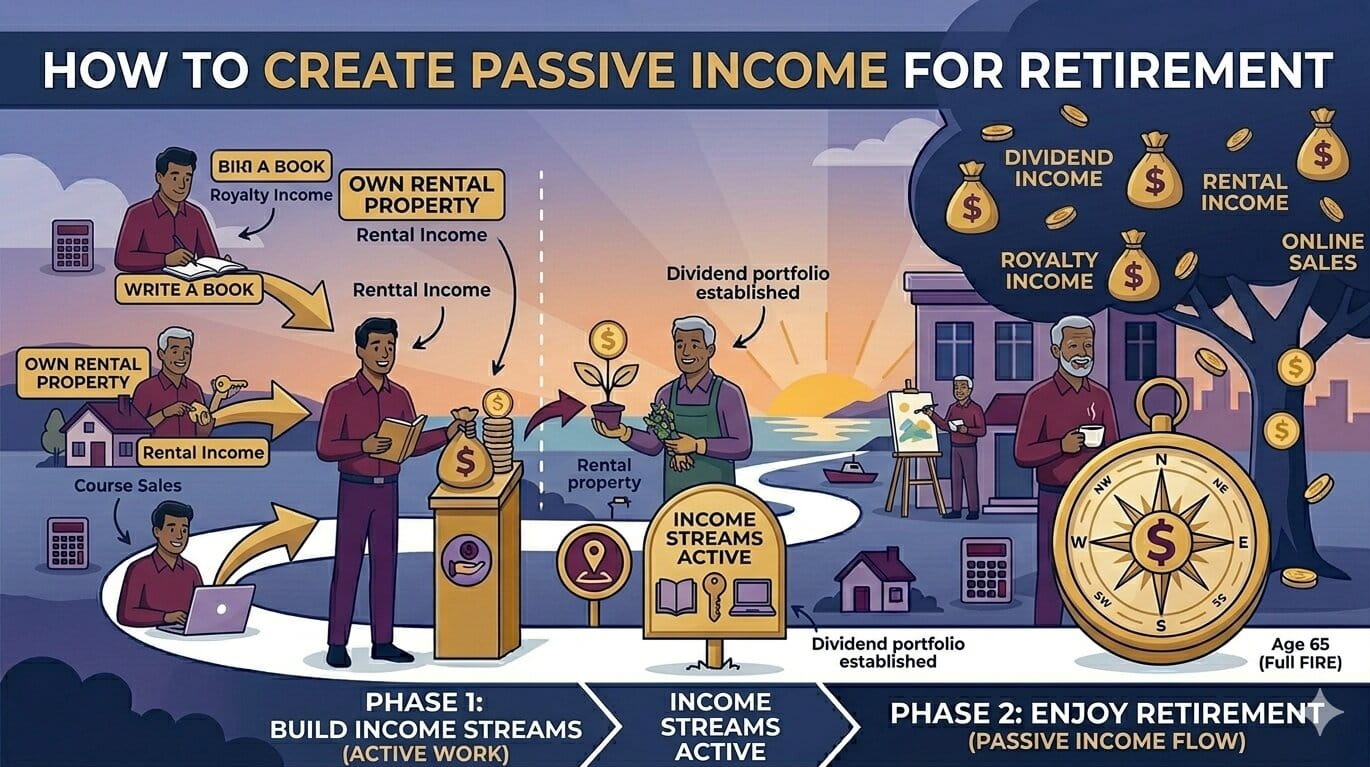
Retirement isn’t just about how much you save—it’s about how you turn those savings into reliable income.
That’s where passive income comes in.
Instead of relying only on withdrawals from your retirement accounts, passive income allows you to generate ongoing cash flow—often with less day-to-day effort. The result? More financial security, flexibility, and peace of mind.
Let’s break down how to build passive income for retirement in a practical, realistic way.
What Is Passive Income?
Passive income is money you earn with minimal ongoing effort after the initial setup.
In retirement, it typically comes from:
- Investments
- Assets
- Income-producing systems
The goal is simple:
Create income streams that continue even when you’re not actively working.
Why Passive Income Matters in Retirement
Relying only on savings withdrawals can be risky.
Passive income helps:
- Reduce pressure on your portfolio
- Provide steady monthly cash flow
- Protect against market downturns
- Extend the life of your savings
It also gives you more flexibility in how and when you withdraw money.
Common Passive Income Sources (Quick Overview)
Here’s a simple comparison:
| Income Source | Effort Level | Income Stability | Growth Potential |
|---|---|---|---|
| Dividend Stocks | Low | Medium | High |
| Rental Properties | Medium | High | Medium |
| Bonds | Low | High | Low |
| REITs | Low | Medium | Medium |
| Online Income | Medium | Variable | High |
Each option has its pros and trade-offs.
1. Dividend Stocks
Dividend stocks are one of the most popular passive income strategies.
These are companies that regularly pay shareholders a portion of profits.
Example:
- You invest $200,000 in dividend stocks
- Average yield: 3%
- Annual income: $6,000
Over time, dividends can grow, increasing your income.
To explore options:
https://statush.com/retirement-planning/best-dividend-stocks-for-retirement-income
Why they work:
- Regular income
- Potential for growth
- Easy to manage
2. Rental Income
Real estate can provide consistent, predictable income.
Example:
- Own a rental property generating $1,500/month
- Annual income: $18,000
Even after expenses, this can be a strong income stream.
Pros:
- Stable cash flow
- Property value appreciation
Cons:
- Maintenance
- Tenant management
3. Bonds and Fixed Income
Bonds provide steady, predictable income with lower risk.
They’re often used in retirement to stabilize portfolios.
Example:
- $100,000 invested in bonds at 4%
- Annual income: $4,000
While returns are lower, they offer reliability.
4. REITs (Real Estate Investment Trusts)
REITs allow you to invest in real estate without owning property directly.
They pay dividends and are easy to buy like stocks.
Example:
- Invest $50,000 in REITs
- Earn regular dividend income
This combines real estate exposure with stock market flexibility.
5. Online and Digital Income
Some retirees build passive income through digital assets:
- Blogs
- YouTube channels
- Online courses
Example:
A blog earning $1,000/month from ads and affiliate links can provide steady income over time.
This requires upfront effort but can become passive later.
Real-World Passive Income Strategy
Let’s combine everything into a practical example:
Case Study:
- Total savings: $1 million
- Allocation:
- $400K in dividend stocks
- $300K in index funds
- $200K in bonds
- $100K in REITs
Estimated annual income:
- Dividends + bonds + REITs → ~$30,000–$40,000
Combined with Social Security, this can fully support retirement.
To understand Social Security timing:
https://statush.com/retirement-planning/when-should-you-start-social-security
How Passive Income Reduces Withdrawal Pressure
Instead of withdrawing 4% from your portfolio, passive income allows you to withdraw less.
Example:
- Required income: $50,000
- Passive income: $20,000
- Required withdrawals: $30,000
This significantly extends your portfolio lifespan.
To understand withdrawal strategies:
https://statush.com/retirement-planning/safe-withdrawal-rate-explained
Key Strategies to Build Passive Income
1. Start Early
The earlier you invest, the more time your income streams have to grow.
2. Diversify Income Sources
Relying on one source is risky.
Combine:
- Stocks
- Bonds
- Real estate
3. Reinvest Earnings
In the early years, reinvesting dividends helps compound growth.
4. Use Tax-Advantaged Accounts
Accounts like IRAs and 401(k)s can reduce taxes on income.
To learn more:
https://statush.com/retirement-planning/best-retirement-accounts-usa
Common Mistakes to Avoid
- Chasing high yields without understanding risk
- Lack of diversification
- Ignoring inflation
- Over-reliance on one income stream
For more insights:
https://statush.com/retirement-planning/retirement-mistakes-to-avoid
Balancing Growth and Income
A strong retirement plan balances:
- Growth (stocks, index funds)
- Income (dividends, bonds)
This ensures your money continues growing while also generating cash flow.
How Passive Income Fits Into Your Retirement Plan
Passive income works alongside:
- Withdrawal strategies
- Social Security
- Savings
It’s not a replacement—it’s a powerful addition.
To build a full plan:
https://statush.com/retirement-planning/retirement-income-planning-strategies
Practical Tips to Get Started
- Begin with dividend-paying ETFs or stocks
- Allocate part of your portfolio to bonds
- Consider REITs for real estate exposure
- Reinvest income early on
- Track your income streams annually
Small steps can build significant income over time.
Final Thoughts
Passive income is what turns savings into freedom.
It reduces risk, increases flexibility, and helps ensure your money lasts throughout retirement.
You don’t need to build every income stream at once. Start with one, stay consistent, and expand over time.
The goal isn’t just to retire—it’s to retire with confidence and stability.
And if you want to align your income strategy with your overall savings goals, start here:
https://statush.com/retirement-planning/how-much-should-you-save-for-retirement-by-age