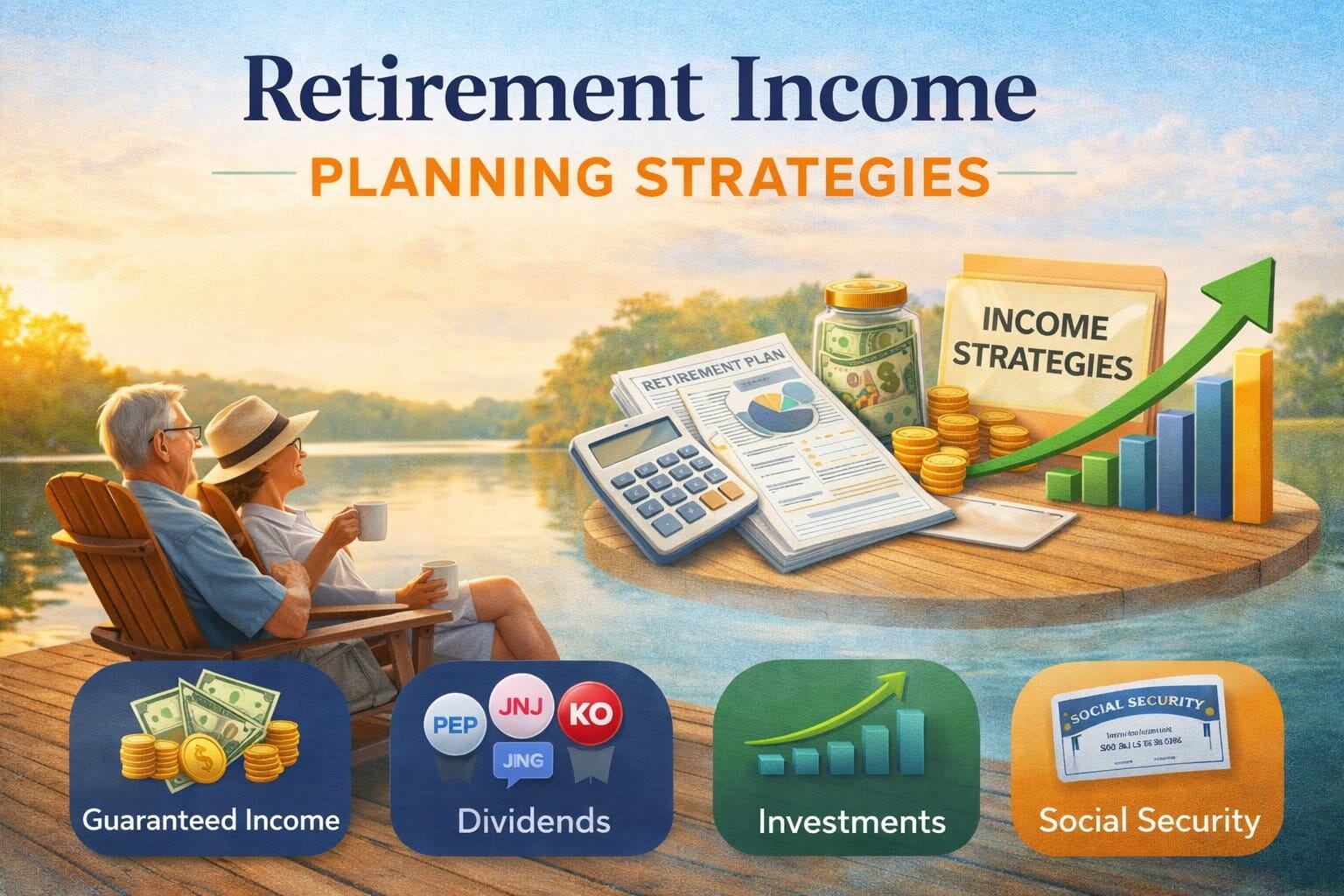
Saving for retirement is only half the journey. The real challenge begins when you stop earning a paycheck and need to turn your savings into a reliable income stream.
That’s where retirement income planning comes in.
A well-structured strategy ensures you:
- Have consistent income
- Minimize taxes
- Protect your savings
- Make your money last for decades
Let’s break down how to build a retirement income plan that actually works.
What Is Retirement Income Planning?
Retirement income planning is the process of converting your assets into sustainable monthly income.
Instead of focusing on how much you’ve saved, the focus shifts to:
How long your money will last and how efficiently you can use it
Key Income Sources in Retirement
Most retirees rely on multiple income streams.
Here’s a simple overview:
| Income Source | Stability | Flexibility | Growth |
|---|---|---|---|
| Social Security | High | Low | Inflation-adjusted |
| Retirement Accounts | Medium | High | Depends on investments |
| Passive Income | Medium | Medium | Moderate |
| Pensions | High | Low | Fixed |
The best plans combine multiple sources for stability and flexibility.
Strategy 1: The 4% Withdrawal Rule
The 4% rule is one of the most widely used strategies.
- Withdraw 4% of your portfolio annually
- Adjust for inflation each year
Example:
- $1,000,000 portfolio → $40,000/year
This helps ensure your savings last 25–30+ years.
To understand this in detail:
https://statush.com/retirement-planning/safe-withdrawal-rate-explained
Strategy 2: Bucket Strategy
This strategy divides your savings into different “buckets” based on time horizon.
| Bucket | Time Frame | Purpose |
|---|---|---|
| Short-term | 1–3 years | Cash and expenses |
| Medium-term | 3–10 years | Bonds, stable investments |
| Long-term | 10+ years | Stocks for growth |
Why it works:
- Provides stability
- Reduces risk during market downturns
- Maintains long-term growth
Strategy 3: Income Layering
Instead of relying on one source, you build multiple income streams.
Example:
- Social Security → $25,000
- Dividends → $10,000
- Withdrawals → $25,000
Total: $60,000/year
This reduces dependence on any single source.
To explore passive income options:
https://statush.com/retirement-planning/how-to-create-passive-income-for-retirement
Strategy 4: Tax-Efficient Withdrawals
Not all retirement income is taxed the same way.
A smart withdrawal strategy can reduce taxes significantly.
Approach:
- Withdraw from taxable accounts first
- Then tax-deferred accounts (like Traditional IRA)
- Use Roth accounts for tax-free income later
To understand withdrawal strategies:
https://statush.com/retirement-planning/best-withdrawal-strategy-for-retirement-accounts
Strategy 5: Delay Social Security
Delaying Social Security can increase your monthly benefit.
- Benefits increase ~8% per year after full retirement age (up to age 70)
Example:
- $2,000/month at 67
- ~$2,480/month at 70
This creates higher guaranteed income later.
To explore timing:
https://statush.com/retirement-planning/when-should-you-start-social-security
Strategy 6: Dividend and Interest Income
Generating income from investments reduces the need to sell assets.
Sources include:
- Dividend stocks
- Bonds
- REITs
Example:
- $500,000 portfolio → $15,000–$20,000 income
To explore dividend strategies:
https://statush.com/retirement-planning/best-dividend-stocks-for-retirement-income
Real-World Example
Case Study:
- Total savings: $1.2 million
- Retirement age: 65
Income plan:
- Social Security → $30,000
- Dividends → $15,000
- Withdrawals (4%) → $48,000
Total income: ~$93,000/year
This diversified approach provides both stability and flexibility.
Managing Risk in Retirement
Retirement isn’t just about income—it’s about protecting it.
Key risks include:
- Market volatility
- Inflation
- Longevity (outliving your savings)
To protect your portfolio:
https://statush.com/retirement-planning/how-to-protect-retirement-savings-from-market-crashes
Adjusting for Inflation
Inflation reduces purchasing power over time.
Your income strategy should:
- Include growth investments
- Adjust withdrawals annually
To understand the impact:
https://statush.com/retirement-planning/how-inflation-impacts-retirement-planning
Common Mistakes to Avoid
- Relying on a single income source
- Withdrawing too much early
- Ignoring tax planning
- Not adjusting for market conditions
For more insights:
https://statush.com/retirement-planning/retirement-mistakes-to-avoid
How This Fits Into Your Retirement Plan
Your income strategy connects everything:
- Savings
- Investments
- Lifestyle
- Taxes
Without a plan, even large savings can be mismanaged.
Final Thoughts
Retirement income planning is what turns your savings into a sustainable lifestyle.
It’s not about one perfect strategy—it’s about combining multiple approaches that work together.
The best plans are:
- Flexible
- Tax-efficient
- Diversified
With the right strategy, you can create a steady, reliable income that supports your retirement for decades—without constantly worrying about running out of money.