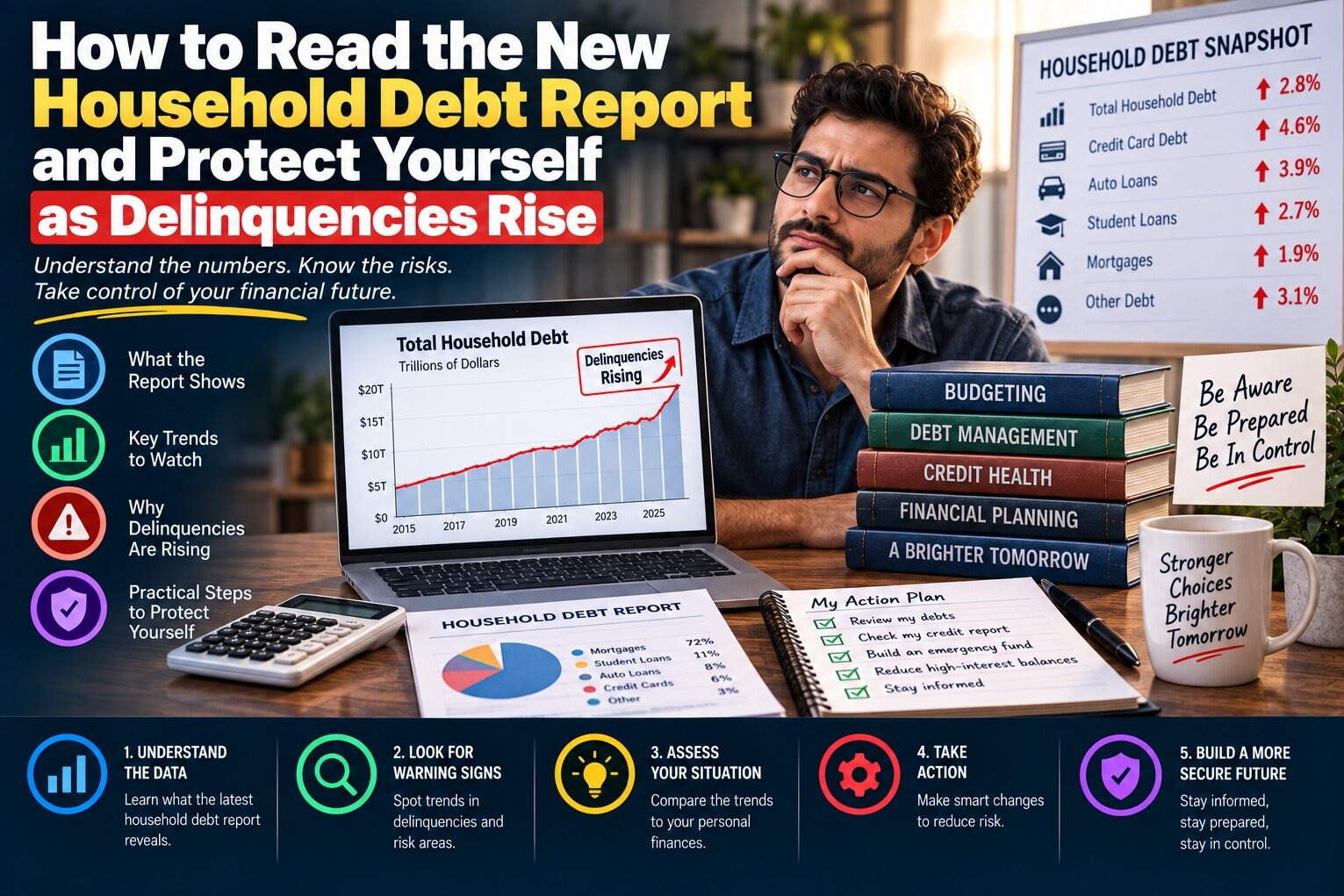
The Federal Reserve Bank of New York's Center for Microeconomic Data published its Household Debt and Credit Report for the second quarter of 2026 on August 11, with figures current through the end of June. Total U.S. household debt barely moved, slipping $13 billion to $18.8 trillion, and the overall delinquency rate ticked down to 4.7% of outstanding balances. Look past the headline, though, and the picture gets messier: the 90-day-plus student loan delinquency rate climbed to 10.6%, up from 10.3% the quarter before, and roughly 55,000 borrowers picked up a new foreclosure notation on their credit file even as new mortgage originations reached $505 billion.
This isn't a U.S.-only story. Equifax Canada's Q2 2026 Consumer Credit Trends report, released August 24, put total Canadian consumer debt at $2.68 trillion — up 4.18% year-over-year — with credit card balances rising to $134.2 billion and Ontario's 90-day-plus non-mortgage delinquency rate up 27% year-over-year to 0.86%. Australia's Reserve Bank, in its most recent Financial Stability Review, flagged mortgage arrears value up 6.8% year-over-year, with the average late-stage delinquent loan balance climbing from about $371,000 to $403,000. None of this amounts to a crisis. It does mean stress is building in specific corners of household finances — student loans, revolving credit, and pockets of the mortgage market — while the aggregate numbers stay calm. Here's how to actually read what these reports are telling you, and what to do with that information regardless of which country you're in.
What the Latest Debt Reports Actually Show
Part of the confusion around these releases comes from the fact that different data sources measure delinquency differently, and they don't always agree. A Liberty Street Economics analysis published by the NY Fed in August found that the bank-reported 30-day credit card delinquency rate fell to 2.85% in Q2 2026, the eighth straight quarterly decline. But the credit-bureau-measured 90-day-plus rate sat at 12.92%, barely down from 13.1% the prior quarter. Both numbers are real; they're just answering different questions. Banks report early-stage delinquency on their own books, while credit bureaus track more severe, longer-running delinquency across all lenders a borrower uses. Reading only one side gives you an incomplete picture of how stressed cardholders actually are.
Separately, the Federal Reserve's G.19 Consumer Credit release on September 8 showed total consumer credit growing at a seasonally adjusted annual rate of 4.2% in July, with revolving credit (mostly credit cards) up 2.5% and nonrevolving credit (auto and personal loans) up 4.8%. Debt is still expanding, in other words — it's just expanding a bit more slowly than delinquencies in certain categories.
| Metric | United States (Q2 2026) | Canada (Q2 2026) |
|---|---|---|
| Total debt outstanding | $18.8 trillion (-0.1% q/q) | $2.68 trillion (+4.18% y/y) |
| Credit card balances | ~$1.25 trillion | $134.2 billion (up from $130.6B in Q1) |
| Credit card delinquency (90+ days) | 12.92% (bureau-measured) | 4.19% (down slightly from 4.28% in Q1, +6.8% y/y) |
| Student loan / regional non-mortgage stress | 10.6% of student debt 90+ days delinquent | Ontario 90+ day non-mortgage delinquency up 27% y/y to 0.86% |
| Mortgage stress signal | ~55,000 new foreclosure notations in Q2 | N/A (RBA Australia: arrears value +6.8% y/y) |
The takeaway isn't that borrowers everywhere are in trouble. It's that averages hide the borrowers who are. If you have student loans, carry a revolving credit card balance, or hold a variable-rate mortgage in a market like Ontario or parts of Australia, the aggregate "delinquency rate improved" headline doesn't describe your situation nearly as well as the category-specific numbers do.
How to Calculate Your Own Debt-to-Income Ratio
Before deciding whether any of this applies to you, run the actual math. Add up your minimum monthly debt payments — credit cards, student loans, auto loans, personal loans, and your mortgage or rent if you're including housing — then divide by your gross monthly income. A result under 36% is generally considered healthy; most U.S. mortgage lenders cap total DTI (including the new mortgage payment) around 43-45%, and UK affordability checks under FCA rules use a similar logic even though they don't publish one universal number. If your ratio is climbing quarter over quarter even though your income hasn't dropped, that's the personal-level version of the delinquency trend showing up in the national data, and it's worth acting on before a missed payment shows up on your credit file.
Step-by-Step: Audit Your Debt This Month
You don't need a financial advisor to do this — you need about 45 minutes and access to your accounts.
- Pull a full credit report. In the U.S., get all three bureau reports free at AnnualCreditReport.com; in the UK use Experian, Equifax, or TransUnion; in Canada, Equifax and TransUnion both offer free reports; in Australia, request yours from Equifax, Illion, or Experian.
- List every debt with its interest rate, not just its balance. A $3,000 balance at 24% APR deserves more urgency than a $10,000 balance at 6%.
- Calculate your DTI using the formula above, and write down last quarter's number if you have it, so you can see the direction of travel.
- Flag anything reported as delinquent or past due, even by a few days — catching this early is far cheaper than fixing it after a 90-day delinquency is reported.
- Check your mortgage or rental rate type. If you're on a variable rate and haven't compared refinancing or renewal options in the past 12 months, that's your highest-leverage move.
- Set a follow-up date for the next quarterly household debt release (roughly early November for the U.S. Q3 report) so you check your own numbers against the national trend regularly, not just when something feels off.
If You Have Student Loans: What the Delinquency Spike Means for You
The rise from 10.3% to 10.6% in 90-day-plus student loan delinquency is the single most concerning line in the NY Fed's Q2 release, because student debt doesn't behave like other consumer debt — it's much harder to discharge and it follows borrowers for decades if left unmanaged. If you're behind or worried about falling behind, contact your loan servicer before a payment is missed, not after. Ask specifically about income-driven repayment recalculation (your required payment may be lower than you think if your income has changed), temporary deferment or forbearance if you're facing a short-term hardship, and loan rehabilitation programs if you're already in default, which can remove the default status from your credit report after a set number of on-time payments. If you're outside the U.S. — UK graduates repaying through the Student Loans Company, or Canadians with federal and provincial student loans — the equivalent move is contacting your loan authority directly rather than waiting for a collections notice, since most offer income-based adjustments or temporary repayment pauses that borrowers frequently don't realize they qualify for until they ask.
How to Qualify for Debt Relief, Consolidation, or Refinancing
Once you know your numbers, the right next move depends on which category of debt is actually driving your DTI up.
For high-interest credit card debt, a 0% balance transfer card is usually the cheapest option if your credit score still qualifies you for one (typically 670+ in the U.S. equivalent scoring, or a "good" band elsewhere) — it buys you 12-21 interest-free months to pay down principal instead of interest. If your score has already slipped, a personal consolidation loan through a bank or credit union, even at a rate in the mid-teens, is still usually cheaper than revolving card APRs that often exceed 24%. For mortgage stress, especially in markets like Ontario or parts of Australia flagged for rising arrears, talk to your lender about a payment deferral or term extension before missing a payment; most lenders would rather restructure than foreclose, but they need to hear from you early. Nonprofit credit counseling agencies (NFCC-affiliated agencies in the U.S., StepChange or National Debtline in the UK, Credit Counselling Canada members, and the National Debt Helpline in Australia) will review your full situation for free and can often negotiate directly with creditors on your behalf.
Common Mistakes to Avoid When Debt Levels Are High
- Only tracking your balance, not your rate. Paying down a low-rate loan aggressively while ignoring a high-rate card costs you money every month you delay.
- Closing old credit cards to "simplify." This can shorten your credit history and raise your utilization ratio, both of which can lower your score right when you need it strongest.
- Waiting for a missed payment before calling your lender or servicer. Every relief option covered above is easier to get before you're delinquent than after.
- Assuming a falling national delinquency rate means your own risk has fallen too. As the data above shows, headline improvement can mask worsening conditions in student loans, specific regions, or specific credit products.
- Taking on a new fixed-rate loan to "lock in" a rate without comparing at least three lenders. Rate spreads between lenders on personal loans and refinances routinely run 2-4 percentage points for the same borrower profile.
What This Means If You're Outside the US
The debt-stress story is genuinely global right now, even though the mechanics differ by country. In the UK, the Bank of England and FCA track household debt through different channels than the Fed, but the underlying advice is the same: check your mortgage product's end date if you're on a fixed rate, since refinancing onto a new rate without shopping around is one of the most common ways UK households overpay. In Canada, Equifax's Q2 data showing credit card delinquency up 6.8% year-over-year even as the quarterly rate improved slightly is the same "headline versus category" trap described above — watch your own card balance and rate, not just the national trend line. In Australia, the RBA's arrears data suggests borrowers in higher-growth mortgage markets should treat any repayment difficulty as a reason to contact their lender immediately, given how much average delinquent balances have grown. Across Western Europe, where variable-rate and shorter-term fixed mortgages are more common than in the U.S., the same logic applies with extra urgency: know your renewal or reset date months in advance, not the week it happens.
What to Do Next
Treat this quarter's debt report the way you'd treat a checkup: informative, not alarming, and only useful if you act on what it tells you. Calculate your DTI this week. Pull your credit report if you haven't in the past year. If you have student loans, call your servicer before your next payment is due, not after. And if you're carrying credit card debt above 24% APR, price out a balance transfer or consolidation loan before the next quarterly report comes out and gives you another reason to put it off.