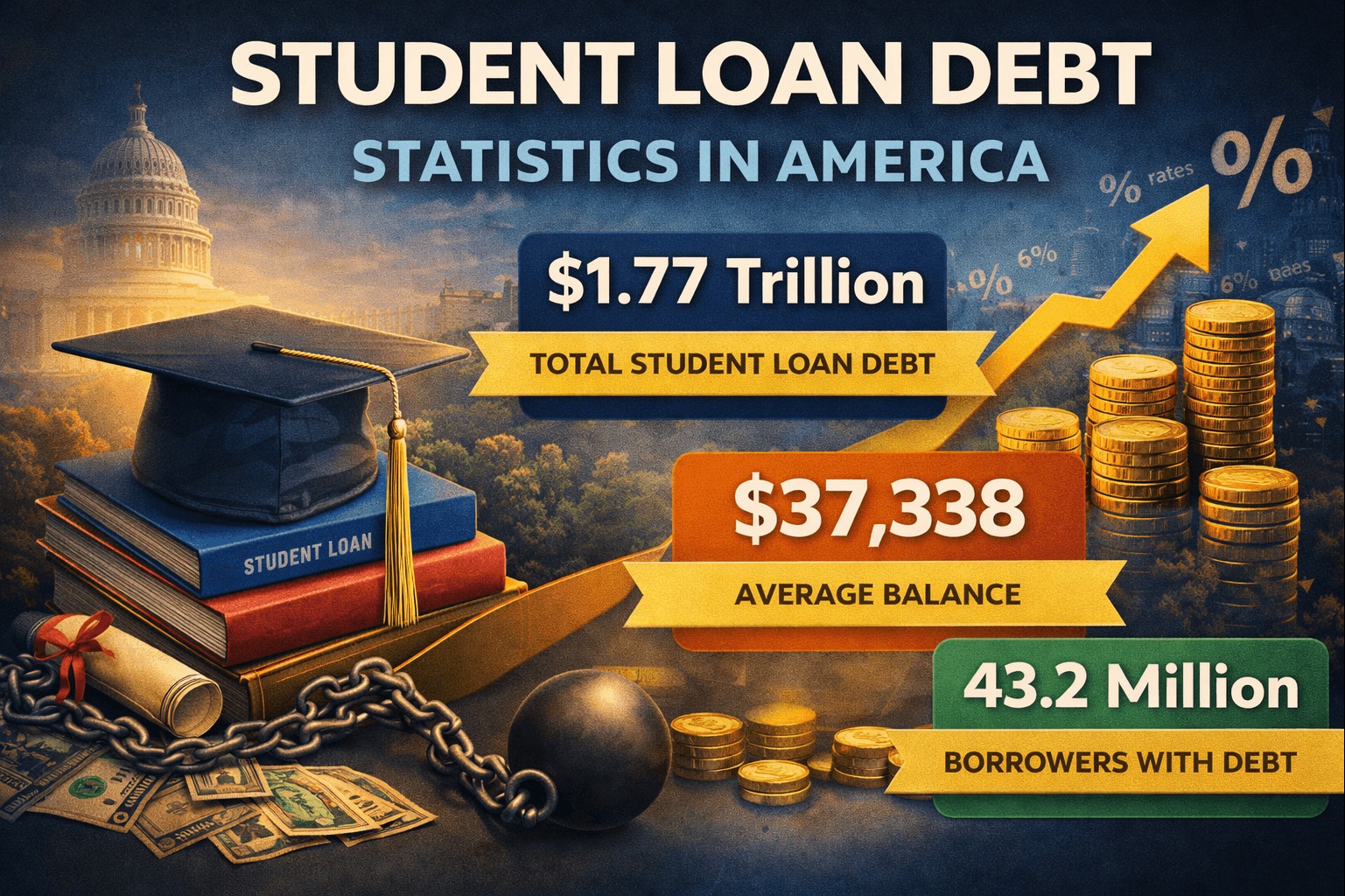
Student loan debt has become one of the defining financial challenges for millions of Americans. For many, it represents an investment in education and future income—but it also creates long-term financial pressure that can affect nearly every aspect of life.
Understanding student loan debt statistics helps you see the bigger picture: how much people owe, how it varies across age groups, and how it impacts financial decisions like saving, investing, and buying a home.
What Is Student Loan Debt?
Student loan debt is money borrowed to pay for education expenses such as tuition, housing, books, and other related costs.
These loans typically fall into two categories:
- Federal student loans (issued by the government)
- Private student loans (issued by banks or lenders)
Unlike many other types of debt, student loans often cannot be easily discharged and may take years—or even decades—to repay.
The Big Picture: Student Loan Debt in the USA
Student loan debt in the United States has grown significantly over the past few decades.
Today:
- Total student loan debt exceeds trillions of dollars
- Millions of borrowers carry outstanding balances
- Average debt per borrower continues to rise
This growth reflects increasing education costs and greater reliance on borrowing to fund college.
Average Student Loan Debt by Age
Student loan debt doesn’t disappear quickly. Many borrowers carry it well into adulthood.
| Age Group | Debt Pattern | Explanation |
|---|---|---|
| 18–24 | Rapid increase | Borrowing begins during college |
| 25–34 | Highest balances | Early career, repayment just starting |
| 35–49 | Gradual decline | Ongoing repayment, but still significant |
| 50+ | Lower but persistent | Long-term borrowers, delayed repayment |
Why Student Loan Debt Has Increased
The rise in student loan debt is not random—it’s driven by several key factors.
Rising Cost of Education
College tuition has increased significantly over time, making it harder for families to pay out of pocket.
Greater Access to Loans
Student loans are relatively accessible, allowing more people to pursue higher education—but also increasing total debt levels.
Longer Repayment Periods
Many borrowers take years to repay loans, especially if they have large balances or lower starting salaries.
Real-World Example
Let’s consider a typical borrower:
- Loan amount: $30,000
- Interest rate: 5%
- Monthly payment: around $300
Over 10 years:
- Total repayment: over $36,000
This shows how interest increases the total cost of borrowing.
Student Loan Debt vs Other Debt Types
Student loan debt is different from other types of debt in several ways.
| Debt Type | Interest Level | Flexibility |
|---|---|---|
| Student Loans | Moderate | Long repayment terms |
| Credit Card Debt | High | Short-term, high cost |
| Mortgage | Low | Long-term, asset-backed |
While student loans typically have lower interest than credit cards, they can still create long-term financial pressure.
Impact on Financial Life
Student loan debt affects more than just monthly payments—it influences major life decisions.
Many borrowers delay:
- Buying a home
- Starting a business
- Saving for retirement
This ripple effect can slow overall wealth building.
To understand how finances grow over time:
How Taxes Impact Wealth Building – https://statush.com/finance-statistics/how-taxes-impact-wealth-building
The Connection Between Income and Debt
Not all borrowers experience student debt the same way.
Those with higher-paying jobs may repay loans faster, while others may struggle with long repayment periods.
Example
- Borrower A earns $80,000 → pays off loans quickly
- Borrower B earns $40,000 → takes much longer to repay
This difference highlights how income plays a major role in debt management.
Repayment Trends in America
Borrowers typically fall into a few categories:
- Those who repay loans quickly
- Those who follow long-term repayment plans
- Those who struggle and fall behind
Understanding these patterns helps explain why student loan debt remains a widespread issue.
Common Challenges Borrowers Face
Many people face similar obstacles when dealing with student loan debt.
These include:
- High monthly payments
- Accumulating interest
- Limited financial flexibility
- Difficulty saving or investing
These challenges often overlap, making debt harder to manage over time.
Strategies to Manage Student Loan Debt
Managing student loans requires planning and consistency.
Focus on Regular Payments
Making consistent payments helps reduce both principal and interest over time.
Pay More When Possible
Extra payments can shorten repayment time and reduce total interest.
Choose the Right Repayment Plan
Different plans offer flexibility based on income and financial situation.
Avoid Missing Payments
Late payments can lead to penalties and negatively affect your financial standing.
Using Tools to Plan Repayment
Understanding your repayment strategy becomes easier with financial tools.
- Student Loan Calculator – https://statush.com/student-loan-calculator
- Debt Payoff Calculator – https://statush.com/debt-payoff-calculator
- Savings Goal Calculator – https://statush.com/savings-goal-calculator
These tools help you visualize how long repayment will take and how to optimize your plan.
Long-Term Perspective
Student loan debt is often a long-term commitment, but it doesn’t have to define your financial future.
With the right approach, you can:
- Manage payments effectively
- Build savings alongside repayment
- Gradually reduce financial pressure
The key is balancing debt repayment with long-term financial goals.
Final Thoughts
Student loan debt statistics in America reveal a clear reality: education often comes with a significant financial cost, and many people carry that burden for years.
The key takeaway is simple:
- Student loans are an investment, but they require careful management
- Interest and time can increase the total cost
- Consistent repayment and planning are essential
When you understand how student loan debt works—and take control of your repayment strategy—you can move forward with greater confidence and financial stability.