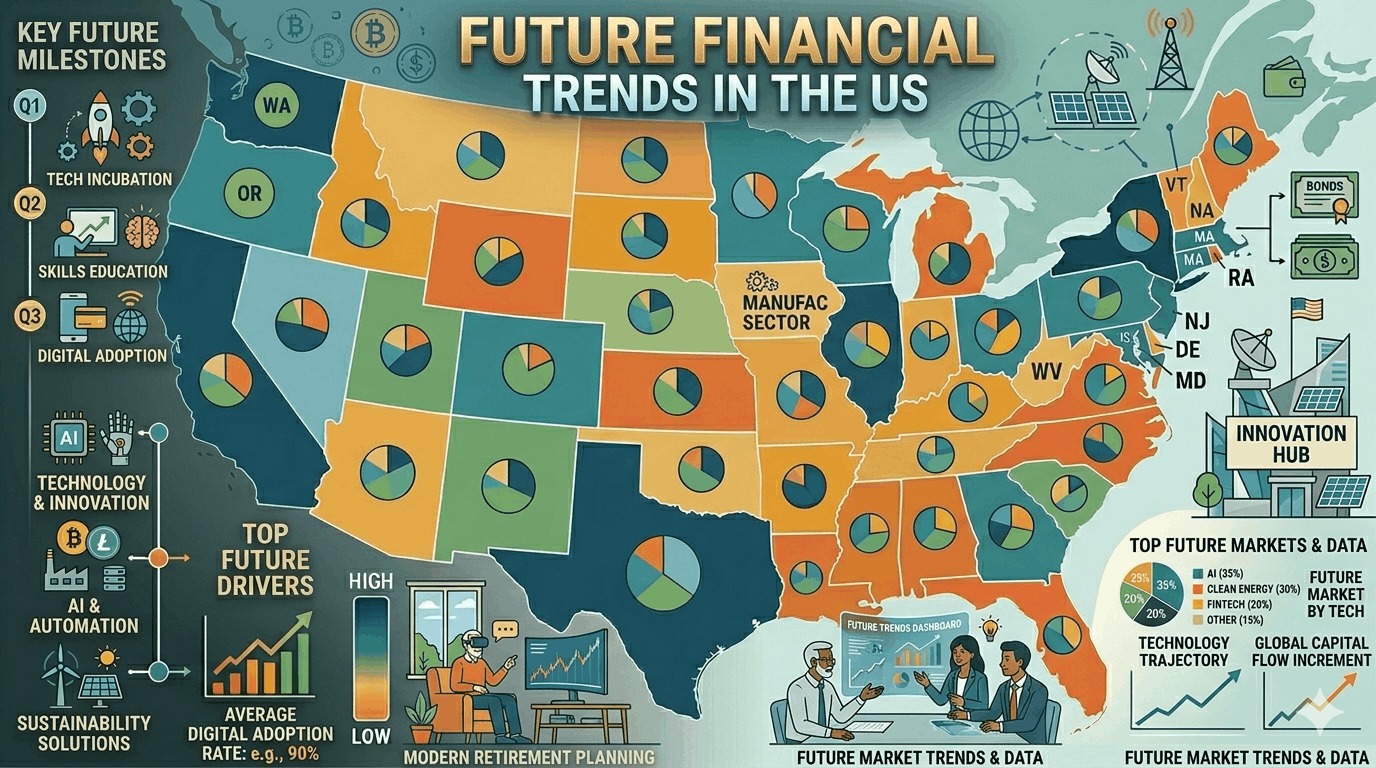
The financial landscape in the United States is changing faster than ever. Technology, shifting work patterns, and evolving consumer behavior are reshaping how people earn, spend, save, and invest.
Understanding future financial trends isn’t just useful—it’s essential. Whether you're building wealth, running a business, or planning for retirement, these trends will directly impact your decisions.
Let’s explore the key future financial trends in the U.S. with clear explanations, real-world examples, and practical insights.
The Shift Toward Digital Finance
One of the most significant trends shaping the future is the rapid move toward digital finance.
Key Trends
- Growth of online banking and mobile apps
- Expansion of digital wallets and contactless payments
- Rise of fintech companies
Simple Explanation
People are managing money entirely online—without visiting banks. Payments, investments, and budgeting are now done through apps.
Real-World Example
Instead of going to a bank branch, someone can:
- Transfer money instantly
- Invest in stocks
- Track expenses
All from a smartphone.
This transformation is part of
Digital Economy Growth Statistics (https://statush.com/finance-statistics/digital-economy-growth-statistics)
Growth of Multiple Income Streams
The traditional model of relying on a single job is changing.
Key Trends
- Increase in side hustles
- Freelancing and gig work growth
- Passive income strategies becoming popular
Example
A person might:
- Work a full-time job
- Run an online business
- Invest in stocks or real estate
This diversification improves financial stability.
This aligns with
Side Hustle Statistics in America (https://statush.com/finance-statistics/side-hustle-statistics-in-america)
Increasing Importance of Financial Literacy
As financial systems become more complex, financial knowledge is becoming more important.
Key Trends
- More people learning about investing and taxes
- Growth of online financial education content
- Younger generations entering markets earlier
Why It Matters
| Area | Impact |
|---|---|
| Investing | Better decision-making |
| Taxes | Reduced liabilities |
| Budgeting | Improved savings |
Example
Someone who understands investing early can build wealth faster through compounding.
This connects with
Financial Literacy Statistics in the USA (https://statush.com/finance-statistics/financial-literacy-statistics-in-the-usa)
Technology and AI in Finance
Technology is not just supporting finance—it’s transforming it.
Key Trends
- AI-driven investment tools
- Robo-advisors managing portfolios
- Automated financial planning
Real-World Example
Apps can now:
- Recommend investment strategies
- Automatically rebalance portfolios
- Analyze spending habits
Impact
- Lower costs
- Increased accessibility
- Faster decision-making
Changing Investment Behavior
Investing trends are evolving as more people enter the market.
Key Trends
- Growth of passive investing (ETFs, index funds)
- Increased interest in alternative assets
- Focus on long-term wealth building
Example
Instead of picking individual stocks, many investors now prefer diversified funds.
This aligns with
Investment Trends in the US Market (https://statush.com/finance-statistics/investment-trends-in-the-us-market)
Housing and Cost of Living Pressures
Rising living costs are shaping financial decisions across the country.
Key Trends
- Higher housing costs in many regions
- Migration to more affordable areas
- Increased demand for budgeting and planning
Example
Remote workers are relocating to lower-cost states to reduce expenses.
This connects with:
- Housing Market Forecast in the USA (https://statush.com/finance-statistics/housing-market-forecast-in-the-usa)
- Average Cost of Living by State (https://statush.com/finance-statistics/average-cost-of-living-by-state)
Retirement Planning Is Becoming More Personal
Retirement is no longer a one-size-fits-all concept.
Key Trends
- Shift from pensions to self-funded retirement
- Increased use of retirement accounts
- Growing interest in early retirement (FIRE movement)
Example
Individuals now rely on:
- 401(k) plans
- IRAs
- Personal investments
Instead of employer-provided pensions.
You can explore planning tools like the
Retirement Calculator (https://statush.com/retirement-calculator)
The Rise of the Digital Workforce
Work itself is changing, and that impacts financial trends.
Key Trends
- Growth of remote work
- Global job opportunities
- Flexible work arrangements
Impact on Finances
- More income flexibility
- Increased opportunity for side income
- Less dependence on location
This aligns with
Remote Work Statistics in the USA (https://statush.com/finance-statistics/remote-work-statistics-in-the-usa)
Inflation and Economic Uncertainty
Economic conditions will continue to influence financial trends.
Key Trends
- Periods of inflation affecting purchasing power
- Interest rate changes impacting borrowing and investing
- Increased focus on financial security
Example
During inflation:
- Costs rise
- Savings lose value
- Investment strategies shift
This connects with
Inflation Trends in the United States (https://statush.com/finance-statistics/inflation-trends-in-the-united-states)
The Importance of Financial Planning Tools
As finances become more complex, tools are becoming essential.
Popular Tools
| Tool | Purpose |
|---|---|
| Budget calculators | Track spending |
| Investment calculators | Plan growth |
| Debt payoff calculators | Reduce liabilities |
| Savings tools | Set financial goals |
Example
Someone planning long-term savings can use the
Compound Interest Calculator (https://statush.com/compound-interest-calculator)
to visualize growth over time.
Challenges in the Future Financial Landscape
While opportunities are increasing, challenges remain.
Key Challenges
- Income inequality
- Rising cost of living
- Financial misinformation
- Market volatility
Real Insight
Access to opportunities is growing—but so is the complexity of managing money effectively.
This is reflected in
Wealth Distribution in America Explained (https://statush.com/finance-statistics/wealth-distribution-in-america-explained)
Practical Tips to Prepare for the Future
To stay ahead of these trends, here are some actionable strategies:
1. Build Multiple Income Streams
Don’t rely on a single source of income.
2. Invest Early and Consistently
Time in the market matters more than timing the market.
3. Learn Financial Basics
Understanding taxes, investing, and budgeting is essential.
4. Adapt to Technology
Use apps and tools to manage your finances efficiently.
5. Plan for Uncertainty
Build an emergency fund and reduce unnecessary debt.
Final Thoughts
Future financial trends in the U.S. point toward a more digital, flexible, and self-driven financial world.
What’s especially important is that individuals now have more control—and responsibility—over their financial future than ever before.
For some, this means new opportunities to build wealth.
For others, it means adapting to change and uncertainty.
But overall, one thing is clear: the future of finance will reward those who stay informed, adaptable, and proactive.