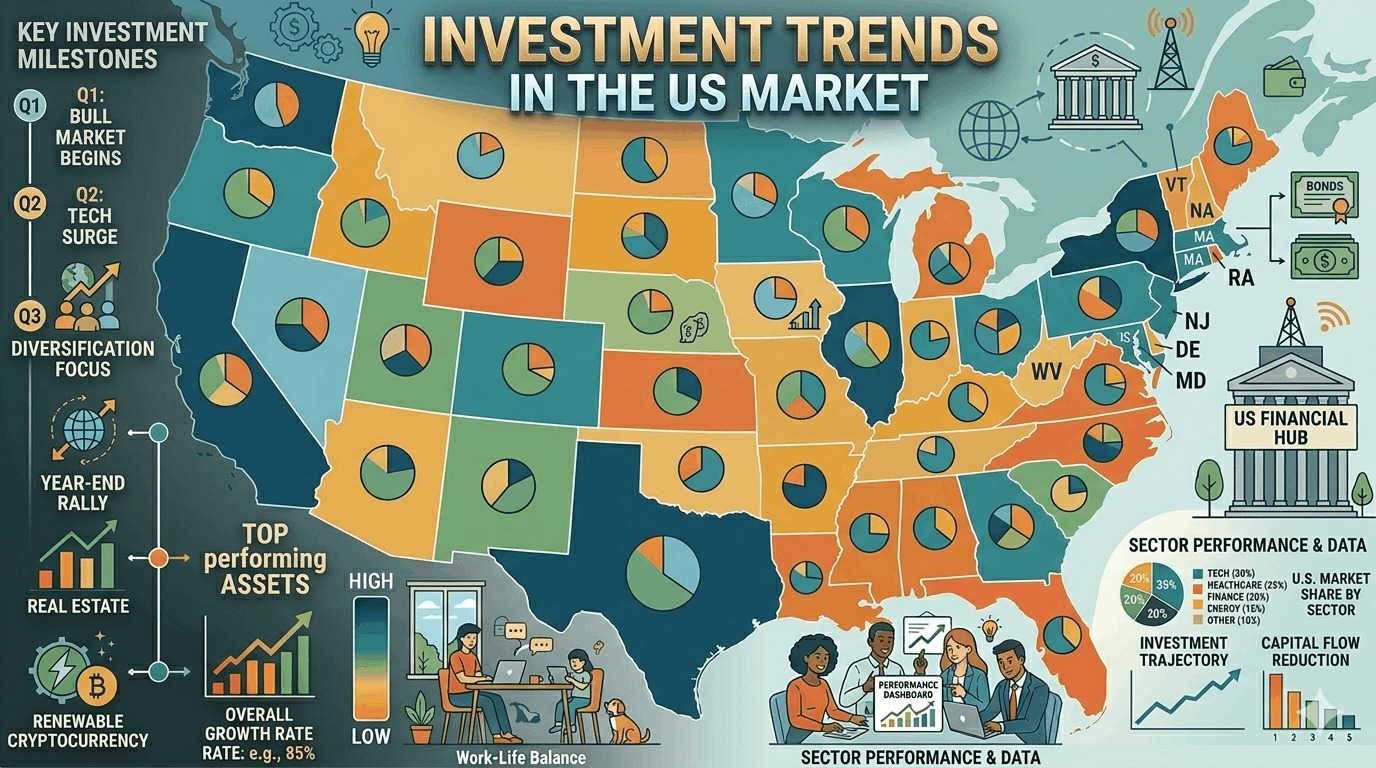
Investing in the U.S. market has evolved significantly over the past decade. What used to be dominated by traditional stocks and long-term portfolios is now influenced by technology, global events, and changing investor behavior.
From the rise of retail investors to the growth of passive investing and digital platforms, understanding current investment trends is essential—whether you’re a beginner or someone looking to refine your strategy.
Let’s explore the latest investment trends in the U.S. market with clear explanations, real-world examples, and practical insights.
The Shift Toward Retail Investing
One of the biggest changes in recent years is the rise of retail investors—individuals investing their own money through online platforms.
Key Statistics
- Retail investors now account for 20% to 25% of market activity
- Millions of new brokerage accounts opened in recent years
- Younger investors (Gen Z and Millennials) are leading the trend
Why This Is Happening
- Easy access to investing apps
- Zero-commission trading
- Financial content on social media
Real-World Example
Platforms like Robinhood made it possible for someone with just $100 to start investing in stocks or ETFs.
This trend connects with
Financial Literacy Statistics in the USA (https://statush.com/finance-statistics/financial-literacy-statistics-in-the-usa)
Growth of Passive Investing
Passive investing has become one of the most dominant strategies in the market.
What Is Passive Investing?
Instead of trying to beat the market, investors simply track it using index funds or ETFs.
Key Statistics
- Over 50% of U.S. equity fund assets are now in passive funds
- Index funds continue to outperform many active managers over time
- ETFs are growing rapidly in popularity
Why Investors Prefer It
| Benefit | Explanation |
|---|---|
| Low fees | Minimal management costs |
| Simplicity | Easy to understand |
| Consistent returns | Tracks overall market growth |
Example
Instead of picking individual stocks, an investor might buy an S&P 500 index fund and benefit from the overall market performance.
Rise of Technology and Growth Stocks
Technology companies have become a major driving force in the U.S. stock market.
Key Trends
- Tech stocks make up a large portion of major indices
- High growth potential attracts investors
- Innovation-driven industries are expanding
Popular Sectors
- Artificial Intelligence
- Cloud computing
- E-commerce
- Fintech
Real-World Insight
Companies like Apple, Microsoft, and Nvidia have delivered significant returns over time, making tech a key focus for investors.
However, these stocks can also be volatile, especially during economic uncertainty.
Increased Interest in Alternative Investments
Traditional stocks and bonds are no longer the only options. Investors are diversifying into alternative assets.
Popular Alternatives
| Asset Type | Example |
|---|---|
| Real estate | Rental properties, REITs |
| Cryptocurrency | Bitcoin, Ethereum |
| Commodities | Gold, oil |
| Private equity | Startup investments |
Why This Trend Is Growing
- Diversification
- Higher return potential
- Protection against inflation
This aligns with insights from
Investment Trends in the US Market (https://statush.com/finance-statistics/investment-trends-in-the-us-market)
Impact of Inflation and Interest Rates
Economic factors like inflation and interest rates play a huge role in investment behavior.
Key Trends
- Rising interest rates can reduce stock valuations
- Inflation pushes investors toward assets like real estate and commodities
- Bonds become more attractive when interest rates increase
Example
During high inflation periods, investors often shift money into:
- Real estate
- Commodities
- Inflation-protected securities
This connects with
Inflation Trends in the United States (https://statush.com/finance-statistics/inflation-trends-in-the-united-states)
The Popularity of Dividend and Income Investing
Many investors are focusing on generating steady income rather than just growth.
Key Trends
- Increased interest in dividend-paying stocks
- Retirees relying on passive income
- Growth of income-focused ETFs
Benefits
- Regular cash flow
- Lower volatility compared to growth stocks
- Long-term wealth building
Example
An investor might build a portfolio of dividend stocks that pay quarterly income, creating a reliable cash stream.
ESG and Sustainable Investing
Environmental, Social, and Governance (ESG) investing has gained significant attention.
What Is ESG Investing?
Investing in companies that prioritize:
- Environmental responsibility
- Social impact
- Ethical governance
Key Trends
- Growing demand among younger investors
- Increase in ESG-focused funds
- Companies improving sustainability practices
Simple Explanation
Investors are no longer focused only on profits—they also care about how companies operate.
The Role of Digital Platforms and AI
Technology is transforming how people invest.
Key Developments
- Robo-advisors managing portfolios automatically
- AI-driven investment tools
- Real-time market data access
Example
Apps can now:
- Suggest portfolios
- Rebalance investments
- Provide insights based on data
This trend is part of the broader shift discussed in
Digital Economy Growth Statistics (https://statush.com/finance-statistics/digital-economy-growth-statistics)
Long-Term vs Short-Term Investing Trends
Investors are split between long-term strategies and short-term trading.
Comparison
| Strategy | Characteristics |
|---|---|
| Long-term investing | Stable, compounding returns |
| Short-term trading | Higher risk, quick profits |
Insight
While short-term trading gets attention, long-term investing remains the most reliable way to build wealth.
Tools like the
Compound Interest Calculator (https://statush.com/compound-interest-calculator)
highlight how consistent investing grows over time.
Risks and Challenges in Today’s Market
Investing today comes with opportunities—but also risks.
Common Risks
- Market volatility
- Economic uncertainty
- Overvaluation of assets
- Emotional decision-making
Real-World Insight
Many new investors enter the market during bull runs but panic during downturns, leading to losses.
Understanding risk is just as important as seeking returns.
Practical Tips for Investors
If you want to align with current investment trends, here are some actionable tips:
1. Diversify Your Portfolio
Don’t rely on a single asset or sector.
2. Focus on Long-Term Growth
Avoid reacting to short-term market noise.
3. Keep Costs Low
Use index funds or ETFs where possible.
4. Stay Informed
Understand economic trends like inflation and interest rates.
5. Invest Consistently
Regular investing often outperforms trying to time the market.
Final Thoughts
Investment trends in the U.S. market show a clear evolution: investing is becoming more accessible, technology-driven, and diversified.
What’s especially important is that investors today have more tools and opportunities than ever before—but also more complexity to navigate.
For some, investing is about building long-term wealth.
For others, it’s about generating income or exploring new opportunities.
But regardless of the approach, one thing remains constant: understanding trends is key to making smarter financial decisions.