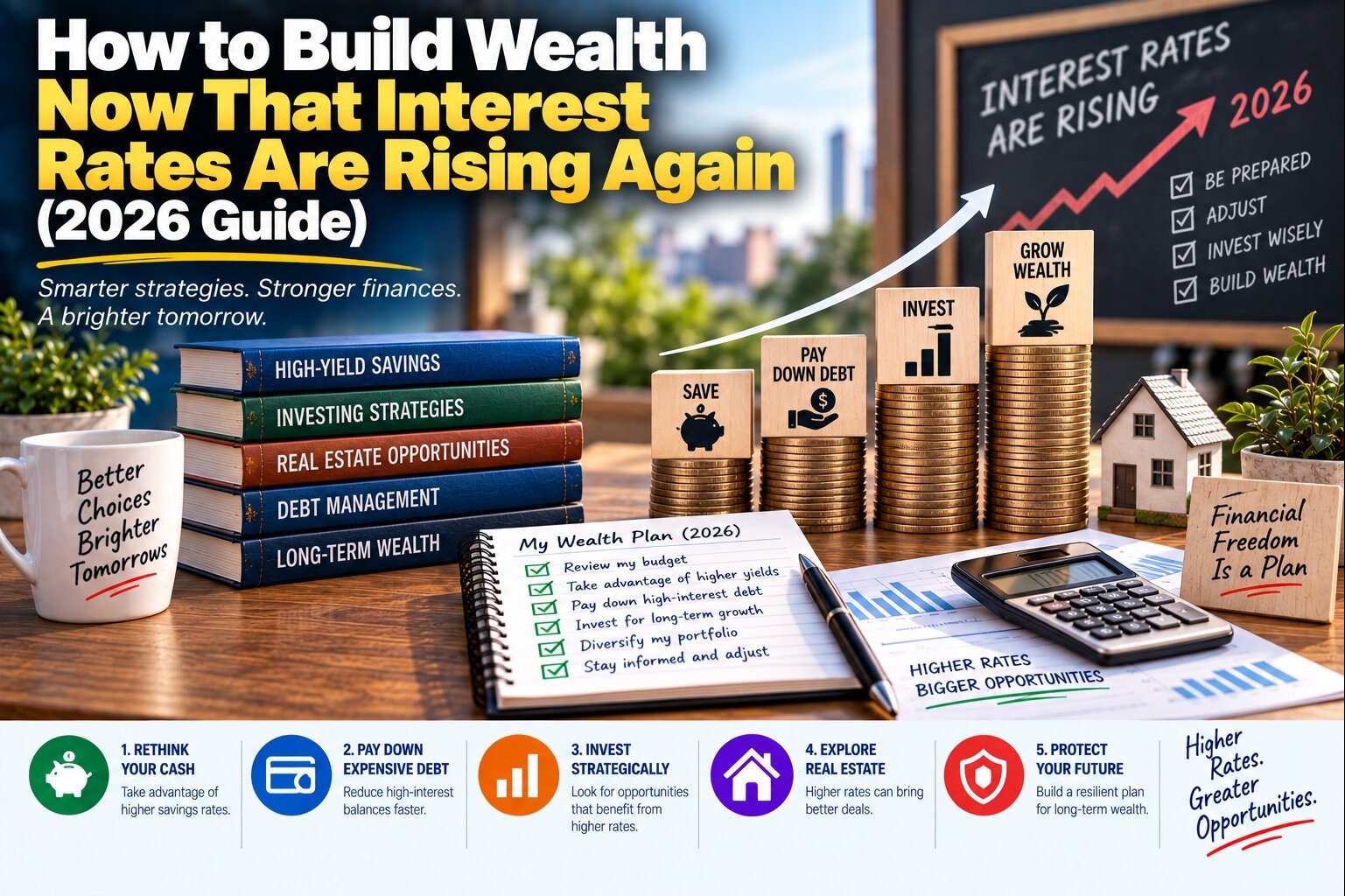
On September 16, 2026, the Federal Reserve raised its benchmark rate a quarter point to a target range of 3.75%-4%, the first U.S. rate hike in more than three years. The Federal Open Market Committee voted 12-0, and its post-meeting statement warned that "inflation remains elevated," with officials now projecting core PCE inflation of 3.4% by year-end, up from 3.3% in June. Sixteen of eighteen FOMC members expect at least one more hike before 2027, and the base case among Fed watchers is another move in December.
The U.S. isn't alone. The Bank of England held its policy rate at 3.75% the same week rather than cutting, and Australia's Reserve Bank meets on September 29 with several major banks, including NAB, penciling in a hike from 4.35% to 4.60%. After several years of easy money, the direction of travel across several Tier 1 economies is turning back toward "higher for longer." That matters far beyond bond traders and mortgage brokers — it changes the math on nearly every tool you use to build wealth, from where you park cash to how aggressively you should pay down debt. Here's what actually changes for you, and what to do about it in the next few months.
Key Numbers to Know
| Central Bank | Current Policy Rate | Recent Move | What It Signals |
|---|---|---|---|
| U.S. Federal Reserve | 3.75%-4.00% | +0.25% (Sept 16, 2026) | First hike since 2023; more possible in December |
| Bank of England | 3.75% | Held steady | Inflation risk keeping cuts on hold |
| Reserve Bank of Australia | 4.35% | Decision due Sept 29, 2026 | Hike to 4.60% seen as live possibility |
| Bank of Canada | Watching Fed closely | No move confirmed yet | Cross-border rate gap affects CAD and mortgages |
What a Rising-Rate World Actually Means for Your Wealth
Higher policy rates ripple outward in a fairly predictable order. Banks lift the rates they pay on savings accounts and certificates of deposit first, because they're competing for deposits. Bond yields adjust next, which is why existing bonds bought at lower rates lose market value even though nothing about the issuer changed. Stock valuations often wobble because future company earnings get discounted at a higher rate, making growth stocks especially sensitive. And borrowing — mortgages, car loans, credit card balances, business lines of credit — simply gets more expensive, which is the whole point: central banks raise rates to cool spending and bring inflation back toward target.
For someone actively building wealth, this cuts both ways. Idle cash finally earns something close to a real return again. But if you're carrying variable-rate debt or you were counting on refinancing a mortgage down soon, the ground just shifted under you. The goal isn't to panic or overhaul your entire portfolio; it's to make sure your plan actually reflects where rates are now, not where they were in 2021.
Step-by-Step: Rebalance Your Wealth Plan for Higher Rates
- Audit your cash first. Check the interest rate on your checking, savings, and any old accounts you've forgotten about. Many big banks still pay near zero even as policy rates climb — that gap is pure lost wealth.
- List every debt by rate, not by balance. Rank credit cards, personal loans, variable-rate mortgages, and business debt from highest interest rate to lowest so you know exactly where a hike hurts most.
- Check your bond and fixed-income exposure. If you hold individual bonds or a bond fund, understand its duration — longer-duration holdings move more sharply when rates rise.
- Revisit any big purchase you're financing. A home, a car, or a business loan taken out six months from now could carry a meaningfully higher rate than one locked in today.
- Rebalance your contribution mix, not your whole portfolio. Consider directing new savings partly toward higher-yield cash instruments while keeping your existing long-term investments in equities and index funds largely intact.
Where to Put Your Cash Right Now
This is the one part of a rising-rate environment that's an unambiguous win for savers, provided you actually move your money. In the U.S., high-yield savings accounts and money market funds are increasingly paying well above what traditional big banks offer, and short-term Treasury bills are competitive with many CDs while carrying no state income tax. UK savers have the equivalent trade-off between easy-access savings accounts, fixed-rate bonds, and NS&I Premium Bonds, all of which typically reprice upward with the Bank Rate. Canadians can compare high-interest savings accounts against Guaranteed Investment Certificates (GICs), and Australians should be shopping term deposits and high-interest savings accounts against each other rather than assuming their current bank pays a competitive rate automatically.
The practical move is the same everywhere: don't assume your existing bank matches the market. Rate comparison sites in each country make this a ten-minute check, and switching often adds a percentage point or more with zero additional risk.
Debt: What to Tackle First When Rates Climb
Not all debt deserves the same urgency. Credit card balances, often sitting at 20%+ APR even before this cycle, become even more punishing and should be priority one for any extra cash. Variable-rate debt — adjustable-rate mortgages, home equity lines of credit, some private student loans — is the next tier, since your payment can rise with little warning. Fixed-rate mortgages locked in during the low-rate years are, by contrast, something you generally want to keep rather than rush to pay off early; that locked-in rate is now working in your favor relative to what a new loan would cost.
If you're not sure whether a loan is fixed or variable, check your original loan documents or call your lender before assuming either way — it changes the entire strategy.
Common Mistakes to Avoid
- Leaving cash in a 0.01% account while headlines about rate hikes pass you by — the hike only helps if your money is somewhere that passes the increase on to you.
- Panic-selling long-term investments because bond or stock prices dipped on rate-decision day; short-term volatility is normal and rarely a reason to abandon a long-term plan.
- Delaying a home or business purchase indefinitely waiting for rates to fall, when no one — including the Fed itself — is certain when that will happen.
- Ignoring variable-rate debt until a payment jumps, instead of getting ahead of it now with extra payments or a fixed-rate refinance.
- Assuming this is only a U.S. story when the Bank of England, the RBA, and other Tier 1 central banks are wrestling with the same inflation pressures and could move in either direction over the next few months.
Who Should Adjust Their Strategy the Most
Anyone carrying variable-rate or high-interest debt should treat this as an immediate prompt to act, since the cost of waiting compounds every month. Savers sitting on a large cash cushion — an emergency fund, a house down payment, proceeds from a sale — are the clearest winners and should move quickly to capture better yields. People near a major financing decision, such as buying a home or refinancing a business loan, need to run the numbers under both today's rates and a scenario where the Fed hikes again in December. If you're mid-career with a diversified portfolio and no near-term borrowing needs, the honest answer is that your best move is largely to keep contributing on schedule and let the rebalancing above happen at the margins.
Practical Tips for the Next Three to Six Months
- Set a calendar reminder to compare your savings account rate against the top five in your country every quarter, not just when rates change.
- If you have an adjustable-rate mortgage or HELOC, ask your lender for the specific date and formula your next rate reset will use, so there are no surprises.
- Before the Fed's December meeting, decide in advance whether you'll adjust your bond allocation, and write down the trigger — don't decide emotionally in the moment.
- If you're outside the U.S., track your own central bank's next meeting date (RBA: September 29; BoE's next scheduled review follows in the weeks after) since local decisions matter more to your mortgage and savings rates than the Fed does.
- Keep automatic contributions to retirement and brokerage accounts running through the volatility — consistency, not timing, is what has historically built wealth through rate cycles.