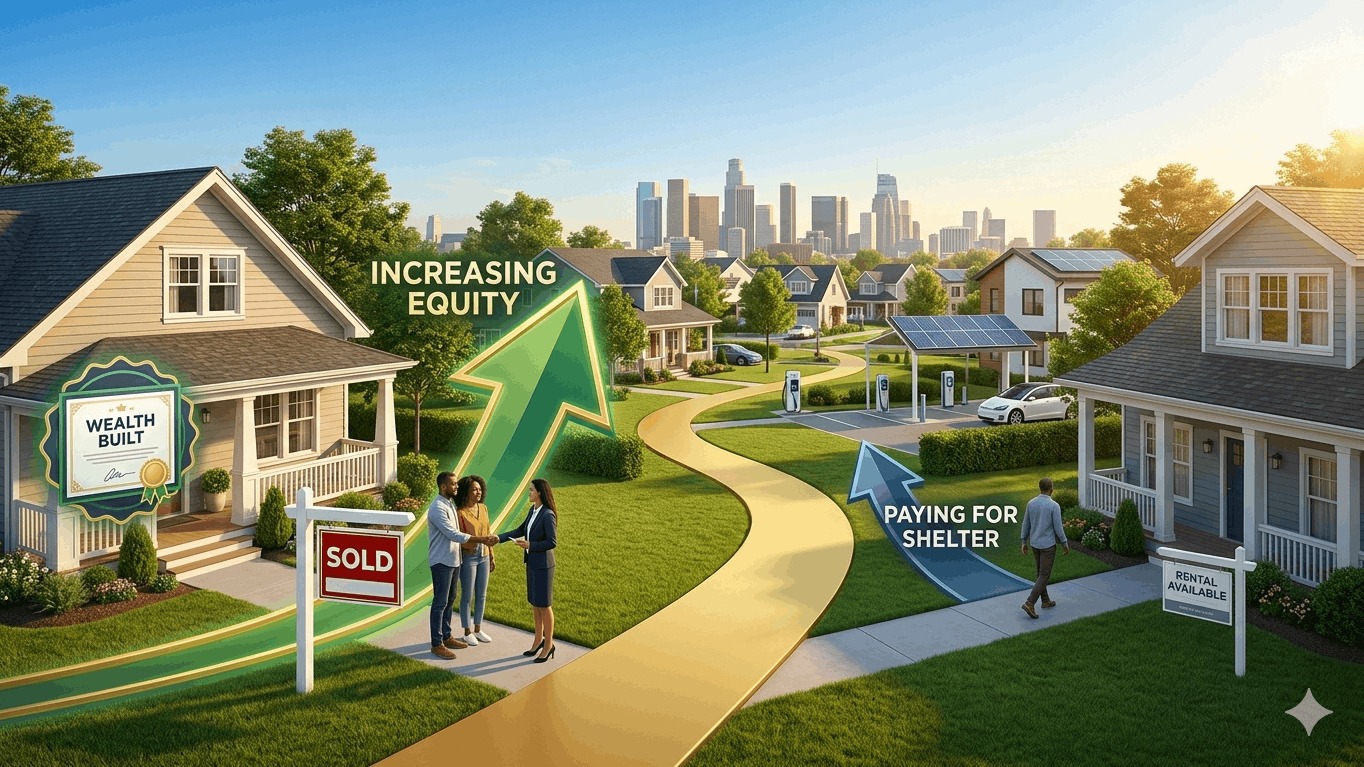
In 2026, the question of whether a home is a wealth-building asset has shifted from "Is it growing?" to "How fast is it growing?" While the frenzy of the early 2020s has subsided, real estate remains one of the few ways the average American can use leverage (other people’s money) to build a multi-generational nest egg.
1. The Wealth-Building Potential in 2026
In 2026, national home prices are expected to stay relatively flat or rise modestly by 1% to 2%. While this doesn't sound as exciting as the stock market's double-digit gains, the "magic" of real estate wealth isn't just in appreciation—it's in the forced savings of a mortgage.
The "Piston Effect" of Home Equity
Real estate builds wealth through two simultaneous actions:
- Amortization: Every monthly mortgage payment reduces your loan balance. In 2026, with mortgage rates hovering around 6%, each check you write is essentially a transfer from your "cash" bucket to your "equity" bucket.
- Appreciation on the Gross Value: If you put 10% down on a $400,000 home and it goes up by 2%, you haven't just made 2% on your cash; you've made $8,000 on your $40,000 investment—a 20% cash-on-cash return.
2. Buying vs. Renting: The 2026 Math
In many US markets today, owning a home is roughly 40% more expensive per month than renting. However, the wealth gap tells a different story:
- The Renter: Pays for a service (shelter). In 30 years, they have $0 in equity.
- The Homeowner: Pays for an asset. In 30 years, even with 0% appreciation, they own a home worth hundreds of thousands of dollars outright.
When Buying is the "Better" Wealth Play
- The 7-Year Rule: In 2026, transaction costs (commissions, taxes) are high. You generally need to stay in the home for at least 7 to 10 years to ensure that appreciation and principal pay-down outweigh the costs of buying and selling.
- The Fixed-Rate Hedge: While rents in 2026 are expected to rise as apartment construction slows, a fixed-rate mortgage locks in your largest expense for 30 years. As inflation raises your wages, your housing cost "shrinks" in real terms.
3. Risks to Your Wealth in 2026
Homeownership is not a guaranteed win. There are several "wealth-eaters" to watch for:
- Maintenance & Cap-Ex: Expect to spend 1% of the home's value annually on repairs. A new roof or HVAC system in 2026 can cost $15,000+, which directly subtracts from your net worth.
- Illiquidity: You cannot "sell a bedroom" if you need cash fast. In 2026, selling a home can take 6 to 12 months in slower markets.
- Opportunity Cost: If you take that 20% down payment and put it in a low-cost S&P 500 index fund, history suggests you might actually end up with more money, provided you are disciplined enough to save the "rent vs. mortgage" difference.
Quotes & Taglines
- "A mortgage is the only bill that eventually stops coming."
- "Rent is the price you pay for flexibility; a mortgage is the price you pay for freedom."
- "Real estate is the only way for the middle class to buy a fortune on layaway."
- "In 2026, don't buy a house for a flip; buy a home for a decade."
- "Your landlord's wealth is built on your rent. Why not build your own?"