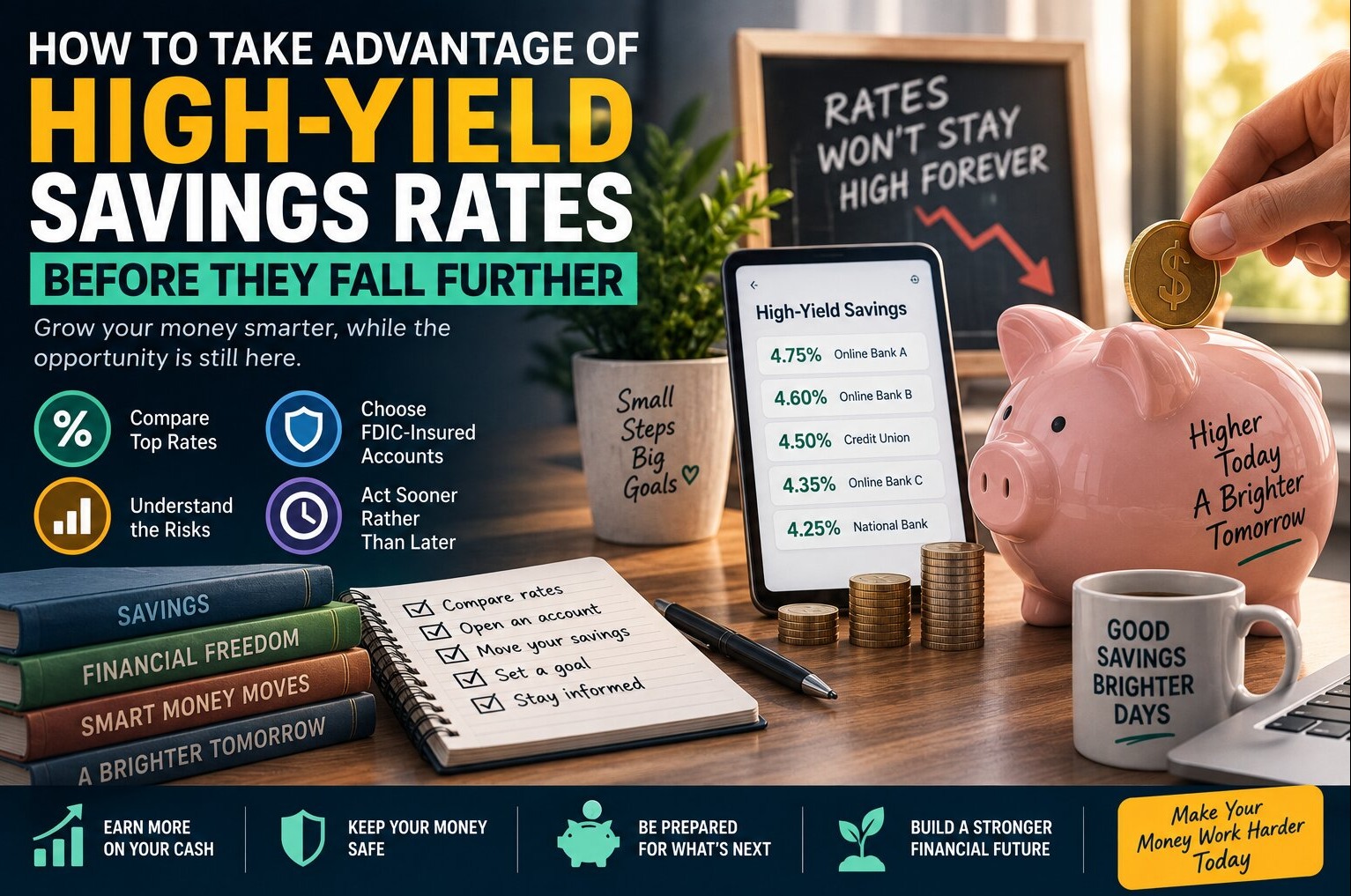
The best high-yield savings account in the United States is paying 4.10% APY as of September 3, 2026, offered by CIT Bank, according to rate tracking from Yahoo Finance and NerdWallet. That's still well above the 0.38% national average the FDIC reports for traditional savings accounts, but the gap has been narrowing. Since early June 2026, thirteen major online banks have adjusted their rates, and ten of them cut, while only three, E*TRADE, Peak Bank, and Valley Bank, raised theirs. The Federal Reserve has held its target range at 3.50% to 3.75% since December 2025, and the next FOMC meeting lands on September 16, 2026, with the Bank of England's Monetary Policy Committee meeting the following day, September 17, with its own base rate sitting at 3.75%.
None of that is a reason to panic. It's a reason to act. Rates on savings accounts move ahead of central bank decisions, not after them, so the accounts paying 4%+ today may not be paying that in three months. This guide walks through how to find the best rate for your situation, how to move your money without losing interest along the way, and how to protect it once it's parked somewhere new, whether you bank in the US, the UK, Canada, or Australia.
Why Savings Account Rates Are Falling Right Now
Online savings accounts, the kind offered by banks with no physical branches to maintain, have paid unusually high rates for the past two years because the Fed and other central banks pushed benchmark rates up sharply to fight inflation. Now that most of those benchmark rates have plateaued or started easing, banks are quietly trimming what they pay depositors, often before headlines catch up.
This isn't unique to the US. In the UK, the Bank of England cut its base rate a quarter point to 3.75% in December 2025 and has held there since, with easy-access accounts from providers like First Active still paying 4.55% AER and bonus-driven offers from newer entrants like LemFi reaching 5.00% AER, but bonus rates typically expire after 12 months and revert lower. In Canada, the Bank of Canada's overnight rate has sat at 2.25% since spring 2026, which is why even the better Canadian high-interest savings accounts, like Synergy Credit Union's iSave account, pay well under 1% on most balances. Australia is the outlier: introductory offers such as ING's Savings Booster pay up to 6.00% p.a. for the first four months before dropping to a 5.40% ongoing bonus rate, reflecting a Reserve Bank of Australia cash rate that remains higher than Canada's or the Eurozone's.
How to Find and Open a High-Yield Savings Account
Comparison shopping for a savings account takes less time than most people expect, and the difference between a mediocre rate and a top rate can add up to hundreds of dollars a year on a modest balance.
- Check your current rate first. Log into your existing savings account and confirm the actual APY you're earning today, not the rate advertised when you opened it.
- Compare at least three online banks. Use a rate-tracking site or your bank comparison tool of choice, and look at the APY, not just the headline number, since some rates include a temporary bonus.
- Read the fine print on bonus rates. Many of the highest advertised rates, including UK offers like LemFi's, only apply for a set introductory period or up to a balance cap.
- Confirm there's no minimum balance penalty. Some accounts pay a lower rate, or charge a fee, if your balance drops below a threshold.
- Check the transfer method and timing. Ask how the new bank moves funds in, ACH transfer, wire, or check, and how long it takes to clear.
- Open the account before you close the old one. This avoids a gap where your money sits in a checking account earning nothing.
Savings Rates Compared: US, UK, Canada, and Australia
Rates shift week to week, so treat the numbers below as a September 2026 snapshot rather than a permanent ranking, and always confirm the current rate directly with the bank before opening an account.
| Country | Top Rate Example (Sept 2026) | Central Bank Benchmark | What to Watch |
|---|---|---|---|
| United States | CIT Bank, 4.10% APY | Fed funds rate: 3.50%–3.75% | Next FOMC decision, Sept 16, 2026 |
| United Kingdom | First Active, 4.55% AER (easy access) | BoE base rate: 3.75% | Next MPC decision, Sept 17, 2026 |
| Australia | ING Savings Booster, up to 6.00% p.a. (intro, 4 months) | RBA cash rate (check current level) | Rate drops to ongoing bonus after intro period |
| Canada | Synergy iSave, tiered from roughly 0.30%–0.55% | BoC overnight rate: 2.25% | Rates already low; shop credit unions and online banks |
How to Switch Banks Without Losing Interest
Moving your emergency fund or savings balance to a new bank feels riskier than it is, provided you follow the transfer in order rather than closing the old account first.
- Open the new high-yield account online, which usually takes 10 to 15 minutes and requires an ID and your existing bank's routing and account numbers.
- Link the two accounts and initiate an ACH transfer (or Faster Payments in the UK, Interac e-Transfer in Canada, or PayID/OSKO in Australia) rather than mailing a check, since electronic transfers are trackable and faster.
- Leave a small buffer, roughly a week's worth of transfer time, in the old account until the new one confirms the deposit landed.
- Redirect any automatic transfers or direct deposits tied to the old savings account before closing it.
- Close the old account only after you've confirmed at least one full statement cycle on the new one.
Locking In Rates with CDs, Fixed Bonds, and Term Deposits
A high-yield savings account is a variable-rate product. The bank can cut your rate the day after the next central bank meeting, with no notice beyond an email. If you're confident you won't need a portion of your cash for six months to two years, locking in today's rate with a certificate of deposit (US), a fixed-rate savings bond (UK), a Guaranteed Investment Certificate (Canada), or a term deposit (Australia) protects that rate against future cuts.
The trade-off is liquidity. Early withdrawal from a CD or term deposit usually costs you a chunk of the interest earned, sometimes all of it. A reasonable middle ground is a CD ladder: split your locked-in cash across three or four terms, say three, six, twelve, and eighteen months, so a portion matures regularly and you're never locked out of your full balance for too long.
A simple rule of thumb: money you need within three months belongs in a high-yield savings account, money you won't touch for six months or longer is a candidate for a CD or term deposit, and money for a goal five or more years out belongs in investments, not deposit accounts.
How to Protect Your Money: Deposit Insurance by Country
Chasing a slightly higher rate is only worth it if the bank holding your money is protected the same way your old one was. Before moving a large balance, confirm the new institution carries deposit insurance in your country.
- United States: FDIC insurance covers up to $250,000 per depositor, per bank, per ownership category.
- United Kingdom: The Financial Services Compensation Scheme (FSCS) protects up to £85,000 per person, per authorized bank or building society.
- Canada: CDIC coverage protects up to $100,000 CAD per eligible account category, per member institution.
- Australia: The Financial Claims Scheme guarantees up to $250,000 AUD per account holder, per authorized deposit-taking institution.
If your balance exceeds the local limit, splitting funds across two insured institutions, or across ownership categories at the same bank, keeps the full amount covered.
Common Mistakes to Avoid
- Chasing a rate without checking the terms. A 6% introductory rate that reverts to 2% after four months, like some Australian booster accounts, is not the same as a stable 4.5% rate.
- Leaving money in a legacy account out of inertia. Many people who opened a savings account years ago are still earning the original rate, which is often close to the 0.38% US average, not the current promotional rate the bank advertises to new customers.
- Moving your entire emergency fund into a CD. Locking up money you might need on short notice defeats the purpose of an emergency fund.
- Ignoring currency and cross-border tax rules. If you're comparing accounts across countries because you have accounts in more than one, check whether interest earned abroad is taxable in your home country.
- Forgetting to update automatic transfers. A forgotten direct deposit still routing to a closed account can trigger fees or delays.
Who Should Move Their Money Now
Not everyone needs to act immediately. If your current savings account is already paying close to the top rate in your market, and it likely isn't, a switch may not be worth the effort. But if you haven't checked your rate in the past six months, or you know you opened your account more than a year ago, there's a good chance you're earning meaningfully less than what's available today. With rate decisions from the Fed and the Bank of England both landing in mid-September 2026, this is a reasonable window to compare rates, move idle cash, and lock in a portion with a CD or term deposit before the next cut arrives.