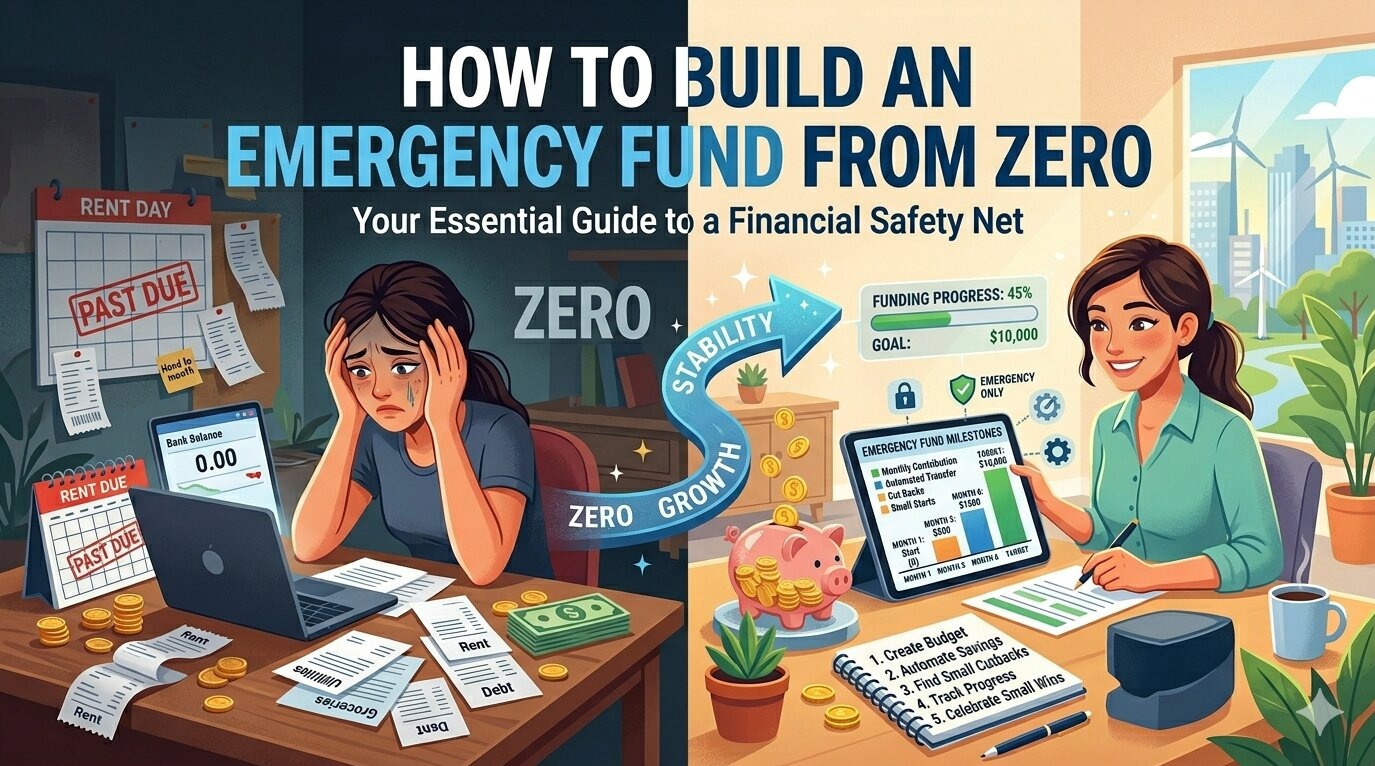
Most people don’t think about an emergency fund—until they actually need one.
A sudden medical bill, job loss, or unexpected expense can disrupt your entire financial situation. Without savings, you’re forced to rely on credit, loans, or help from others.
That’s where an emergency fund becomes essential.
The good news? You don’t need a large income to build one. Even starting from zero is completely possible with the right approach.
Let’s break it down step by step.
What Is an Emergency Fund?
An emergency fund is money set aside specifically for unexpected situations.
It is not for:
- Shopping
- Travel
- Regular expenses
It is only for real emergencies like:
- Medical expenses
- Job loss
- Urgent repairs
Think of it as your financial safety net.
Why You Need an Emergency Fund
Without an emergency fund:
- You may fall into debt
- You lose financial stability
- Stress increases
With an emergency fund:
- You gain security
- You handle problems confidently
- You avoid high-interest loans
Even a small fund can make a big difference.
Step 1: Set a Clear Target
Start with a realistic goal.
Ideal target:
- 3 to 6 months of expenses
But if you’re starting from zero, break it into smaller goals:
| Stage | Target Amount |
|---|---|
| Beginner | ₹5,000 – ₹10,000 |
| Intermediate | ₹20,000 – ₹50,000 |
| Advanced | 3–6 months expenses |
Small milestones make the process easier and more motivating.
Step 2: Start Small (But Start Now)
One of the biggest mistakes is waiting for the “right time.”
You don’t need a big amount.
Start with:
- ₹500/week
- ₹1,000/month
Consistency matters more than size.
Real-world example:
Saving ₹1,000/month builds ₹12,000 in a year—enough to handle many small emergencies.
Step 3: Create Space in Your Budget
To save money, you need to free up some amount.
Look for:
- Unnecessary subscriptions
- Excess food delivery
- Impulse purchases
If you need help reducing expenses:
https://statush.com/money/how-to-reduce-monthly-expenses-quickly
And if you don’t have a budget yet:
https://statush.com/money/how-to-create-a-monthly-budget-that-works
Step 4: Save First, Not Last
Don’t wait to see what’s left at the end of the month.
Instead:
- Save immediately after receiving income
For example:
- Income = ₹30,000
- Save ₹2,000 first
This ensures your emergency fund grows consistently.
Step 5: Keep Your Fund Separate
Your emergency fund should not be mixed with your regular spending money.
Keep it:
- In a separate bank account
- Easily accessible
- Not too easy to spend impulsively
This reduces the temptation to use it unnecessarily.
Step 6: Automate Your Savings
Automation makes saving effortless.
You can:
- Set automatic transfers
- Use recurring deposits
- Schedule monthly savings
This removes the need for constant decision-making.
Step 7: Increase Contributions Gradually
As your income grows, increase your savings.
For example:
- Start with ₹1,000/month
- Increase to ₹2,000 or ₹3,000
Even small increases make a big difference over time.
Step 8: Use It Only for Real Emergencies
This is very important.
Before using your fund, ask:
“Is this truly an emergency?”
Avoid using it for:
- Shopping
- Vacations
- Non-urgent expenses
Discipline protects your fund.
Step 9: Rebuild After Using It
If you use your emergency fund, your next priority should be rebuilding it.
Treat it like a reset—not a failure.
This keeps your financial safety intact.
Step 10: Combine with Overall Financial Planning
An emergency fund is just the first step.
Once it’s in place, you can focus on:
- Investing
- Long-term goals
- Wealth building
For a complete roadmap:
https://statush.com/money/financial-planning-for-beginners
Simple Emergency Fund Plan
Here’s a quick structure you can follow:
| Step | Action | Priority |
|---|---|---|
| Set goal | Define target amount | High |
| Start small | Begin saving immediately | High |
| Cut expenses | Free up money | High |
| Automate savings | Make it consistent | Medium |
| Increase gradually | Grow contributions | Medium |
Real-Life Example
Pooja earns ₹25,000/month and has no savings.
She starts:
- Saving ₹1,500/month
- Reducing unnecessary expenses
In 6 months:
- Builds ₹9,000 fund
In 1 year:
- Crosses ₹20,000
Now, she can handle emergencies without stress.
Common Mistakes to Avoid
- Waiting to start
- Saving irregularly
- Using the fund for non-emergencies
- Not keeping it separate
- Stopping after reaching a small amount
Avoiding these mistakes makes the process smoother.
Connecting It All
An emergency fund protects everything else in your financial life.
It works best when combined with:
- Budgeting
- Expense control
- Smart saving habits
If you’re struggling financially, this guide can help:
https://statush.com/money/how-to-stop-living-paycheck-to-paycheck
Final Thoughts
Building an emergency fund from zero may feel slow—but it’s one of the most powerful financial steps you can take.
Start small. Stay consistent.
Even a few thousand rupees can give you peace of mind and financial confidence.
And once you have that safety net, everything else becomes easier.