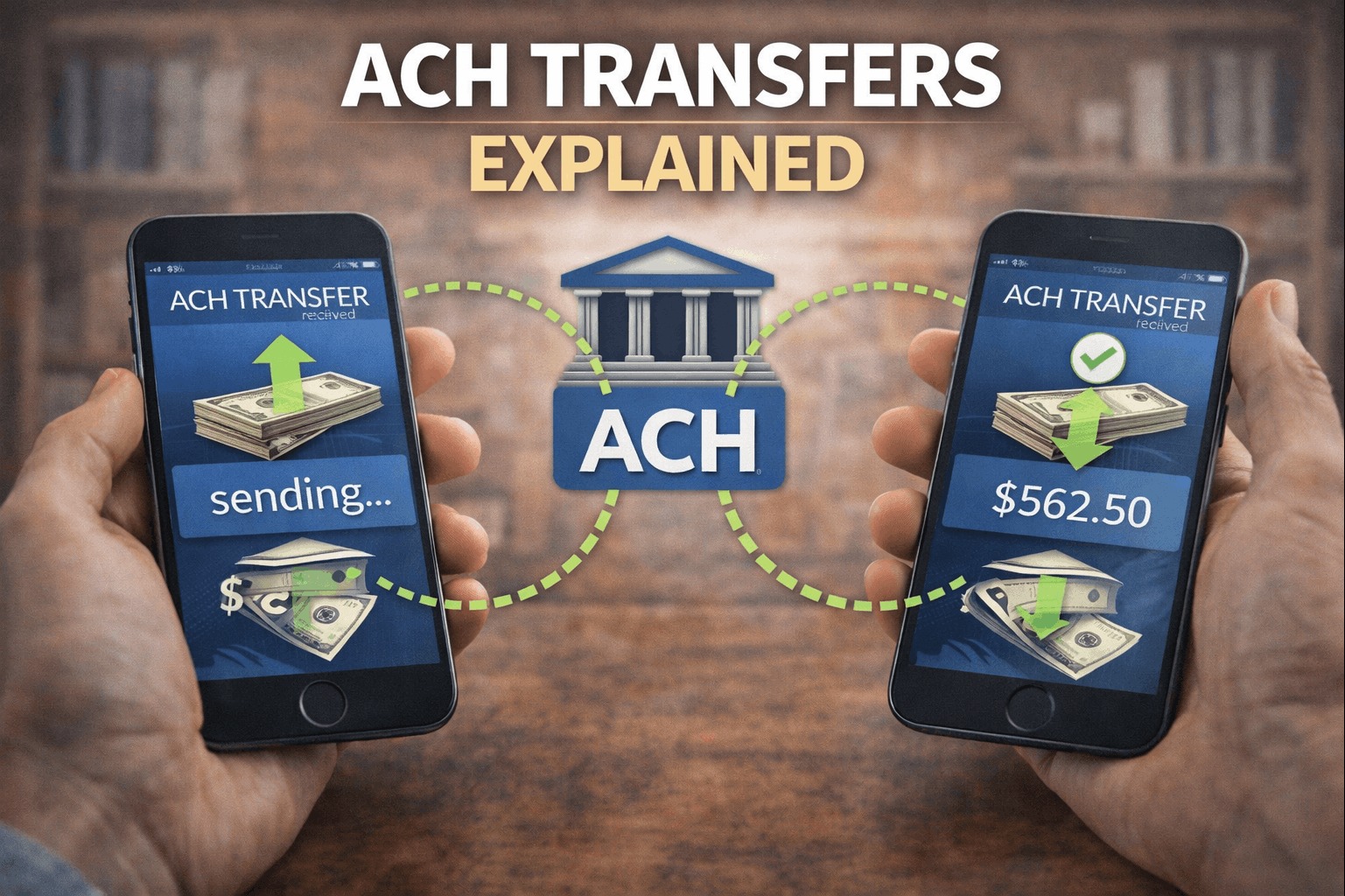
If you’ve ever received your paycheck via direct deposit, paid a bill online, or transferred money between bank accounts, you’ve already used an ACH transfer—even if you didn’t realize it.
ACH transfers are one of the most common and low-cost ways to move money in the United States. They’re not flashy, and they’re not instant like some modern apps, but they quietly power billions of transactions every year.
Let’s break down how ACH transfers work, when to use them, and how they compare to other payment methods.
What Is an ACH Transfer?
ACH stands for Automated Clearing House, a network that connects banks and financial institutions across the U.S.
An ACH transfer is an electronic movement of money between bank accounts using this network.
Here’s a simple breakdown:
| Feature | ACH Transfer |
|---|---|
| Speed | 1–3 business days |
| Cost | Usually free or very low |
| Reversibility | Possible in some cases |
| Best for | Bills, payroll, recurring payments |
In simple terms, ACH is like a scheduled, digital bank-to-bank transfer that doesn’t happen instantly but is reliable and affordable.
How ACH Transfers Work (Step-by-Step)
ACH transfers might seem invisible, but there’s a clear process behind the scenes.
Step 1: Authorization
You authorize a payment or transfer:
- Paying a utility bill
- Setting up direct deposit
- Moving money between accounts
Step 2: Request Is Sent
Your bank sends the request to the ACH network.
Step 3: Batch Processing
Unlike wire transfers, ACH transactions are grouped and processed in batches at specific times during the day.
Step 4: Clearing and Settlement
The receiving bank verifies the details and credits the funds.
Step 5: Funds Are Available
Money appears in the recipient’s account within 1–3 business days.
Real-World Example
Let’s say Mike in Florida gets paid every two weeks.
- His employer sends payroll through ACH
- The money is deposited directly into his bank account
- No checks, no delays, no fees
Another example:
Emma pays her electricity bill online using her bank account.
- The utility company pulls money via ACH
- The payment processes in 1–2 days
- No extra charges
ACH is essentially the backbone of everyday financial activity in the U.S.
Types of ACH Transfers
There are two main types of ACH transactions:
1. ACH Credit
Money is pushed from your account to another.
Examples:
- Direct deposit (salary)
- Sending money to a friend
- Transferring between your own accounts
2. ACH Debit
Money is pulled from your account by a company or service.
Examples:
- Paying utility bills
- Subscription payments
- Mortgage auto-pay
ACH vs Wire Transfers
People often compare ACH transfers with wire transfers, but they serve different purposes.
| Feature | ACH Transfer | Wire Transfer |
|---|---|---|
| Speed | 1–3 days | Same day |
| Cost | Free or low | Expensive |
| Reversibility | Sometimes possible | Hard to reverse |
| Best for | Everyday payments | Urgent or large payments |
For a deeper understanding of wires, check this:
https://statush.com/credit-cards-banking/how-wire-transfers-work
ACH vs Peer-to-Peer Apps
Modern apps like Venmo or Zelle feel instant, but many of them still rely on ACH behind the scenes.
| Feature | ACH | P2P Apps |
|---|---|---|
| Speed | Slower | Instant or near-instant |
| Fees | Low | Sometimes charged |
| Use case | Bills, payroll | Splitting expenses |
To explore these apps further:
https://statush.com/credit-cards-banking/peer-to-peer-payment-apps-explained
Advantages of ACH Transfers
1. Low Cost
Most ACH transfers are free, making them ideal for regular use.
2. Convenient
Perfect for recurring payments like rent, utilities, or subscriptions.
3. Widely Accepted
Used by employers, banks, and businesses nationwide.
4. Secure
Operates through regulated banking systems.
Disadvantages of ACH Transfers
1. Slower Processing
Not ideal for urgent payments.
2. Limited Weekend Processing
Most ACH transactions don’t process on weekends or holidays.
3. Potential Delays
Errors or verification issues can slow things down.
4. Requires Authorization
You must trust companies you allow to pull funds from your account.
Common Uses of ACH Transfers
ACH is everywhere in daily financial life.
Most common uses include:
- Direct deposit of paychecks
- Paying utility bills
- Mortgage and rent payments
- Transferring money between accounts
- Government benefits and tax refunds
If you’re comparing account types for managing these transactions, this can help:
https://statush.com/credit-cards-banking/checking-vs-savings-accounts
ACH Transfer Fees
One of the biggest advantages of ACH is cost.
| Transaction Type | Typical Cost |
|---|---|
| Bank-to-bank transfer | Free |
| Bill payments | Free |
| Business processing | Small fee (for merchants) |
Compared to wire transfers or credit cards, ACH is significantly cheaper.
How Safe Are ACH Transfers?
ACH transfers are generally safe, but like any financial system, they’re not risk-free.
Risks include:
- Unauthorized withdrawals
- Incorrect account details
- Fraudulent billing setups
How to stay safe:
- Monitor your bank account regularly
- Set up alerts for transactions
- Only authorize trusted companies
- Report suspicious activity immediately
For more security guidance:
https://statush.com/credit-cards-banking/banking-security-tips-everyone-should-know
Practical Tips for Using ACH Transfers
Here are some simple ways to use ACH smarter:
- Schedule payments a few days early
- Keep enough balance to avoid overdrafts
- Review automatic payments monthly
- Avoid linking your account to unknown services
- Use ACH for predictable, recurring expenses
If overdrafts are a concern, understanding this can help:
https://statush.com/credit-cards-banking/overdraft-protection-explained
When Should You Use ACH Transfers?
ACH transfers are ideal when:
- You don’t need instant payments
- You want to avoid fees
- You’re handling routine transactions
- You’re setting up recurring payments
They’re basically the “default” option for everyday banking.
When You Should Avoid ACH Transfers
ACH may not be the best choice when:
- You need money to arrive immediately
- You’re making a large, time-sensitive payment
- The recipient requires guaranteed same-day funds
In those cases, wire transfers or instant payment methods are better options.
Final Thoughts
ACH transfers are one of the most practical tools in modern banking. They’re not fast, and they’re not exciting—but they’re reliable, affordable, and essential.
For everyday financial tasks like paying bills, receiving income, or moving money between accounts, ACH is hard to beat.
The key is understanding when to use it—and when to choose a faster option instead.
In a world full of instant payments and flashy apps, ACH quietly does the heavy lifting behind the scenes. And once you understand how it works, you can use it to simplify your financial life while keeping costs low.