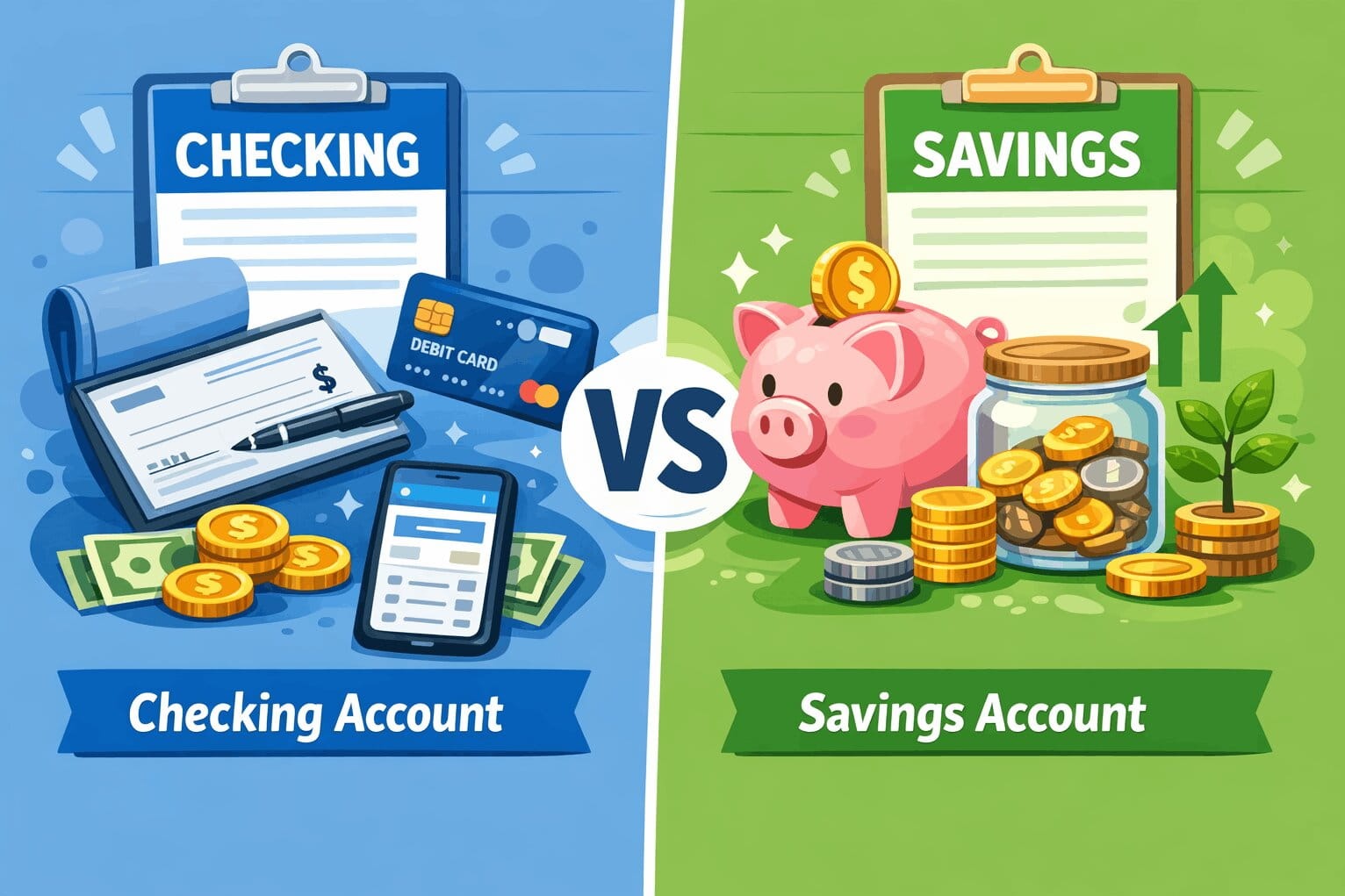
When you open a bank account in the United States, you’ll usually choose between two main options: a checking account or a savings account. While both are essential, they serve very different purposes.
Understanding the difference between these two accounts is key to managing your money effectively. When used together, they create a simple but powerful system for spending, saving, and growing your finances.
What Is a Checking Account?
A checking account is designed for everyday transactions.
It allows you to:
- Deposit and withdraw money
- Pay bills
- Use a debit card
- Transfer funds
Checking accounts are built for frequent use. You can access your money easily, often without restrictions.
What Is a Savings Account?
A savings account is designed for storing and growing your money over time.
It typically offers:
- Interest on your balance
- Limited withdrawals
- A focus on saving rather than spending
Savings accounts help you set money aside for future goals, emergencies, or long-term plans.
To understand growth:
How Interest Works in Savings Accounts
https://statush.com/credit-cards-banking/how-interest-works-in-savings-accounts
Key Differences at a Glance
| Feature | Checking Account | Savings Account |
|---|---|---|
| Purpose | Daily spending | Saving money |
| Interest | Usually low or none | Higher interest |
| Access | Frequent, unlimited | Limited withdrawals |
| Debit Card | Yes | Sometimes |
| Best For | Bills and expenses | Goals and savings |
How They Work Together
The best way to use checking and savings accounts is together—not separately.
A simple system looks like this:
- Your income goes into your checking account
- You pay bills and expenses from checking
- You transfer extra money to savings
This creates a clear separation between spending and saving.
Real-World Example
Let’s look at a practical example.
Smart Setup
Anjali receives her salary in her checking account. She uses it for rent, groceries, and bills. Each month, she transfers $500 to her savings account.
Result:
- Expenses are covered
- Savings grow steadily
Less Effective Setup
Rohit keeps all his money in his checking account.
Result:
- Easy to spend everything
- No structured savings
The difference is not income—it’s how the accounts are used.
Interest: The Key Advantage of Savings Accounts
Savings accounts earn interest, which helps your money grow over time.
Checking accounts typically offer little or no interest.
This is why it’s important not to keep large amounts of money in checking.
For better growth options:
High-Yield Savings Accounts Explained
https://statush.com/credit-cards-banking/high-yield-savings-accounts-explained
Accessibility and Convenience
Checking accounts are built for convenience.
You can:
- Withdraw cash anytime
- Use ATMs and debit cards
- Make frequent transactions
Savings accounts, on the other hand, may limit withdrawals to encourage saving.
Fees and Costs
Checking accounts sometimes come with fees, such as:
- Monthly maintenance fees
- Overdraft fees
Savings accounts usually have fewer fees, especially with online banks.
To avoid unnecessary charges:
How to Avoid Bank Fees
https://statush.com/credit-cards-banking/how-to-avoid-bank-fees
When to Use a Checking Account
A checking account is best for:
- Daily expenses
- Paying bills
- Receiving income
- Frequent transactions
It’s your main financial hub for day-to-day activity.
When to Use a Savings Account
A savings account is best for:
- Emergency funds
- Short-term goals
- Long-term savings
It’s where you keep money that you don’t plan to spend immediately.
Common Mistakes to Avoid
Many people misuse these accounts, which can slow financial progress.
One common mistake is keeping all money in checking, making it easy to overspend.
Another mistake is not using a savings account at all, missing out on interest.
Some people also withdraw from savings too frequently, reducing its effectiveness.
Choosing the Right Accounts
Not all checking and savings accounts are the same.
Online banks often offer:
- Lower fees
- Higher savings interest rates
Traditional banks may offer:
- In-person service
- Easier cash handling
To explore options:
Best Online Banks in the USA
https://statush.com/credit-cards-banking/best-online-banks-in-the-usa
A Simple Strategy That Works
If you want a simple system, follow this:
- Use checking for all income and expenses
- Transfer savings immediately after receiving income
- Keep savings separate to avoid spending it
This creates discipline without requiring complex budgeting.
A Simple Way to Think About It
Think of your checking account as your spending wallet.
Think of your savings account as your financial safety net.
Both are important—but they serve different roles.
Final Thoughts
Checking and savings accounts are not competitors—they are complementary tools.
A checking account helps you manage your daily finances, while a savings account helps you build your future.
Using both effectively is one of the simplest ways to improve your financial health.
Start by separating your spending and saving, and let each account do its job.
Over time, this small change can lead to significant financial progress.