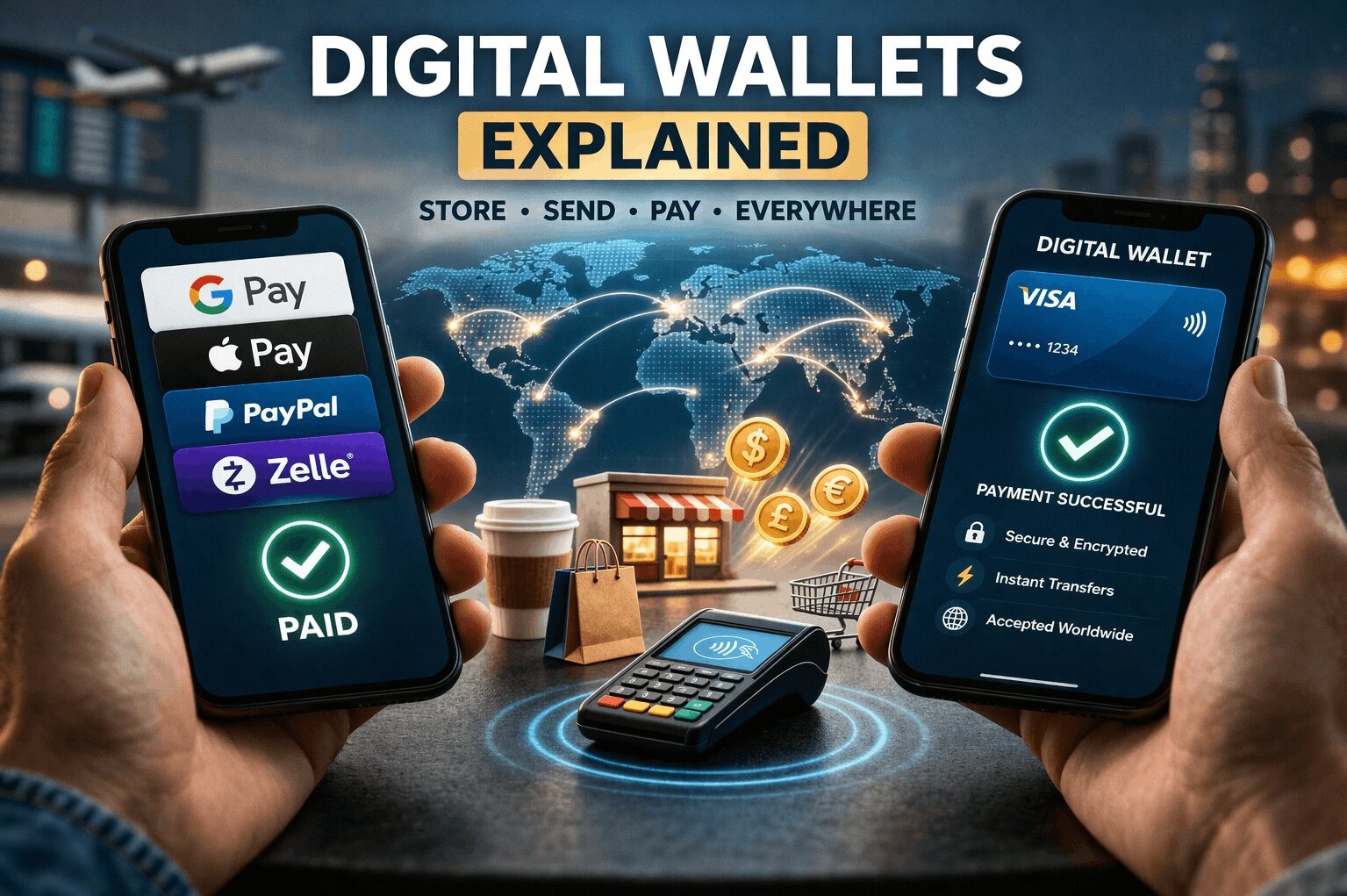
Digital wallets have quickly become a normal part of everyday life in the United States. Whether you’re tapping your phone at a store, paying online without entering card details, or sending money to a friend, chances are you’re using a digital wallet.
They’re fast, convenient, and often more secure than carrying physical cash or cards—but they’re not perfect. Understanding how they work can help you use them smarter and avoid common mistakes.
Let’s break it all down in a simple, practical way.
What Is a Digital Wallet?
A digital wallet is an app or software that stores your payment information—like debit cards, credit cards, and even bank accounts—so you can make transactions electronically.
Instead of pulling out your physical wallet, you use your phone, smartwatch, or computer.
Here’s a quick overview:
| Feature | Digital Wallet |
|---|---|
| Stores | Cards, bank accounts, tickets |
| Devices | Smartphones, smartwatches, computers |
| Payments | Contactless, online, in-app |
| Security | Encryption and tokenization |
In simple terms, a digital wallet is your physical wallet—just in digital form, with extra features.
How Digital Wallets Work
The technology behind digital wallets is advanced, but the experience is simple.
Step 1: Add Your Payment Method
You link your debit card, credit card, or bank account.
Step 2: Secure Your Wallet
You set up:
- PIN
- Fingerprint
- Face recognition
Step 3: Make a Payment
At checkout:
- Tap your phone (in-store)
- Click “Pay with wallet” (online)
Step 4: Transaction Is Processed
Your wallet communicates with the bank using secure encryption.
Step 5: Payment Completed
Funds are deducted or charged just like a regular card payment.
Real-World Example
Let’s say Alex is buying coffee in New York.
- Total bill: $6
- Instead of using cash or a card, he taps his phone
- Payment completes in seconds
No card swipe, no PIN entry, no hassle.
Another example:
Maria shops online and uses her digital wallet to check out instantly—no need to type card details.
This convenience is why digital wallets are growing so fast.
Types of Digital Wallets
Not all digital wallets are the same. They generally fall into three categories.
1. Closed Wallets
- Used only within a specific platform
- Example: store-specific apps
2. Semi-Closed Wallets
- Accepted by multiple merchants
- Limited to certain networks
3. Open Wallets
- Linked to banks
- Can be used almost anywhere
- Allow withdrawals and transfers
Digital Wallet vs Traditional Payment Methods
Here’s how digital wallets compare to cards and cash:
| Feature | Digital Wallet | Debit/Credit Card | Cash |
|---|---|---|---|
| Speed | Very fast | Fast | Slower |
| Convenience | High | Medium | Low |
| Security | High | Medium | Low |
| Tracking | Easy | Easy | Difficult |
Digital wallets combine the convenience of cards with added security and speed.
If you want to understand how cards work behind the scenes, check this:
https://statush.com/credit-cards-banking/how-credit-cards-work-in-the-usa
Advantages of Digital Wallets
1. Convenience
You can pay in seconds without carrying multiple cards.
2. Faster Checkout
Especially useful for online shopping and contactless payments.
3. Enhanced Security
Uses tokenization (your real card number isn’t shared).
4. Easy Expense Tracking
Transactions are automatically recorded.
5. Multi-Functionality
Store tickets, passes, and loyalty cards.
Disadvantages of Digital Wallets
1. Device Dependency
If your phone dies, your wallet is inaccessible.
2. Limited Acceptance in Some Areas
Not all merchants accept digital wallets.
3. Learning Curve
Some users may find setup confusing.
4. Potential Security Risks
If your device is compromised, your wallet could be at risk.
Are Digital Wallets Safe?
Generally, yes—digital wallets are considered very secure.
Why they’re safe:
- Encryption protects your data
- Tokenization hides your card details
- Biometric authentication adds protection
But risks still exist:
- Phishing scams
- Lost or stolen devices
- Fake apps
To stay protected:
- Use strong passwords
- Enable biometric security
- Avoid public Wi-Fi for transactions
You can learn more here:
https://statush.com/credit-cards-banking/banking-security-tips-everyone-should-know
Popular Uses of Digital Wallets
Digital wallets are used in many everyday situations.
Common uses include:
- In-store contactless payments
- Online shopping
- Sending money to friends
- Paying bills
- Storing boarding passes and tickets
They’re especially useful when paired with mobile banking tools:
https://statush.com/credit-cards-banking/mobile-banking-apps-explained
Digital Wallets vs Bank Transfers
Digital wallets and bank transfers serve different purposes.
| Feature | Digital Wallet | Bank Transfer |
|---|---|---|
| Speed | Instant | Slower (ACH) |
| Convenience | High | Medium |
| Fees | Low or none | Usually none |
| Use case | Everyday payments | Larger transfers |
For understanding bank transfers:
https://statush.com/credit-cards-banking/ach-transfers-explained
Practical Tips for Using Digital Wallets
Let’s make this actionable.
- Always lock your phone with biometrics
- Add only trusted cards and accounts
- Enable transaction alerts
- Keep your apps updated
- Remove old or unused cards
One smart habit:
Use a credit card inside your digital wallet instead of a debit card—it adds an extra layer of protection.
When Should You Use a Digital Wallet?
Digital wallets are ideal when:
- You want fast, contactless payments
- You shop online frequently
- You prefer not carrying physical cards
- You want better tracking of expenses
When You Might Avoid Digital Wallets
They may not be the best option when:
- You’re in areas with limited acceptance
- Your device battery is unreliable
- You prefer cash for budgeting control
The Future of Digital Wallets
Digital wallets are evolving quickly.
Future trends include:
- Integration with IDs and driver’s licenses
- Cryptocurrency storage
- Biometric-only payments
- Deeper integration with banking services
They’re gradually becoming an all-in-one financial tool.
Final Thoughts
Digital wallets are changing how people manage and spend money. They’re faster, more convenient, and often safer than traditional methods—but only if used correctly.
The key is balance: use digital wallets for convenience, but stay aware of security and backup options.
Once you get comfortable with them, it’s hard to go back to digging through your physical wallet at checkout.