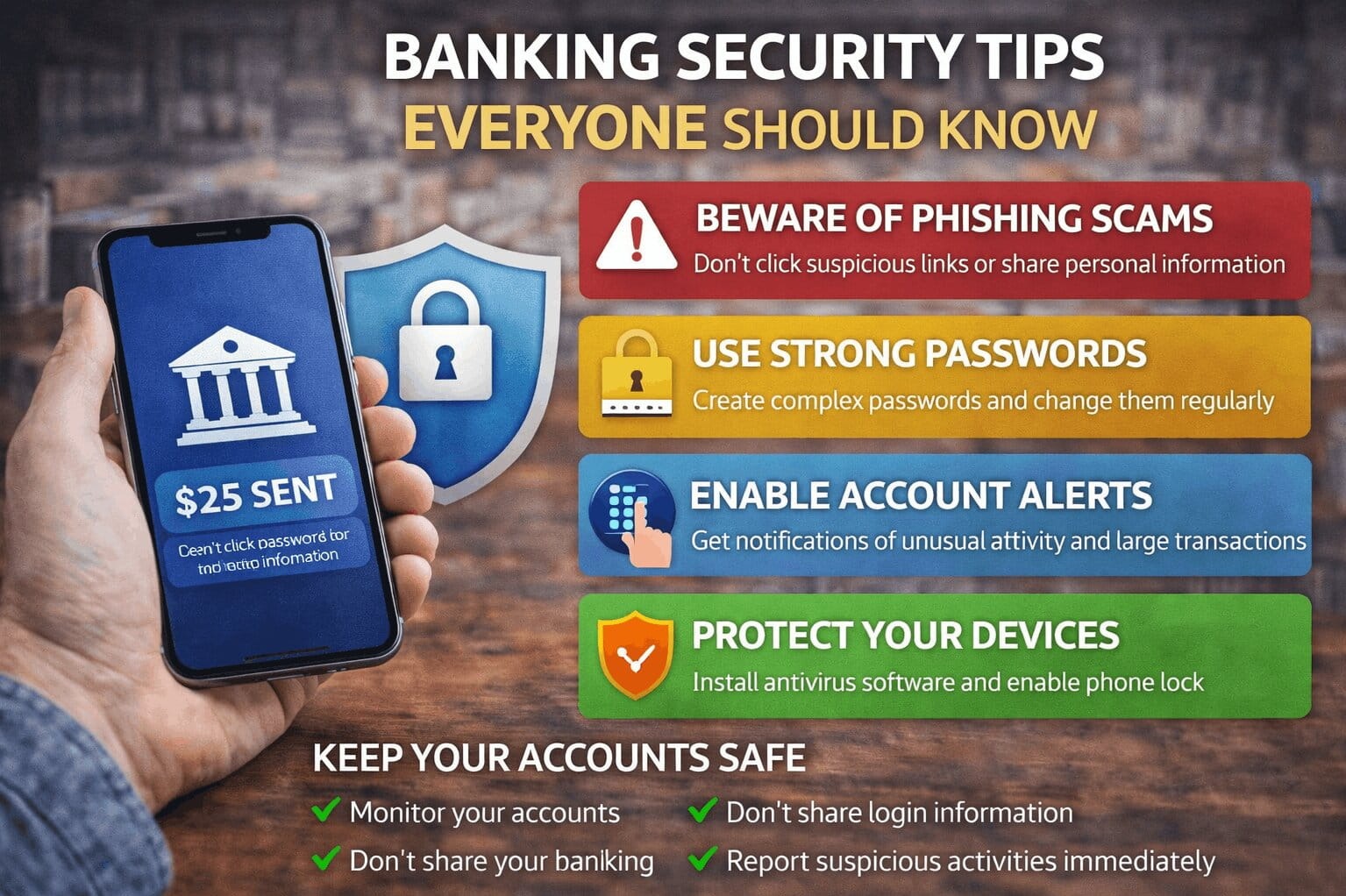
Managing your money online is incredibly convenient—but it also comes with risks. From phishing scams to account takeovers, banking fraud has become more sophisticated, and unfortunately, more common.
The good news? Most security issues can be avoided with a few smart habits.
This guide covers practical, real-world banking security tips that anyone can follow—whether you’re using a traditional bank, mobile app, or digital wallet.
Why Banking Security Matters
Your bank account is more than just a place to store money—it’s connected to your entire financial life.
If compromised, it can lead to:
- Unauthorized transactions
- Identity theft
- Loss of savings
- Long recovery processes
Here’s a quick snapshot:
| Risk | Impact |
|---|---|
| Fraud transactions | Immediate money loss |
| Identity theft | Long-term financial damage |
| Account takeover | Loss of access |
| Data breach | Personal info exposure |
Taking security seriously isn’t optional anymore—it’s essential.
Common Banking Threats You Should Know
Understanding risks is the first step to avoiding them.
1. Phishing Attacks
Fake emails or messages pretending to be from your bank.
2. Malware and Spyware
Malicious software that steals your data.
3. Public Wi-Fi Attacks
Hackers intercept your data on unsecured networks.
4. SIM Swap Scams
Fraudsters take control of your phone number.
5. Fake Payment Requests
Scammers trick you into sending money.
If you want a deeper breakdown of fraud tactics, read:
👉 How to Protect Your Bank Account from Fraud
Essential Banking Security Tips
Let’s focus on what actually works.
1. Use Strong and Unique Passwords
Avoid common passwords like:
- 123456
- password
- your name or birthdate
Instead:
- Use a mix of letters, numbers, symbols
- Create unique passwords for each account
2. Enable Two-Factor Authentication (2FA)
This adds a second layer of protection.
Even if someone gets your password, they can’t access your account without verification.
3. Monitor Your Accounts Regularly
Check your bank account frequently.
Better yet, use apps that help track activity:
👉 Mobile Banking Apps Explained
4. Set Up Real-Time Alerts
Enable notifications for:
- Transactions
- Logins
- Password changes
This helps you detect fraud instantly.
Safe Online Banking Habits
Good habits are your first line of defense.
Avoid Public Wi-Fi
Never log into your bank account on public networks.
Use Secure Websites
Always check for:
- HTTPS
- Lock icon in the browser
Log Out After Use
Especially on shared or public devices.
Keep Devices Updated
Updates fix security vulnerabilities.
Protecting Your Debit and Credit Cards
Cards are one of the most common fraud targets.
Key Tips:
- Never share your PIN
- Cover the keypad at ATMs
- Avoid saving card details on unknown websites
- Use credit cards for better protection
To understand how cards work:
👉 How Credit Cards Work in the USA
Using Digital Wallets Safely
Digital wallets are secure—but only if used correctly.
Best Practices:
- Enable biometric authentication
- Lock your device
- Avoid using unknown apps
- Remove old or unused cards
Learn more here:
👉 Digital Wallets Explained
Staying Safe with Payment Apps
P2P apps are convenient but risky if misused.
Safety Tips:
- Send money only to trusted people
- Double-check recipient details
- Avoid unknown payment requests
For more insights:
👉 Peer-to-Peer Payment Apps Explained
Recognizing and Avoiding Scams
Scammers rely on urgency and fear.
Common Warning Signs:
- “Your account will be locked!”
- “Act immediately!”
- “You’ve won a prize!”
What to Do:
- Pause before acting
- Verify directly with your bank
- Never click unknown links
Advanced Security Measures
If you want extra protection, go a step further.
1. Use a Password Manager
Helps generate and store strong passwords.
2. Freeze Your Credit
Prevents unauthorized accounts from being opened.
3. Use Virtual Cards
Temporary card numbers for safer online shopping.
4. Separate Financial Accounts
Use different accounts for spending and savings.
What to Do If You Notice Suspicious Activity
Act quickly—time matters.
Steps to Take:
- Contact your bank immediately
- Lock your account or card
- Change passwords
- Review recent transactions
- Report fraud
Fast action can limit damage significantly.
Common Mistakes to Avoid
Even small mistakes can lead to big problems.
- Reusing passwords
- Ignoring alerts
- Clicking suspicious links
- Sharing OTPs or PINs
- Not checking bank statements
Avoiding these can prevent most fraud cases.
Practical Daily Security Checklist
Keep it simple and consistent:
- Check your account activity
- Avoid suspicious links
- Use secure networks
- Lock your phone
- Update apps regularly
These habits take less than a minute but provide strong protection.
The Role of Modern Banking Technology
Banks are improving security with:
- Real-time fraud detection
- Instant alerts
- Biometric authentication
- AI-based monitoring
While technology helps, your habits still matter the most.
Final Thoughts
Banking security isn’t about fear—it’s about awareness and control.
You don’t need to be a tech expert to stay safe. Just follow a few smart habits, stay alert, and think before you act.
Most fraud happens because of simple mistakes. Avoid those, and you’re already ahead of the majority.
In the end, protecting your money comes down to one simple rule:
Stay cautious, stay informed, and never rush financial decisions.