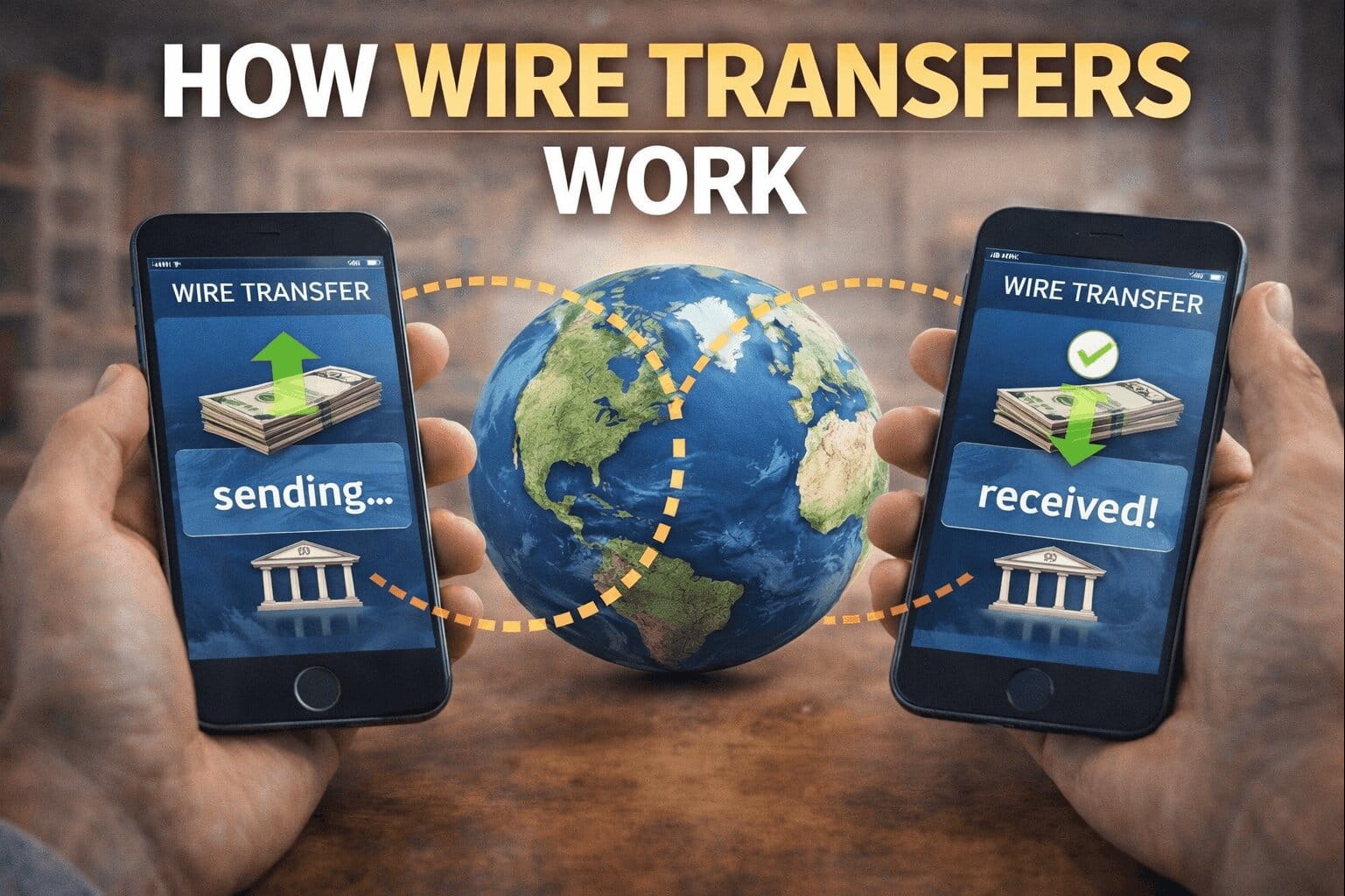
Wire transfers are one of the fastest ways to send money in the United States and internationally. Whether you’re paying a real estate closing cost, sending money to family, or transferring funds between banks, wire transfers are often used when speed and certainty matter.
But here’s the catch—they’re also one of the most expensive and irreversible ways to move money. So understanding how they work is essential before you hit “send.”
Let’s break it down in a simple, practical way.
What Is a Wire Transfer?
A wire transfer is an electronic method of sending money directly from one bank account to another.
Unlike checks or some digital payments, wire transfers don’t involve physical money. Instead, banks communicate with each other through secure networks to move funds.
Here’s a simple overview:
| Feature | Wire Transfer |
|---|---|
| Speed | Same day (domestic) |
| Cost | $15–$50 typically |
| Reversibility | Usually cannot be reversed |
| Best for | Large or urgent payments |
Think of it as a direct, bank-to-bank message saying:
“Move this exact amount of money from Account A to Account B right now.”
How Wire Transfers Work (Step-by-Step)
The process may sound technical, but it’s actually straightforward.
Step 1: Provide Transfer Details
You’ll need:
- Recipient’s full name
- Bank name
- Account number
- Routing number (U.S.) or SWIFT code (international)
Step 2: Bank Verifies the Request
Your bank checks:
- Your identity
- Available balance
- Transfer limits
Step 3: Funds Are Sent Through a Network
Banks use secure systems like:
- Fedwire (U.S.)
- SWIFT (international)
Step 4: Receiving Bank Accepts Funds
The recipient’s bank receives the message and credits their account.
Step 5: Transaction Is Completed
Funds are usually available the same day (domestic) or within 1–3 business days (international).
Real-World Example
Let’s say Sarah in California is buying a house and needs to send $25,000 for a down payment.
- She goes to her bank (or uses online banking)
- Initiates a wire transfer to the escrow company
- Pays a $30 fee
- The money arrives the same day
Why not use another method? Because:
- The amount is large
- The transaction is time-sensitive
- The recipient requires guaranteed funds
Wire transfers are often used in high-stakes situations like this.
Types of Wire Transfers
There are two main types:
1. Domestic Wire Transfers
- Sent within the United States
- Typically processed the same day
- Use routing numbers
2. International Wire Transfers
- Sent across countries
- Use SWIFT/BIC codes
- May involve intermediary banks
- Can take 1–3 business days
If you frequently send money abroad, you might also want to explore alternatives like apps discussed here: https://statush.com/credit-cards-banking/how-to-send-money-internationally
Wire Transfer Fees Explained
Wire transfers aren’t cheap, and fees vary depending on the bank and transfer type.
| Type | Typical Fee |
|---|---|
| Domestic outgoing | $20–$35 |
| Domestic incoming | $10–$20 |
| International outgoing | $35–$50 |
| International incoming | $15–$25 |
Some online banks offer lower fees—or even free incoming wires.
If you’re trying to reduce costs across your banking activity, this guide can help: https://statush.com/credit-cards-banking/how-to-avoid-bank-fees
Wire Transfer vs ACH Transfer
People often confuse wire transfers with ACH transfers, but they’re quite different.
| Feature | Wire Transfer | ACH Transfer |
|---|---|---|
| Speed | Same day | 1–3 days |
| Cost | Expensive | Usually free or low-cost |
| Reversibility | Hard to reverse | Easier to correct |
| Use case | Urgent, large payments | Everyday transactions |
For a deeper breakdown of ACH payments, check this:
https://statush.com/credit-cards-banking/ach-transfers-explained
Advantages of Wire Transfers
1. Speed
Domestic wires are often completed within hours.
2. Reliability
Funds are guaranteed once sent—no bouncing like checks.
3. Ideal for Large Payments
Perfect for real estate, business deals, or emergencies.
4. Secure Bank-to-Bank System
Uses encrypted financial networks.
Disadvantages of Wire Transfers
1. High Fees
One of the most expensive ways to send money.
2. Irreversible
Once sent, it’s very difficult to cancel.
3. Risk of Fraud
Scammers often target wire transfers because they can’t be undone.
4. Requires Accurate Details
Even a small mistake can send money to the wrong account.
Common Wire Transfer Scams
Wire fraud is a serious issue in the U.S., especially in real estate and online transactions.
Example Scam:
You receive an email that looks like it’s from your real estate agent with updated wiring instructions.
You send $10,000…
…but the email was fake.
The money is gone.
How to Protect Yourself:
- Always verify details via phone (not email)
- Double-check account numbers
- Never trust last-minute changes
- Use secure banking channels
For more safety tips, visit:
https://statush.com/credit-cards-banking/how-to-protect-your-bank-account-from-fraud
When Should You Use a Wire Transfer?
Wire transfers are best when:
- You need to send money quickly
- The amount is large
- The recipient requires guaranteed funds
- Timing is critical
Common Use Cases:
- Real estate transactions
- Business payments
- Emergency transfers
- International payments
When You Should Avoid Wire Transfers
In many everyday situations, wire transfers are overkill.
Avoid using them when:
- You’re sending small amounts
- Time isn’t urgent
- Lower-cost options are available
Better alternatives include:
- ACH transfers
- Peer-to-peer apps
- Digital wallets
Learn more about modern payment options here:
https://statush.com/credit-cards-banking/peer-to-peer-payment-apps-explained
Practical Tips for Using Wire Transfers
Let’s keep it real and useful.
- Confirm recipient details twice (or even three times)
- Send a small test transfer if possible
- Be aware of cutoff times (usually early afternoon)
- Ask your bank about daily limits
- Keep records of every transaction
One simple rule:
If you wouldn’t hand someone cash in person, don’t wire them money.
Final Thoughts
Wire transfers are powerful, fast, and reliable—but they come with costs and risks.
They’re not designed for everyday use. Instead, they’re best reserved for important, time-sensitive transactions where speed and certainty matter more than cost.
For most daily payments, cheaper and more flexible options exist. But when you truly need money to move now, few tools are as effective as a wire transfer.
Just remember: once it’s sent, there’s no undo button—so always double-check before you confirm.