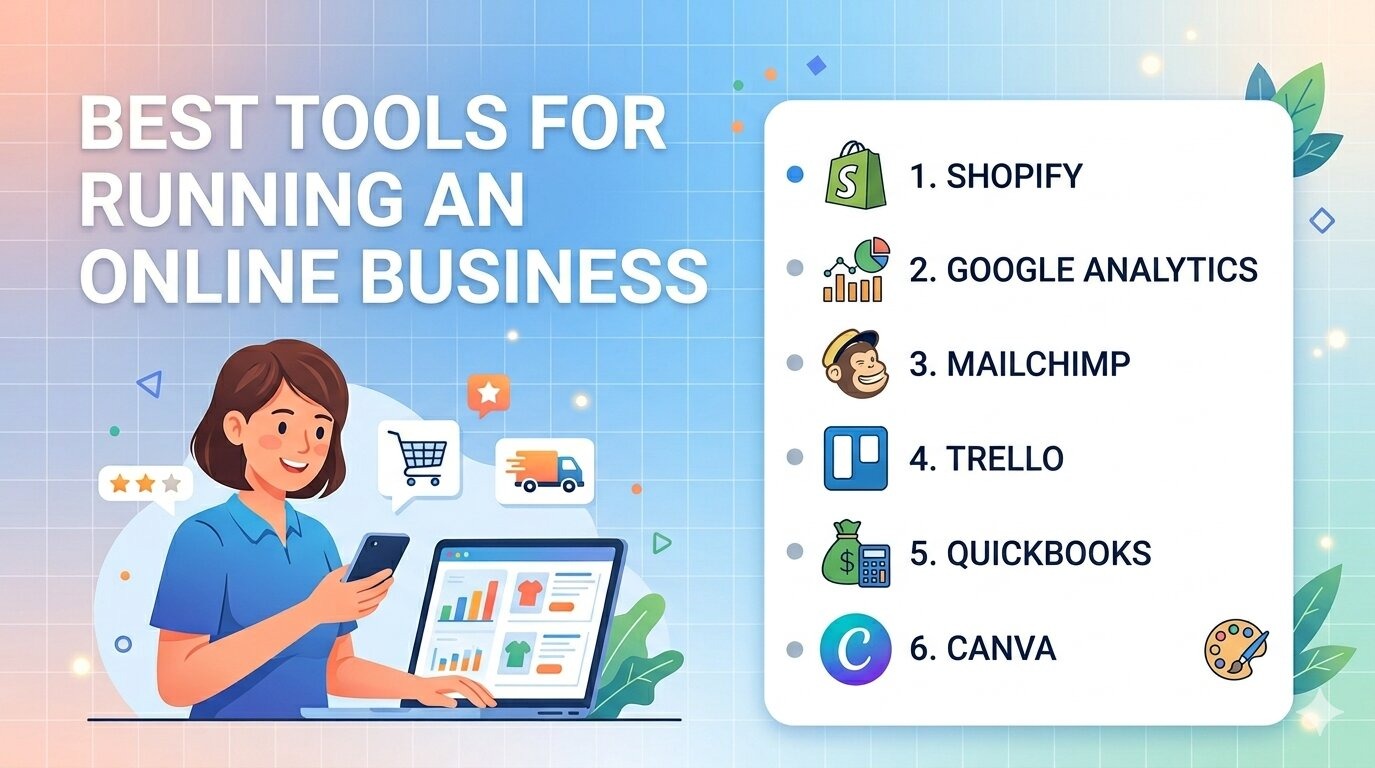
E-commerce has transformed how businesses operate in the U.S. From small home-based brands to large online stores, selling products online is now one of the most accessible ways to build a scalable business.
But here’s the reality—while starting an e-commerce business is easy, building a profitable and sustainable one requires strategy.
This guide breaks everything down in a simple, practical way so you can start and grow with clarity.
What is an E-commerce Business?
An e-commerce business sells products online through platforms like websites, marketplaces, or apps.
Common types:
- Physical products (clothing, electronics, etc.)
- Digital products (ebooks, courses)
- Subscription-based products
Real insight
E-commerce success isn’t about having products—it’s about having the right product + system + marketing.
If you’re still at the starting stage, read:
How to Start an Online Business in the USA – https://statush.com/business/how-to-start-an-online-business-in-the-usa
Step 1: Choose the Right Product
Your product is the foundation of your business.
Good product criteria:
- Solves a clear problem
- Has demand
- Reasonable competition
- Good profit margins
Practical tip
Avoid choosing products only based on trends—focus on sustainability.
Step 2: Validate Your Product Idea
Before investing heavily, test your idea.
How to validate:
- Check competitors
- Test ads with small budgets
- Gather feedback
Learn more:
How to Validate a Business Idea Before Launch – https://statush.com/business/how-to-validate-a-business-idea-before-launch
Step 3: Choose Your Business Model
There are multiple e-commerce models:
Options:
- Dropshipping
- Private label
- Wholesale
- Print-on-demand
Insight
Each model has different costs, control, and scalability.
Step 4: Set Up Your Online Store
Your store is your digital storefront.
Essentials:
- Domain name
- E-commerce platform (Shopify, WooCommerce)
- Product pages
- Payment gateway
Practical tip
Focus on simplicity and user experience.
Step 5: Handle Legal and Financial Setup
Even online businesses must follow U.S. regulations.
Do this:
- Register your business
- Understand sales tax
- Open a business bank account
Guides:
How to Register a Business Name in the USA – https://statush.com/business/how-to-register-a-business-name-in-the-usa
How to Open a Business Bank Account in the USA – https://statush.com/business/how-to-open-a-business-bank-account-in-the-usa
Step 6: Build a Customer Acquisition System
You need traffic to make sales.
Main channels:
- Social media marketing
- Paid ads (Facebook, Google)
- SEO
- Influencer marketing
Practical tip
Start with one channel and master it.
For deeper strategies:
Customer Acquisition Strategies for Small Businesses – https://statush.com/business/customer-acquisition-strategies-for-small-businesses
Step 7: Optimize Your Product Pages
Your product page decides whether visitors buy or leave.
Include:
- High-quality images
- Clear descriptions
- Pricing and offers
- Reviews and testimonials
Real insight
Small improvements in product pages can significantly increase conversions.
Step 8: Manage Inventory and Fulfillment
Efficient operations are key to success.
Focus on:
- Reliable suppliers
- Fast shipping
- Inventory tracking
Practical tip
Poor fulfillment can damage your brand quickly.
Step 9: Focus on Customer Experience
Customer experience drives repeat business.
Improve by:
- Fast support
- Easy returns
- Clear communication
Learn more:
How to Retain Customers and Increase Lifetime Value – https://statush.com/business/how-to-retain-customers-and-increase-lifetime-value
Step 10: Scale with Systems
Once your business works, scale it.
Focus on:
- Automation
- SOPs
- Marketing optimization
- Team building
Guide:
How to Scale a Startup Step-by-Step – https://statush.com/business/how-to-scale-a-startup-step-by-step
E-commerce Setup Table
| Step | Importance Level | Difficulty | Best Practice |
|---|---|---|---|
| Product selection | Very High | Medium | Focus on demand |
| Validation | Very High | Medium | Test before investing |
| Store setup | High | Medium | Keep it simple |
| Marketing | Very High | Medium | Focus on one channel |
| Fulfillment | High | Medium | Ensure reliability |
| Customer experience | Very High | Medium | Build trust |
| Scaling | Very High | Medium | Use systems |
Common E-commerce Mistakes
Let’s be honest—many beginners struggle due to avoidable mistakes.
Avoid:
- Choosing poor products
- Skipping validation
- Weak product pages
- Poor customer service
- Scaling too early
Connecting E-commerce with Growth
E-commerce success depends on systems, marketing, and operations.
To build a scalable business:
How to Build a Scalable Business Model – https://statush.com/business/how-to-build-a-scalable-business-model
To increase revenue:
How to Increase Business Revenue – https://statush.com/business/how-to-increase-business-revenue
To manage finances:
How to Manage Business Finances Effectively – https://statush.com/business/how-to-manage-business-finances-effectively
Final Thoughts
E-commerce is one of the best ways to build a scalable business—but success requires strategy, consistency, and execution.
Focus on:
- The right product
- Strong marketing
- Excellent customer experience
Start simple, improve continuously, and scale what works.
Because in the end, successful e-commerce businesses aren’t built overnight—they’re built through consistent optimization and smart decisions.