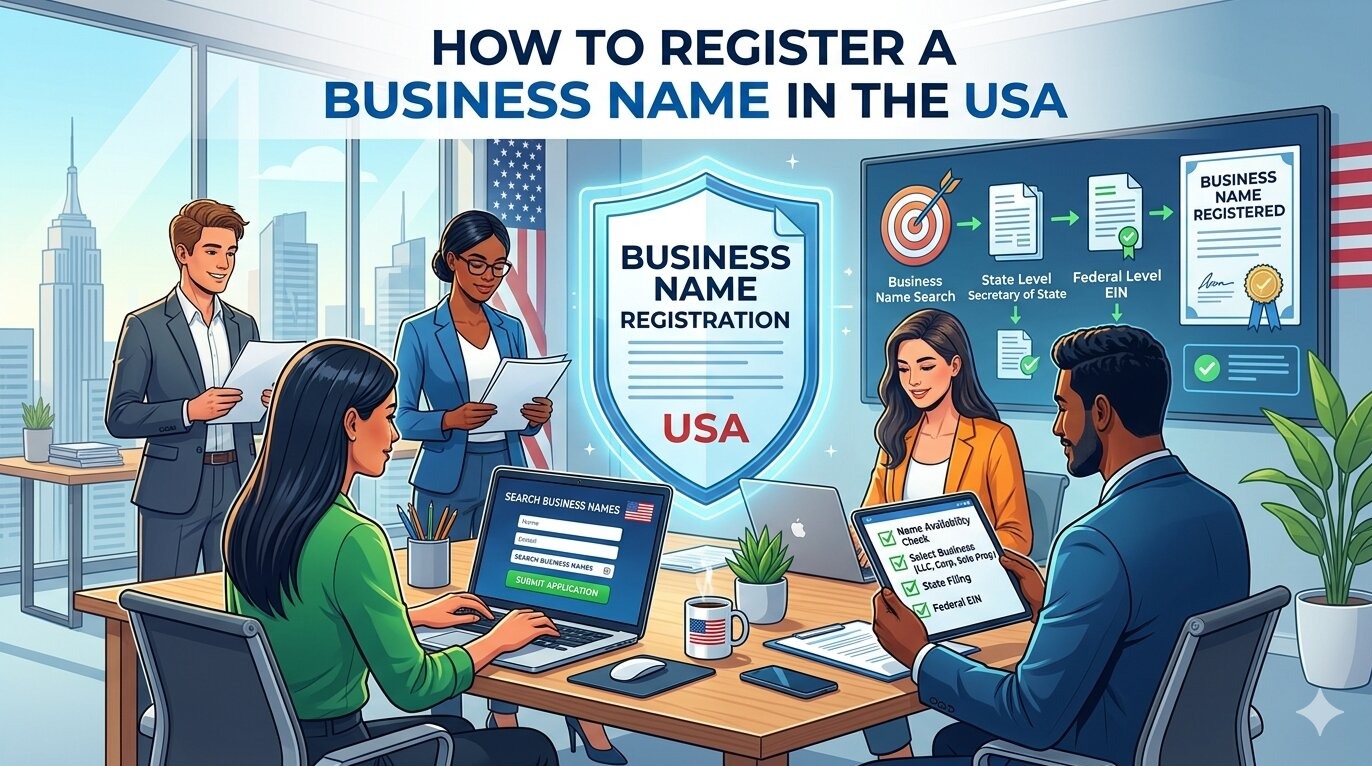
Choosing a business name is exciting—but registering it properly is what makes it official.
Many beginners either skip this step or misunderstand it, which can lead to legal issues later. The process itself isn’t complicated, but it does require clarity about what exactly you’re registering and why.
Let’s walk through it step by step in a practical, easy-to-understand way.
Why Registering Your Business Name Matters
Your business name isn’t just a label—it’s your identity in the market.
Registering your name helps you:
- Protect your brand legally
- Build credibility with customers
- Open a business bank account
- Avoid conflicts with other businesses
Real-world example:
A small online seller started using a name without checking availability. Later, they had to rebrand completely after receiving a legal notice from an existing business. That cost time, money, and customer trust.
Understand the Types of Business Names
Before registering, it’s important to understand what kind of name you’re dealing with.
Common types:
| Type | Meaning | Example |
|---|---|---|
| Legal Name | Official registered name | John Smith LLC |
| DBA (Doing Business As) | Trade name | “Fresh Bites” |
| Trademark | Brand protection | Nike |
Each serves a different purpose.
Simple explanation:
- Your legal name is what the government recognizes
- A DBA is what customers see
- A trademark protects your brand nationally
Step 1: Choose a Unique Business Name
Your name should be:
- Easy to remember
- Simple to spell
- Relevant to your business
- Unique in your state
Quick checklist:
- Avoid complex words
- Keep it short
- Think long-term (don’t limit future growth)
Tip:
Try saying your name out loud—if it’s hard to pronounce, it may be hard to remember.
Step 2: Check Name Availability
Before registering anything, you need to confirm that your name is available.
Where to check:
- State business registry
- Domain name availability
- Social media handles
This step is critical—skipping it can lead to conflicts later.
Step 3: Register Your Business Name
The process depends on your business structure.
For LLCs and Corporations:
- Register the name when forming your business with the state
For Sole Proprietors:
- File a DBA (Doing Business As) if using a different name
Simple breakdown:
| Business Type | What You Need to Do |
|---|---|
| LLC | Register name with state |
| Corporation | Register name with state |
| Sole Proprietor | File DBA (if needed) |
Step 4: Consider Trademark Protection
Registering your name at the state level doesn’t fully protect it nationwide.
If you plan to grow your business, consider applying for a trademark.
When to consider a trademark:
- You’re building a brand
- You plan to operate in multiple states
- You want strong legal protection
Honest opinion:
Not every small business needs a trademark immediately—but it becomes important as you grow.
Step 5: Secure Your Online Presence
Once your name is finalized, secure your digital assets.
Important steps:
- Buy your domain name (.com if possible)
- Reserve social media handles
- Create basic branding
Example:
A startup secured its domain and social handles early, preventing competitors from taking similar names.
Step 6: Align Your Name With Your Business Plan
Your business name should match your long-term goals.
Ask yourself:
- Will this name still make sense if I expand?
- Does it reflect my brand identity?
- Is it flexible enough for future products/services?
If you’re still shaping your business direction, read
How to Write a Business Plan That Works
https://statush.com/business/how-to-write-a-business-plan-that-works
Step 7: Start Your Business After Registration
Once your name is registered, you’re ready to move forward.
Next steps include:
- Setting up finances
- Getting licenses
- Launching your product or service
You can follow
How to Start a Small Business in the USA (Step-by-Step)
https://statush.com/business/how-to-start-a-small-business-in-the-usa-step-by-step
And if you’re still exploring ideas, check
Best Profitable Small Business Ideas in the USA
https://statush.com/business/best-profitable-small-business-ideas-in-the-usa
Common Mistakes to Avoid
Let’s keep it practical—avoid these common errors:
- Choosing a name without checking availability
- Picking names that are too complex
- Ignoring trademark conflicts
- Delaying domain purchase
- Changing names frequently
A strong name builds consistency and trust over time.
Quick Registration Flow (Simple Overview)
Here’s a quick way to understand the process:
| Step | Action | Goal |
|---|---|---|
| 1 | Choose name | Brand identity |
| 2 | Check availability | Avoid conflicts |
| 3 | Register name | Legal recognition |
| 4 | Trademark (optional) | Protection |
| 5 | Secure online assets | Brand presence |
Final Thoughts
Registering your business name is one of the first real steps in turning your idea into something official.
It doesn’t require complex knowledge—just careful attention to:
- Uniqueness
- Legal requirements
- Long-term vision
Take your time to choose the right name, register it properly, and build your brand on a strong foundation.
Because in business, your name is more than just a name—it’s your reputation.