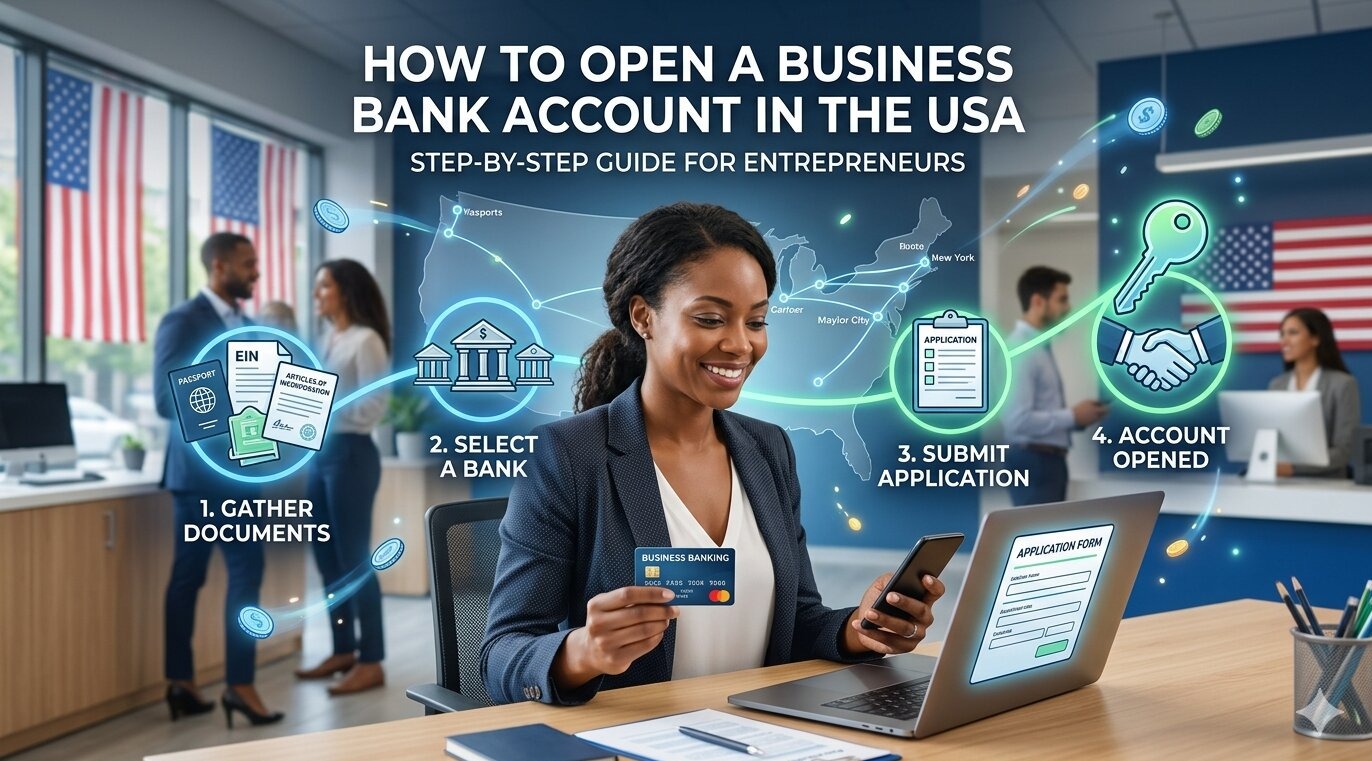
Opening a business bank account might not feel as exciting as launching your product or landing your first customer—but it’s one of those foundational steps that quietly supports everything else.
In simple terms, this is where your business becomes financially “real.” It separates your personal money from your business operations, builds credibility, and makes accounting far easier down the road.
If you’re serious about running a business properly (and not just experimenting), this step is non-negotiable.
Why You Need a Business Bank Account
Some new entrepreneurs try to delay this step. They use personal accounts in the beginning, thinking they’ll “fix it later.” That usually leads to confusion—and sometimes legal trouble.
Here’s why a dedicated business account matters:
- Keeps personal and business finances separate
- Makes bookkeeping and taxes easier
- Builds trust with clients and vendors
- Helps you qualify for loans and funding
- Protects your personal assets (especially for LLCs and corporations)
If you’re still setting up your business structure, it’s worth reading:
How to Start a Small Business in the USA (Step-by-Step)
https://statush.com/business/how-to-start-a-small-business-in-the-usa-step-by-step
What You Need Before Opening an Account
You can’t just walk into a bank and open an account without preparation. Banks require specific documents to verify your business.
Here’s what you’ll typically need:
| Requirement | What It Means | Example |
|---|---|---|
| Business Registration | Proof your business exists | LLC or corporation documents |
| EIN (Tax ID) | Business tax identification | Issued by IRS |
| Owner ID | Personal identification | Passport or driver’s license |
| Business Address | Official location | Office or home address |
| Operating Agreement | Internal structure (for LLCs) | Optional but recommended |
The exact requirements may vary slightly depending on the bank, but this list covers the essentials.
If you haven’t registered your business yet, start here:
How to Register a Business Name in the USA
https://statush.com/business/how-to-register-a-business-name-in-the-usa
Choosing the Right Bank (Don’t Rush This)
Not all business bank accounts are the same. Choosing the wrong one can cost you time, money, and unnecessary headaches.
Here’s what to compare:
- Monthly fees
- Minimum balance requirements
- Transaction limits
- Online banking features
- Customer support
- Integration with accounting tools
Types of Banks to Consider:
| Bank Type | Best For | Example Use Case |
|---|---|---|
| Traditional Banks | Stability & full services | Established businesses |
| Online Banks | Low fees & convenience | Freelancers, startups |
| Credit Unions | Lower costs | Small local businesses |
A freelancer might prefer a no-fee online account, while a retail business may benefit from a bank with physical branches.
Step-by-Step: Opening Your Business Bank Account
Let’s make this simple and actionable.
Step 1: Choose Your Bank
Do your research. Compare at least 2–3 options before deciding.
Step 2: Gather Your Documents
Make sure everything is ready:
- Registration papers
- EIN
- ID proof
Missing documents are one of the most common reasons for delays.
Step 3: Apply (Online or In-Person)
Many banks now allow full online applications, but some still require a branch visit.
Step 4: Deposit Initial Funds
Some banks require a minimum opening deposit.
Step 5: Activate and Set Up
Once approved:
- Set up online banking
- Order debit cards
- Link accounting software
Real-World Example
Let’s say you’ve started a small digital marketing agency.
Without a business account:
- Client payments go into your personal account
- Expenses mix with personal spending
- Tax calculations become messy
With a business account:
- All income is tracked clearly
- Expenses are categorized properly
- You look more professional (clients trust you more)
It’s a small change that makes a big difference.
Common Mistakes to Avoid
1. Choosing Based Only on “Big Name” Banks
Big banks aren’t always the best fit. Sometimes smaller or online banks offer better terms.
2. Ignoring Fees
Monthly fees, transaction limits, and hidden charges can add up quickly.
3. Mixing Personal and Business Money
Even after opening an account, some people still mix funds. Avoid this—it defeats the whole purpose.
4. Not Planning for Growth
Choose a bank that can grow with your business. Switching later can be inconvenient.
How This Connects to Other Business Steps
Your business bank account isn’t just a standalone setup—it connects to everything else.
For example:
- You’ll need it to apply for loans
- It’s required for payment gateways
- Investors often ask for financial records
If you’re planning funding, explore:
How to Get a Small Business Loan in the USA
https://statush.com/business/how-to-get-a-small-business-loan-in-the-usa
And if you’re thinking long-term growth:
How to Raise Capital for Your Startup
https://statush.com/business/how-to-raise-capital-for-your-startup
Practical Tips (That Actually Help)
Here are a few insights that can save you time and frustration:
- Open your account early – Don’t wait until your first payment
- Use a separate savings account – Set aside money for taxes
- Enable alerts – Stay on top of transactions
- Keep clean records – Makes audits and taxes easier
- Ask about integrations – Tools like QuickBooks can simplify accounting
When Should You Open It?
Ideally, right after registering your business.
Not:
- After your first customer
- After your first payment
- After things “get serious”
Because by then, things are already messy.
Final Thoughts
Opening a business bank account is one of those steps that feels small but has a huge impact.
It brings structure, clarity, and professionalism to your business from day one. More importantly, it sets you up for smoother operations as you grow.
If you treat your business like a real business from the start, everything becomes easier—finances, taxes, funding, and even decision-making.
Take the time to choose the right bank, set it up properly, and build good habits early. It’s one of the simplest ways to avoid complications later on.