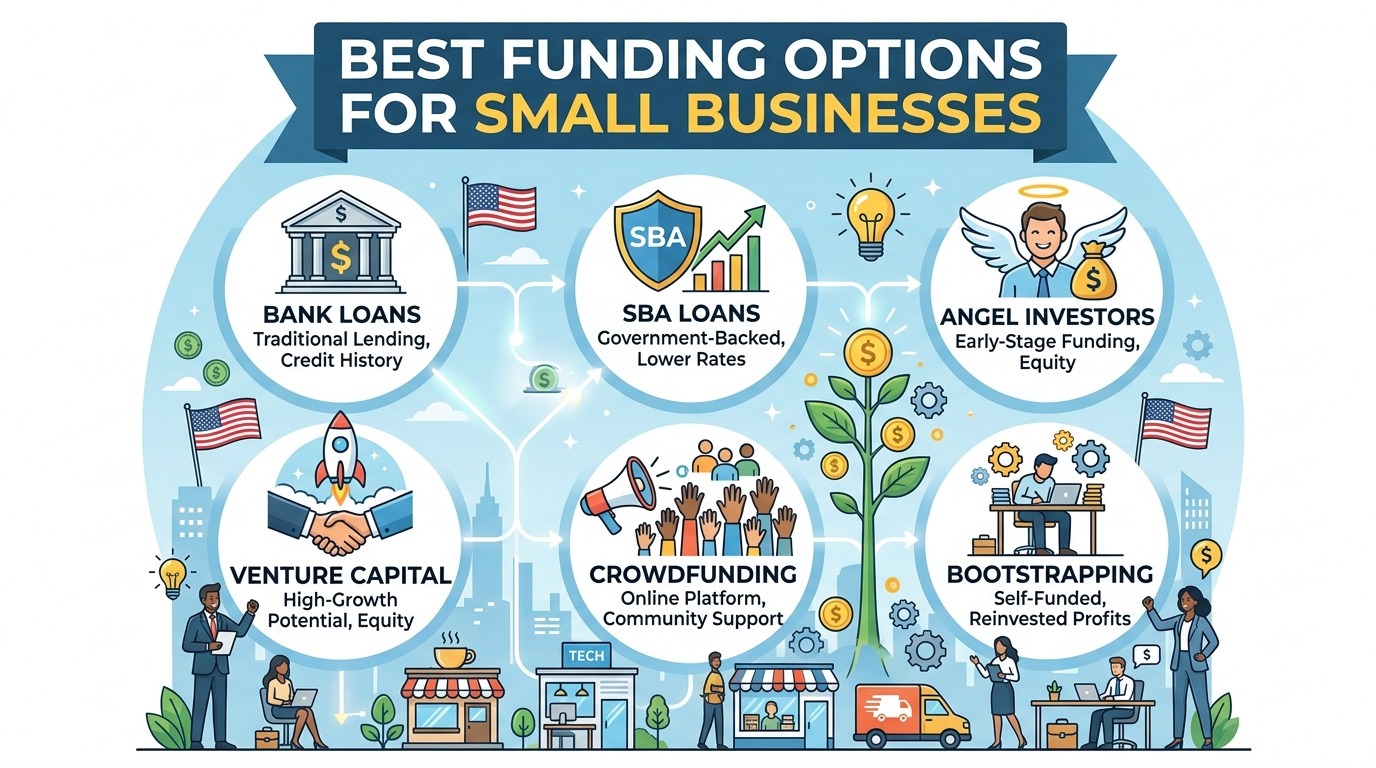
Starting or growing a small business almost always comes down to one key question: where is the money going to come from? Whether you're launching your first venture or trying to scale an existing one, choosing the right funding option can make a huge difference—not just financially, but strategically too.
The truth is, there’s no one-size-fits-all solution. Some funding options give you full control, while others bring in partners. Some are quick but expensive, while others are slow but affordable. The right choice depends on your goals, risk tolerance, and stage of business.
Understanding Why Funding Matters
Before diving into options, it’s worth asking: what exactly do you need funding for?
Most small businesses need capital for:
- Initial setup (equipment, licenses, inventory)
- Daily operations (rent, salaries, marketing)
- Growth (expansion, hiring, new products)
If you haven’t already clarified your financial needs, it’s a good idea to first create a proper plan. You can follow a structured approach in this guide:
How to Write a Business Plan That Works – https://statush.com/business/how-to-write-a-business-plan-that-works
A clear plan helps you avoid over-borrowing—or worse, underfunding your business.
1. Bootstrapping (Self-Funding)
Bootstrapping simply means using your own money to fund your business. This could be savings, side income, or reinvesting profits.
Why it works
- Full control—no investors, no pressure
- No debt or interest
- Forces disciplined spending
Where it gets tricky
- Limited capital can slow growth
- Personal financial risk is high
Real-world example
Many successful businesses started small—think freelancers, local service providers, or e-commerce stores that began from a bedroom setup.
If you want to go deeper into this approach:
How to Bootstrap a Startup Successfully – https://statush.com/business/how-to-bootstrap-a-startup-successfully
2. Friends and Family Funding
This is often the first external funding source for new entrepreneurs.
Pros
- Easy access
- Flexible repayment terms
- Lower pressure compared to banks
Cons
- Can strain personal relationships
- Lack of formal structure can create confusion
Practical tip
Always treat it like a business deal:
- Put everything in writing
- Define repayment or equity clearly
3. Small Business Loans
Loans are one of the most common funding methods, especially for businesses with a clear revenue model.
Types of loans
- Bank loans
- Government-backed loans
- Microloans
Advantages
- You keep full ownership
- Predictable repayment schedule
Drawbacks
- Interest costs
- Requires credit history and documentation
If you're considering this route:
How to Get a Small Business Loan in the USA – https://statush.com/business/how-to-get-a-small-business-loan-in-the-usa
4. SBA Loans (Government-Backed)
SBA (Small Business Administration) loans are popular in the U.S. because they offer better terms than traditional loans.
Why they’re attractive
- Lower interest rates
- Longer repayment periods
- Government backing reduces lender risk
The catch
- Approval process can be slow
- Requires solid documentation and business plan
Learn more here:
SBA Loans Explained for Beginners – https://statush.com/business/sba-loans-explained-for-beginners
5. Angel Investors
Angel investors are individuals who invest their personal money into startups in exchange for equity.
What they bring
- Capital
- Mentorship
- Industry connections
What you give up
- Partial ownership
- Some level of control
When it makes sense
- Early-stage startups with high growth potential
- Businesses that need guidance, not just money
For a deeper comparison:
Angel Investors vs Venture Capital Explained – https://statush.com/business/angel-investors-vs-venture-capital-explained
6. Venture Capital (VC)
Venture capital firms invest large amounts into high-growth startups.
Pros
- Big funding amounts
- Strategic support and scaling expertise
Cons
- High expectations for growth
- Loss of significant control
- Not suitable for small, local businesses
Honest take
VC funding is not for everyone. If your business isn’t aiming for rapid scaling, this option may create more pressure than value.
7. Business Grants
Grants are essentially “free money”—you don’t have to repay them.
Why they’re great
- No repayment
- No equity loss
Why they’re hard
- Highly competitive
- Strict eligibility criteria
Where to explore
Business Grants in the USA (How to Apply) – https://statush.com/business/business-grants-in-the-usa-how-to-apply
Practical tip
Apply to multiple grants instead of relying on just one.
8. Crowdfunding
Platforms like Kickstarter or Indiegogo allow you to raise money from the public.
Benefits
- No debt (in many cases)
- Validates your business idea
- Builds early customer base
Challenges
- Requires strong marketing
- Success is not guaranteed
Best for
- Product-based businesses
- Creative or innovative ideas
9. Revenue-Based Financing
This is a newer model where you repay funding as a percentage of your revenue.
Why it's interesting
- Payments adjust based on income
- No fixed EMI pressure
Downsides
- Can be expensive over time
- Not widely available everywhere
10. Funding Without Giving Equity
If you want to grow but keep ownership, this is worth exploring.
Options include:
- Loans
- Grants
- Revenue-based financing
You can explore strategies here:
How to Get Funding Without Giving Equity – https://statush.com/business/how-to-get-funding-without-giving-equity
Simple Comparison Table
| Funding Option | Ownership Loss | Risk Level | Speed | Best For |
|---|---|---|---|---|
| Bootstrapping | No | High | Fast | Beginners, small startups |
| Friends & Family | Maybe | Medium | Fast | Early-stage businesses |
| Bank Loans | No | Medium | Medium | Stable businesses |
| SBA Loans | No | Low | Slow | Structured, planned businesses |
| Angel Investors | Yes | Medium | Medium | Startups with growth potential |
| Venture Capital | Yes (high) | High | Medium | High-growth startups |
| Grants | No | Low | Slow | Eligible businesses |
| Crowdfunding | No | Medium | Medium | Product-based ideas |
| Revenue-Based Financing | No | Medium | Fast | Businesses with steady revenue |
Choosing the Right Option (Real Talk)
Here’s the honest part most guides don’t tell you:
- If you're just starting → bootstrap first
- If you have traction → consider loans or angels
- If you're scaling fast → look at investors
- If you hate giving control → avoid equity funding
Also, don’t jump into funding just because it’s available. Many businesses fail not due to lack of money—but because they took the wrong kind of money.
Final Thoughts
Funding is not just about getting cash—it’s about choosing the right financial partner or structure for your business journey.
Start simple. Stay realistic. And always align your funding choice with your long-term vision.
If you're still at the idea or early stage, you should first validate and structure your business properly:
How to Validate a Business Idea Before Launch – https://statush.com/business/how-to-validate-a-business-idea-before-launch
How to Build a Business from Scratch – https://statush.com/business/how-to-build-a-business-from-scratch
Because at the end of the day, the best funding strategy starts with a solid business foundation.