If there’s one type of funding every entrepreneur wishes for, it’s this: money you don’t have to repay.
That’s exactly what business grants offer.
But before you get too excited, let’s be clear—grants are not “free money” in the casual sense. They come with rules, competition, and expectations. Still, if you approach them strategically, they can be one of the most powerful funding options available.
Let’s break it down in a simple, practical way.
What Are Business Grants?
A business grant is funding provided by:
- Government agencies
- Private organizations
- Nonprofits
Unlike loans, you don’t repay grants. And unlike investors, you don’t give up equity.
However, you usually need to:
- Meet specific eligibility criteria
- Use the funds for a defined purpose
- Report how the money is used
Why Grants Are So Attractive
Grants offer a unique combination of benefits:
- No repayment required
- No ownership dilution
- Can improve credibility
- Supports early-stage businesses
But here’s the honest truth: they’re competitive and often slower to secure.
Types of Business Grants
Not all grants are the same. They’re usually targeted toward specific groups or industries.
Here’s a simple overview:
| Grant Type | Who It’s For | Example Use |
|---|---|---|
| Federal Grants | Large-scale projects | Research, innovation |
| State/Local Grants | Small businesses | Community development |
| Industry Grants | Specific sectors | Tech, agriculture |
| Minority/Women Grants | Underrepresented groups | Startup support |
| Innovation Grants | New ideas | Product development |
Understanding which category you fit into is the first step.
Where to Find Grants
Finding the right grant takes effort. They’re not always easy to spot.
Common sources include:
- Government websites
- Local business development centers
- Private foundations
- Corporate programs
Each source has its own requirements and deadlines.
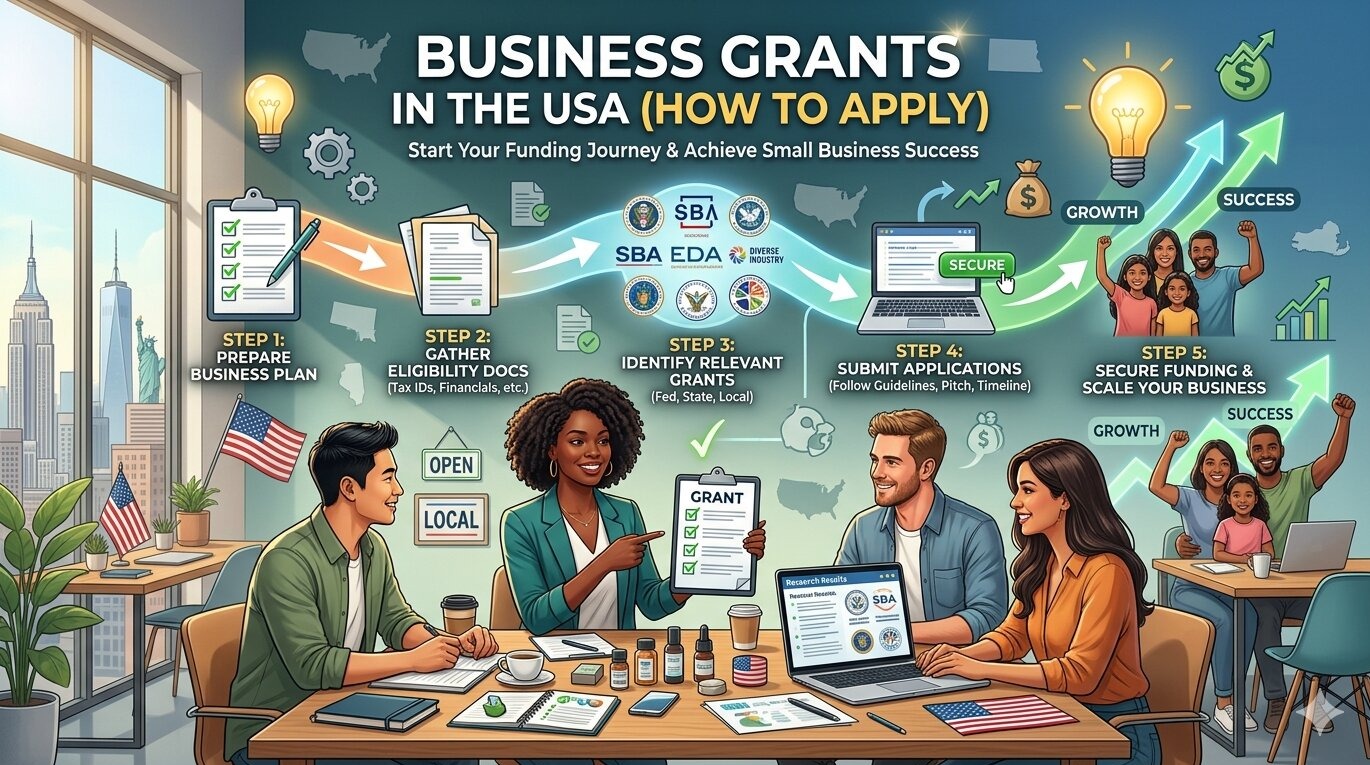
Step-by-Step: How to Apply for a Grant
Let’s simplify the process.
Step 1: Identify Relevant Grants
Focus only on grants that match your business type and eligibility.
Applying randomly wastes time.
Step 2: Understand Requirements
Carefully review:
- Eligibility criteria
- Funding purpose
- Deadlines
Missing details can disqualify your application.
Step 3: Prepare Your Documents
You’ll typically need:
- Business plan
- Financial statements
- Project proposal
- Registration documents
If your plan needs improvement, start here:
How to Write a Business Plan That Works
https://statush.com/business/how-to-write-a-business-plan-that-works
Step 4: Write a Strong Application
This is where most people fail.
Your application should clearly explain:
- What your business does
- Why you need funding
- How you’ll use the money
- Expected outcomes
Be clear, specific, and realistic.
Step 5: Submit and Follow Up
After submission:
- Track your application
- Be ready to provide additional information
Real-World Example
Imagine a small eco-friendly packaging startup.
They apply for a sustainability grant:
- Show environmental impact
- Present a clear business model
- Explain how funds will scale production
If approved, they receive funding without debt or equity loss—allowing them to grow faster.
Common Mistakes to Avoid
1. Applying Without Eligibility
Not meeting criteria leads to automatic rejection.
2. Writing Generic Applications
Each grant requires a tailored approach.
3. Ignoring Deadlines
Late submissions are not accepted.
4. Overestimating Chances
Grants are competitive—don’t rely on them as your only funding source.
How Grants Compare to Other Funding Options
| Feature | Grants | Loans | Investors |
|---|---|---|---|
| Repayment | No | Yes | No |
| Ownership Loss | No | No | Yes |
| Difficulty | High | Medium | High |
| Speed | Slow | Medium | Varies |
Grants are excellent—but not always the fastest or easiest option.
Practical Tips That Actually Help
- Apply early and often – Don’t rely on just one grant
- Focus on niche grants – Less competition
- Be specific – Clear proposals stand out
- Keep documents ready – Saves time
- Follow instructions exactly – Small mistakes matter
One honest insight: persistence matters more than perfection here.
How Grants Fit Into Your Funding Strategy
Grants are best used alongside other funding methods.
For example:
- Early stage → Bootstrapping + Grants
- Growth stage → Loans or investors
If you want a full overview of funding options, read:
How to Raise Capital for Your Startup
https://statush.com/business/how-to-raise-capital-for-your-startup
And if you want to avoid equity dilution:
How to Get Funding Without Giving Equity
https://statush.com/business/how-to-get-funding-without-giving-equity
Challenges You Should Expect
Let’s keep it real—grants are not easy.
You may face:
- High competition
- Long waiting periods
- Complex applications
- Strict reporting requirements
But if you succeed, the reward is worth it.
Final Thoughts
Business grants can be a game-changer—if you approach them with the right mindset.
They’re not quick wins or guaranteed outcomes. They require effort, patience, and attention to detail.
But for entrepreneurs who are willing to put in the work, grants offer something rare in business: funding without strings attached to ownership or repayment.
Use them wisely, combine them with other strategies, and treat them as part of your overall growth plan—not your only option.