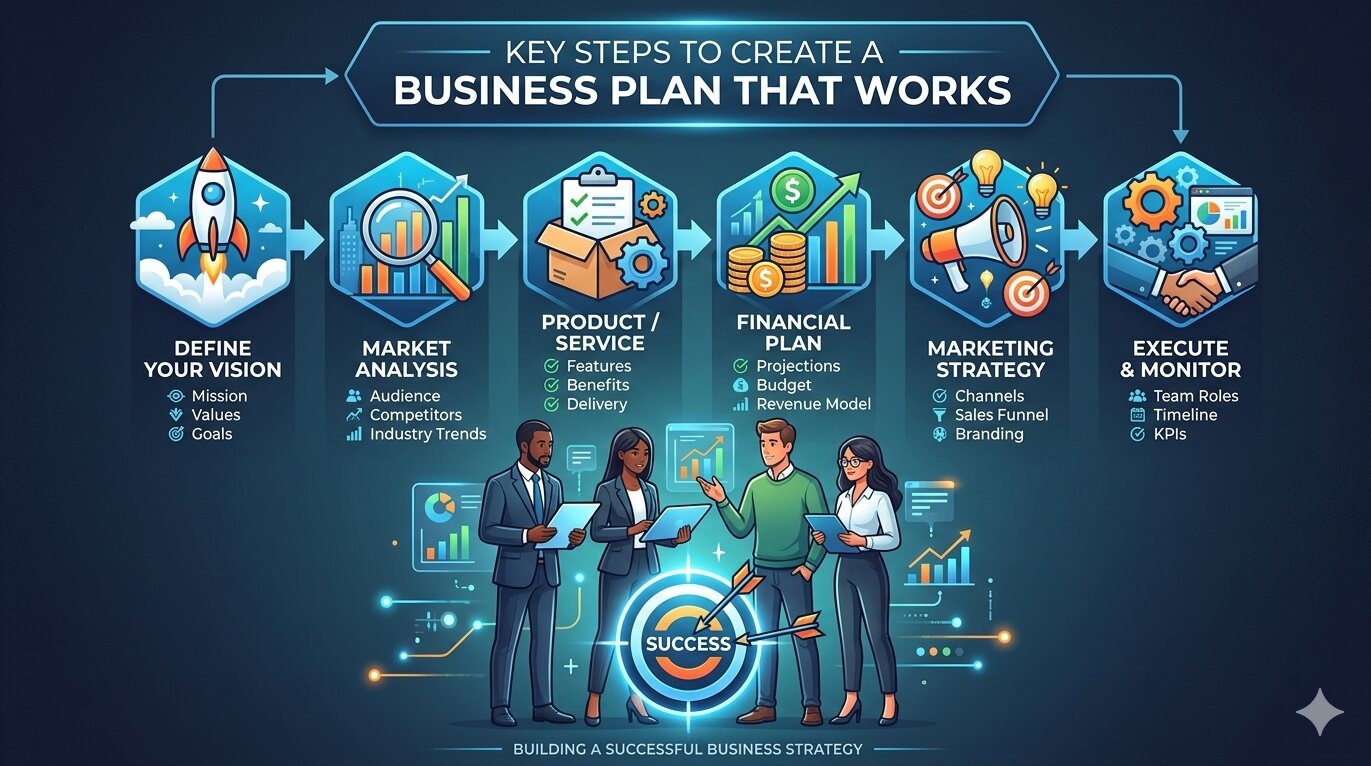
A business plan sounds like something complicated—and honestly, many people make it that way.
But in reality, a good business plan isn’t about impressing investors with long documents. It’s about clarity. It helps you understand what you’re building, how it will make money, and what steps you need to take.
Think of it less like a formal document and more like a roadmap you’ll actually use.
Why a Business Plan Still Matters
Some people skip writing a business plan, especially when starting small. That can work—but it often leads to confusion later.
A solid plan helps you:
- Stay focused on your goals
- Understand your costs and profits
- Make better decisions
- Avoid unnecessary risks
Real-world example:
A small online store owner didn’t plan pricing properly and ended up selling products at very low margins. After creating a simple plan, they adjusted pricing and became profitable.
Keep It Simple and Practical
You don’t need a 40-page document. A clear and simple plan is far more useful.
At its core, your business plan should answer:
- What are you selling?
- Who are you selling to?
- How will you make money?
- What will it cost you?
- How will you grow?
That’s it.
Step 1: Define Your Business Idea Clearly
Start with a simple explanation of your business.
Include:
- What your business does
- What problem it solves
- Why it’s different
Example:
Instead of saying “I run a fitness business,” say:
“I provide online fitness coaching for beginners who want simple, home-based workouts.”
Clarity here makes everything else easier.
If you’re still deciding your idea, explore
Best Profitable Small Business Ideas in the USA
https://statush.com/business/best-profitable-small-business-ideas-in-the-usa
Step 2: Understand Your Target Market
Your business isn’t for everyone—and that’s a good thing.
Define:
- Who your ideal customers are
- Their problems
- Their buying behavior
Simple customer breakdown:
| Factor | Example |
|---|---|
| Age | 25–40 |
| Profession | Working professionals |
| Problem | Lack of time for fitness |
| Goal | Stay healthy at home |
The clearer your audience, the easier your marketing becomes.
Step 3: Outline Your Products or Services
Describe what you’re offering in a simple way.
Include:
- Main product/service
- Pricing strategy
- Unique value
Tip:
Focus on benefits, not just features.
For example:
- Feature: “4-week training plan”
- Benefit: “Helps you lose weight without going to the gym”
Step 4: Plan How You’ll Make Money
This is one of the most important sections.
You need to clearly define:
- Pricing
- Revenue streams
- Expected income
Example revenue model:
| Source | Price | Monthly Sales | Total |
|---|---|---|---|
| Coaching plan | $100 | 20 clients | $2000 |
| Add-ons | $50 | 10 clients | $500 |
Honest opinion:
Many businesses fail not because of bad ideas—but because of weak pricing.
Step 5: Estimate Your Costs
Understanding your expenses helps you avoid surprises.
Common costs:
- Tools or software
- Marketing
- Inventory
- Rent (if applicable)
- Licenses
Simple cost breakdown:
| Expense | Monthly Cost |
|---|---|
| Software | $50 |
| Marketing | $200 |
| Miscellaneous | $100 |
Knowing your costs helps you calculate profit accurately.
Step 6: Define Your Marketing Strategy
A business without marketing is like a shop with no visitors.
You don’t need complex strategies—just start with what works.
Simple marketing channels:
- Social media
- Word of mouth
- Email marketing
- Local advertising
Example:
A local service business gained its first clients through community Facebook groups before running any paid ads.
Step 7: Validate Before Scaling
Before you go all in, test your assumptions.
Ask:
- Are people interested?
- Are they willing to pay?
- Is your pricing working?
If you haven’t validated yet, read
How to Validate a Business Idea Before Launch
https://statush.com/business/how-to-validate-a-business-idea-before-launch
Step 8: Turn Your Plan Into Action
A business plan is only useful if you act on it.
Break your plan into small steps:
- Week 1: Finalize idea
- Week 2: Validate demand
- Week 3: Set up basics
- Week 4: Start selling
Tip:
Execution matters more than planning.
Business Plan Structure (Quick Overview)
Here’s a simple structure you can follow:
| Section | Purpose |
|---|---|
| Idea | What you’re building |
| Market | Who you’re targeting |
| Offer | What you’re selling |
| Revenue | How you’ll earn |
| Costs | What you’ll spend |
| Marketing | How you’ll grow |
Keep it short, clear, and practical.
Common Mistakes to Avoid
Let’s keep this real—avoid these:
- Overcomplicating the plan
- Guessing numbers without research
- Ignoring costs
- Not updating the plan
- Writing but not executing
A plan should evolve as your business grows.
Connecting Your Plan to Real Execution
Once your plan is ready, the next step is actually starting your business.
You can follow
How to Start a Small Business in the USA (Step-by-Step)
https://statush.com/business/how-to-start-a-small-business-in-the-usa-step-by-step
And don’t forget—your business name and registration matter too. See
How to Register a Business Name in the USA
https://statush.com/business/how-to-register-a-business-name-in-the-usa
Final Thoughts
A business plan doesn’t need to be perfect—it just needs to be useful.
Focus on:
- Clarity over complexity
- Real numbers over guesses
- Action over theory
Start simple, adjust as you learn, and keep moving forward.
Because at the end of the day, a working business beats a perfect plan sitting on paper.