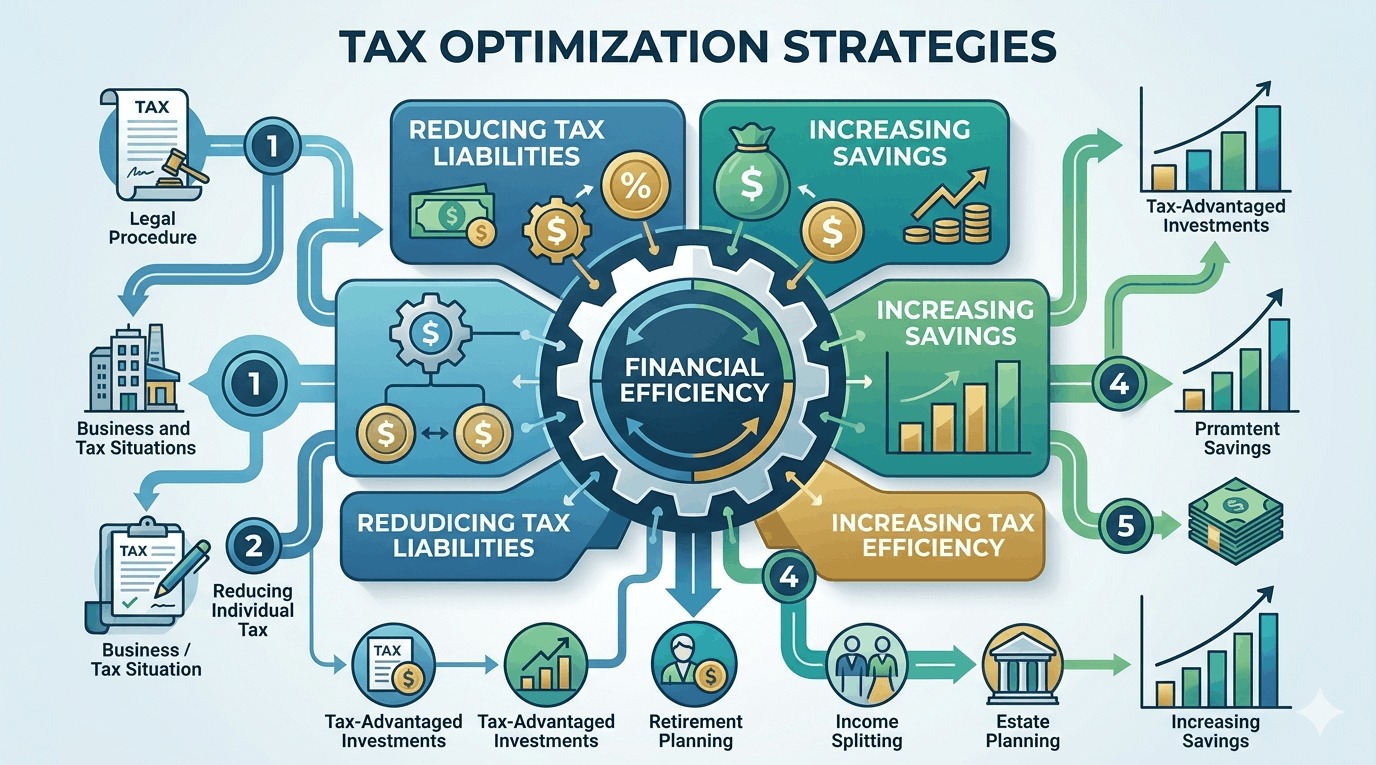
Most people focus on how much they earn or invest—but often overlook how much they lose to taxes. Tax optimization is about legally minimizing your tax burden so you can keep more of your income and grow your wealth faster.
It’s not about avoiding taxes. It’s about understanding the rules set by the Internal Revenue Service and using them intelligently.
Let’s break down the most effective tax optimization strategies in a clear, practical way.
What Is Tax Optimization?
Tax optimization means structuring your income, investments, and financial decisions in a way that reduces your overall tax liability.
This includes:
- Using deductions and credits
- Timing income and expenses
- Choosing the right investment accounts
- Planning for the long term
To understand how taxes apply to your income:
What Is Taxable Income – https://statush.com/finance-statistics/what-is-taxable-income
Why Tax Optimization Matters
Even small tax savings can make a big difference over time.
Real-World Example
If you save $2,000 in taxes each year and invest it:
- Over 20 years, that amount can grow significantly
This is the power of combining tax savings with compounding.
Core Tax Optimization Strategies
Let’s explore the most effective strategies, with clear explanations instead of just short bullet points.
1. Maximize Tax-Advantaged Accounts
One of the simplest and most powerful strategies is using tax-advantaged accounts.
Accounts like:
- 401(k)
- IRA
- Roth IRA
offer either:
- Tax deferral (pay later)
- Tax-free growth (in some cases)
For example, contributing to a traditional 401(k) reduces your taxable income today, while a Roth IRA allows tax-free withdrawals later.
Learn more here:
Tax Benefits of Retirement Accounts – https://statush.com/finance-statistics/tax-benefits-of-retirement-accounts
2. Optimize Deductions and Credits
Deductions reduce your taxable income, while credits directly reduce your tax bill.
Understanding the difference is crucial.
For instance:
- A $1,000 deduction reduces taxable income
- A $1,000 credit reduces your tax bill directly
Choosing the right deductions and credits can significantly lower what you owe.
Explore this further:
Tax Credits vs Tax Deductions – https://statush.com/finance-statistics/tax-credits-vs-tax-deductions
3. Time Your Income and Expenses
Timing plays a key role in tax optimization.
You can:
- Delay income to the next year
- Accelerate deductions into the current year
This strategy is especially useful if your income fluctuates.
Example:
If you expect to be in a lower tax bracket next year, delaying income can reduce your taxes.
4. Focus on Long-Term Investments
Holding investments for more than a year can significantly reduce taxes due to lower long-term capital gains rates.
Frequent trading may increase taxes because:
- Short-term gains are taxed at higher rates
This is why many successful investors adopt a long-term approach—not just for returns, but also for tax efficiency.
Learn more:
Short-Term vs Long-Term Capital Gains Taxes – https://statush.com/finance-statistics/short-term-vs-long-term-capital-gains-taxes
5. Use Tax-Loss Harvesting
Tax-loss harvesting involves selling investments at a loss to offset gains.
Example:
If you have:
- $10,000 in gains
- $4,000 in losses
You are taxed only on $6,000.
This strategy helps reduce taxable income while maintaining your overall investment strategy.
6. Manage Your Tax Bracket
Your tax bracket determines how much tax you pay.
Smart planning allows you to:
- Stay within lower brackets
- Spread income across years
- Use tax-free withdrawals when needed
This is especially important in retirement or during high-income years.
7. Structure Your Investments Efficiently
Where you hold your investments matters.
For example:
- Keep high-tax investments (like bonds) in tax-deferred accounts
- Keep long-term growth investments in taxable accounts
This reduces the overall tax impact without changing your investment strategy.
Real-World Scenario
Let’s say you earn $100,000 annually.
Without planning:
- You pay full taxes on your income
With optimization:
- You contribute to a 401(k)
- Claim eligible deductions
- Use tax-efficient investments
Your taxable income may drop significantly, saving thousands each year.
Avoiding Common Tax Mistakes
Even good earners lose money due to poor tax planning.
Common mistakes include:
- Ignoring tax-efficient investing
- Missing deductions or credits
- Selling investments without tax consideration
- Not planning ahead
Avoiding these mistakes is just as important as applying strategies.
To stay on track:
Tax Filing Mistakes to Avoid – https://statush.com/finance-statistics/tax-filing-mistakes-to-avoid
Using Tools to Improve Tax Planning
Financial tools can help you make better decisions.
- Retirement Calculator – https://statush.com/retirement-calculator
- Net Worth Calculator – https://statush.com/net-worth-calculator
- Compound Interest Calculator – https://statush.com/compound-interest-calculator
These tools help you see how tax decisions impact your long-term wealth.
Long-Term Tax Optimization Mindset
Tax optimization isn’t something you do once—it’s an ongoing process.
Successful individuals:
- Review their tax strategy annually
- Adjust based on income changes
- Stay updated on tax rules
For a broader perspective:
Long-Term Tax Planning Guide – https://statush.com/finance-statistics/long-term-tax-planning-guide
Final Thoughts
Tax optimization is one of the most powerful ways to improve your financial life. It doesn’t require complex strategies—just awareness, planning, and consistency.
The key is simple:
- Understand how taxes work
- Use available benefits
- Plan ahead
When done right, tax optimization allows you to keep more of what you earn—and that can make a huge difference in your long-term wealth.