Introduction
If you’ve ever filed taxes or planned your finances, you’ve likely heard the term taxable income. But what exactly does it mean?
In simple terms, taxable income is the portion of your total income that is subject to tax after deductions and adjustments.
Understanding taxable income is essential because it directly determines how much tax you owe in the United States.
In this guide, we’ll explain everything in a simple, beginner-friendly way.
What Is Taxable Income?
Taxable income is the amount of income that the government uses to calculate your tax liability.
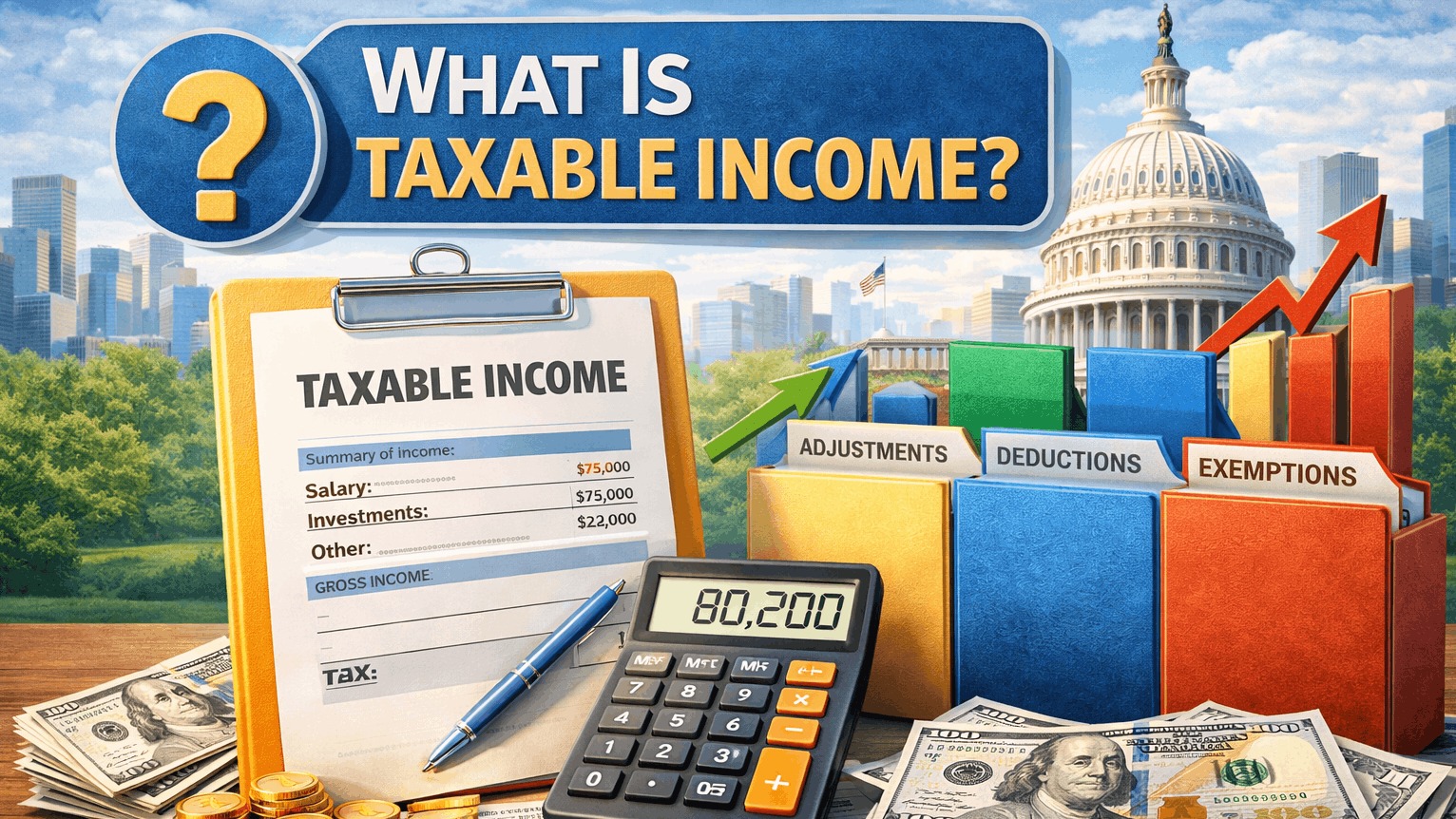
It is calculated after subtracting:
- Adjustments
- Deductions
- Exemptions (in limited cases)
The Internal Revenue Service (IRS) uses your taxable income to determine how much tax you owe based on tax brackets.
Taxable Income Formula (Simple Explanation)
Here’s how it works:
Total Income (Gross Income)
→ minus Adjustments
→ equals Adjusted Gross Income (AGI)
→ minus Deductions
→ equals Taxable Income
This final number is what gets taxed.
What Counts as Taxable Income?
In the U.S., most types of income are taxable unless specifically excluded.
1. Earned Income
- Salaries and wages
- Bonuses and commissions
- Self-employment income
2. Investment Income
- Interest income
- Dividends
- Capital gains
Related: How to Invest for Passive Income
3. Other Taxable Income
- Rental income
- Unemployment benefits
- Retirement withdrawals (401k, IRA)
What Is NOT Taxable Income?
Some income is excluded from taxation:
- Gifts and inheritances
- Life insurance payouts
- Municipal bond interest
- Certain scholarships
Important: Just because something is income doesn’t always mean it’s taxable.
Gross Income vs Taxable Income
Many people confuse these two terms.
Gross Income
Your total earnings before any deductions.
Taxable Income
Your income after deductions and adjustments.
Example:
- Gross Income: $70,000
- Standard Deduction: $13,850 (approx)
- Taxable Income: ~$56,150
You are taxed on $56,150, not $70,000.
Adjusted Gross Income (AGI)
Before calculating taxable income, you first determine AGI (Adjusted Gross Income).
AGI = Gross Income – Adjustments
Common Adjustments:
- Retirement contributions
- Student loan interest
- Health savings account (HSA) contributions
AGI is important because many deductions and credits depend on it.
Standard Deduction vs Itemized Deductions
To reduce taxable income, you can choose:
Standard Deduction
- Fixed amount set by the IRS
- Simple and widely used
Itemized Deductions
- Mortgage interest
- Medical expenses
- State and local taxes
Most taxpayers choose the standard deduction because it’s easier.
Related: How Income Taxes Work in the USA
How Taxable Income Affects Your Tax Bill
The lower your taxable income, the less tax you pay.
This is because the U.S. uses a progressive tax system.
- Lower taxable income → lower taxes
- Higher taxable income → higher taxes
Related: Federal vs State Taxes Explained
Taxable Income Example (Step-by-Step)
Let’s break it down:
Scenario:
- Salary: $80,000
- Retirement contribution: $5,000
- Standard deduction: $13,850
Calculation:
- Gross Income = $80,000
- Adjustments = $5,000
- AGI = $75,000
- Deduction = $13,850
- Taxable Income = $61,150
This is the amount used to calculate your tax.
How to Reduce Taxable Income (Legally)
Reducing taxable income is one of the smartest financial strategies.
1. Contribute to Retirement Accounts
- 401(k)
- Traditional IRA
2. Use Health Savings Accounts (HSA)
3. Claim All Deductions
- Education expenses
- Medical costs
- Business expenses
4. Take Advantage of Tax Credits
Related: How to Manage Investment Risk
Why Taxable Income Matters
Understanding taxable income helps you:
- Estimate your tax bill
- Plan investments
- Maximize deductions
- Avoid overpaying taxes
It’s a key concept in personal finance and wealth building.
Common Mistakes to Avoid
- Confusing gross income with taxable income
- Missing deductions
- Not tracking all income sources
- Ignoring tax-saving opportunities
Final Thoughts
So, what is taxable income?
It’s the portion of your income that is actually taxed after all deductions and adjustments.
Understanding this concept can help you:
- Save money legally
- Make smarter financial decisions
- Reduce your overall tax burden
Once you master taxable income, managing taxes becomes much easier.