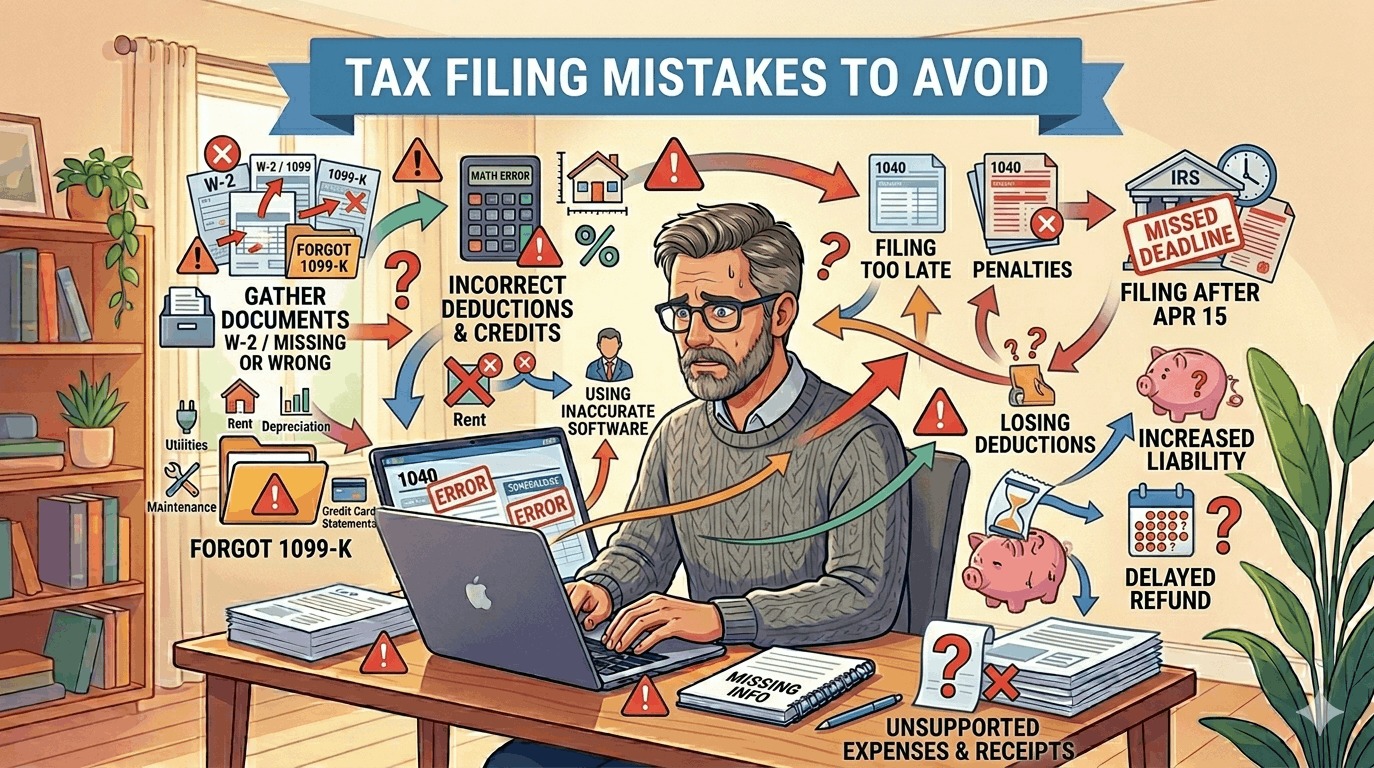
Filing taxes in the United States isn’t just about submitting forms—it’s about getting the details right. Even small mistakes can lead to delayed refunds, unexpected penalties, or paying more tax than necessary.
The reality is that most tax errors aren’t complicated. They usually come down to oversight, lack of preparation, or misunderstanding how certain rules work. The good news is that once you know what to watch for, these mistakes are easy to avoid.
In this guide, we’ll walk through the most common tax filing mistakes in a practical, real-world way so you can file confidently and accurately.
Why Small Mistakes Can Have Big Consequences
Tax filing may seem routine, but it’s a process where accuracy matters. A simple typo, missing document, or incorrect calculation can trigger delays or even an IRS notice.
For example, entering the wrong Social Security Number can delay your return for weeks. Missing income from a 1099 form can result in penalties later.
This is why preparation is so important. If you haven’t already, it helps to review:
How to Prepare for Tax Season
https://statush.com/finance-statistics/how-to-prepare-for-tax-season
A Real-Life Scenario
Consider two taxpayers with similar financial situations.
Person A rushes through filing:
- Misses a 1099 income source
- Forgets a deduction
- Receives an IRS notice later
Person B reviews everything carefully:
- Reports all income
- Claims eligible deductions
- Files accurately and on time
The difference isn’t just peace of mind—it can also impact how much tax is owed.
Common Tax Filing Mistakes (Overview Table)
Here’s a quick overview of the most frequent issues:
| Mistake | What Happens | Impact |
|---|---|---|
| Incorrect personal details | Mismatch with IRS records | Delays or rejection |
| Missing income | IRS detects discrepancy | Penalties + interest |
| Wrong filing status | Incorrect tax calculation | Overpay or underpay |
| Skipping deductions/credits | Higher taxable income | Pay more tax |
| Math errors | Incorrect totals | Processing delays |
| Filing late | Missed deadline | Penalties |
This table gives a snapshot, but understanding the “why” behind each mistake is what really helps prevent them.
Incorrect Personal Information
One of the simplest yet most common mistakes is entering incorrect personal details.
This includes:
- Social Security Numbers
- Names (not matching official records)
- Bank account details
Even a small typo can cause your return to be rejected or your refund to be delayed.
From a practical standpoint, this is one of the easiest mistakes to fix—just double-check everything before submitting.
Not Reporting All Income
Many taxpayers assume that if they don’t receive a tax form, they don’t need to report the income. That’s not true.
The IRS receives copies of forms like:
- W-2 (employment income)
- 1099-NEC (freelance income)
If you leave out income, the IRS will likely notice.
This is especially common among freelancers and side hustlers. To understand how this works:
How to File Taxes as a Freelancer
https://statush.com/finance-statistics/how-to-file-taxes-as-a-freelancer
Choosing the Wrong Filing Status
Your filing status affects your tax brackets, deductions, and eligibility for certain credits.
For example, filing as “Single” instead of “Head of Household” could mean:
- Higher taxable income
- Lower deductions
- More tax owed
This mistake often happens because people choose the default option instead of reviewing what they qualify for.
Missing Deductions and Credits
One of the most costly mistakes is simply not claiming what you’re eligible for.
Deductions reduce your taxable income, while credits reduce your tax bill directly. Missing either can result in paying more tax than necessary.
Example:
- Missing a $2,000 credit → you pay $2,000 more tax
To understand the difference:
Tax Credits vs Tax Deductions
https://statush.com/finance-statistics/tax-credits-vs-tax-deductions
Math Errors and Manual Mistakes
Even though most tax software reduces calculation errors, mistakes can still happen—especially with manual entries.
Common issues include:
- Incorrect totals
- Miscalculated deductions
- Entering numbers in the wrong fields
These errors can delay processing or trigger IRS corrections.
Filing Late or Missing Deadlines
Failing to file on time is one of the most avoidable mistakes, yet it happens every year.
If you owe taxes and file late:
- You may face penalties
- Interest may be added
Even if you can’t pay the full amount, it’s better to file on time and arrange payment later.
Not Making Quarterly Payments (For Self-Employed)
Freelancers and business owners often forget about quarterly estimated taxes.
If you don’t pay throughout the year, you may face penalties—even if you pay everything at the end.
To understand this better:
How Quarterly Estimated Taxes Work
https://statush.com/finance-statistics/how-quarterly-estimated-taxes-work
Poor Record-Keeping
Another common issue is not maintaining proper records.
Without documentation:
- You may miss deductions
- You may not be able to support your claims
Good record-keeping makes filing easier and reduces stress during tax season.
Comparing Careless vs Prepared Filing
| Scenario | Careless Filing | Prepared Filing |
|---|---|---|
| Accuracy | Low | High |
| Deductions claimed | Limited | Maximized |
| Risk of penalties | High | Low |
| Stress level | High | Low |
| Refund outcome | Lower | Optimized |
This comparison highlights how preparation directly impacts results.
Practical Tips to Avoid Mistakes
Avoiding tax filing mistakes doesn’t require complicated strategies. It comes down to a few simple habits.
Take time to review your return before submitting it. Keep your documents organized throughout the year. Use reliable tax software or consult a professional if your situation is complex.
These small steps can prevent most common errors.
The Bigger Picture: Filing Taxes as a System
Tax filing shouldn’t be treated as a last-minute task. It’s part of your overall financial system.
When you stay organized and understand the basics, you:
- Reduce errors
- Save money
- File with confidence
For a broader strategy:
Tax Optimization Strategies
https://statush.com/finance-statistics/tax-optimization-strategies
Final Thoughts
Most tax filing mistakes are avoidable. They don’t happen because the system is complicated—they happen because of small oversights.
The key is simple:
- Stay organized
- Double-check details
- Understand what you’re eligible for
From a practical standpoint, taking a little extra time before filing can save you money, stress, and potential problems later.
Continue Learning
- How to Prepare for Tax Season
https://statush.com/finance-statistics/how-to-prepare-for-tax-season - How to Reduce Your Taxable Income
https://statush.com/finance-statistics/how-to-reduce-your-taxable-income - Long-Term Tax Planning Guide
https://statush.com/finance-statistics/long-term-tax-planning-guide