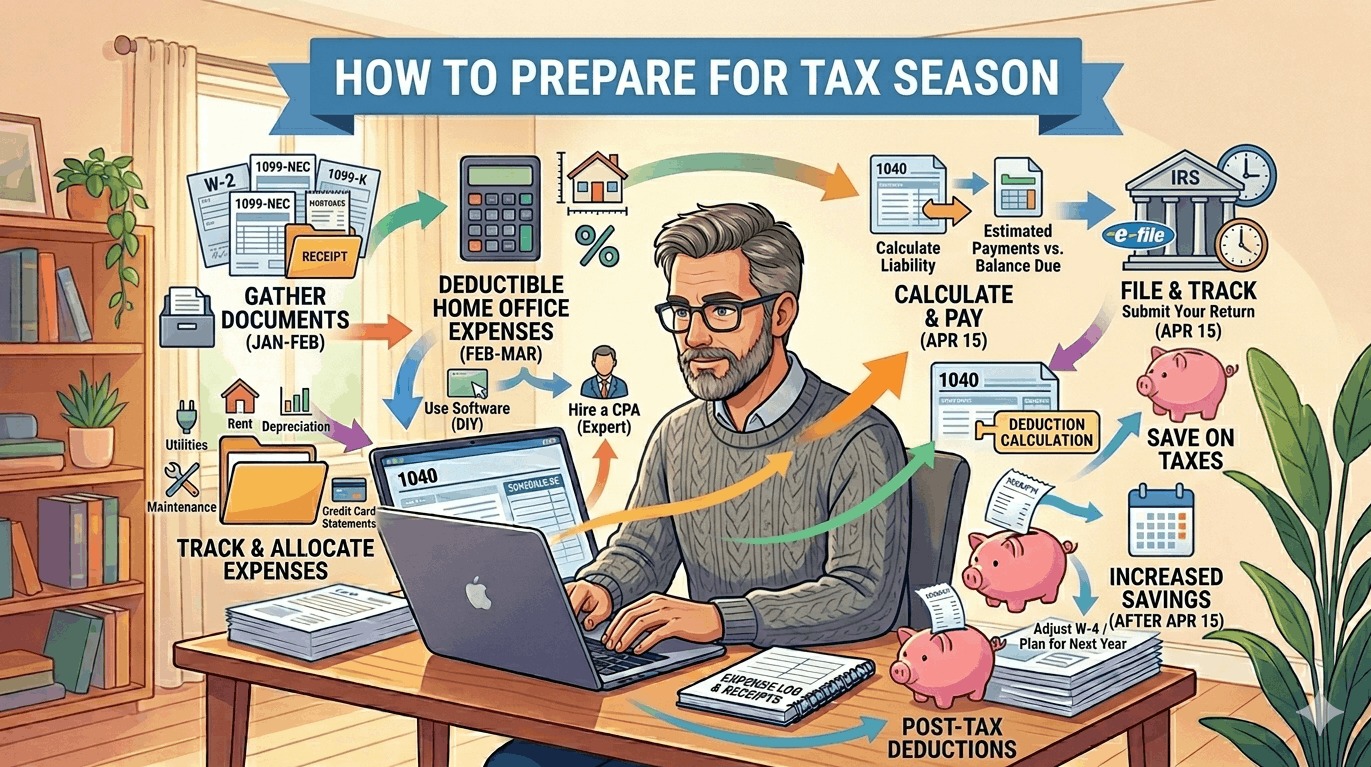
Tax season in the United States has a way of sneaking up on people. One minute it’s the start of a new year, and the next you’re scrambling to find documents, calculate income, and figure out what you owe.
The difference between a stressful tax season and a smooth one usually comes down to preparation. When you plan ahead—even just a little—you can avoid last-minute confusion, reduce errors, and often save money.
Preparing for taxes isn’t just about filing forms. It’s about organizing your financial life in a way that makes the entire process easier and more efficient.
Why Preparation Matters More Than You Think
Many people treat taxes as a once-a-year task, but in reality, it’s something that reflects your financial activity throughout the entire year.
If you wait until the last minute, you’re more likely to:
- Miss deductions
- Forget income sources
- Make filing mistakes
On the other hand, being prepared allows you to:
- Maximize deductions and credits
- Avoid penalties
- File quickly and confidently
If you want to understand how taxes are calculated overall, it helps to review:
How Income Taxes Work in the USA
https://statush.com/finance-statistics/how-income-taxes-work-in-the-usa
A Real-Life Scenario
Let’s compare two individuals to see how preparation makes a difference.
Person A waits until April:
- Scrambles to find documents
- Misses $2,000 in deductions
- Pays higher taxes
Person B prepares early:
- Keeps organized records
- Claims all deductions
- Files on time with confidence
The difference isn’t just convenience—it can directly impact how much tax you pay.
Step 1: Gather All Your Financial Documents
The first step in preparing for tax season is collecting everything you’ll need.
This includes:
- W-2 forms (for employees)
- 1099 forms (for freelancers or contractors)
- Bank and investment statements
- Records of additional income
Having all your documents ready ensures you don’t miss any income when filing.
For freelancers and side hustlers, this step is especially important since income may come from multiple sources.
Step 2: Organize Your Expenses and Deductions
Once your income is clear, the next step is identifying deductions.
This includes:
- Business expenses
- Mortgage interest
- Property taxes
- Charitable donations
Example:
If you identify $5,000 in deductions:
- Your taxable income decreases by $5,000
This can lead to meaningful tax savings.
To understand how this works:
How Business Expenses Reduce Taxes
https://statush.com/finance-statistics/how-business-expenses-reduce-taxes
Step 3: Review Tax Credits
Tax credits are often more valuable than deductions because they reduce your tax bill directly.
Examples include:
- Child Tax Credit
- Education credits
Example:
A $2,000 tax credit reduces your tax bill by the full $2,000.
If you want a clear comparison:
Tax Credits vs Tax Deductions
https://statush.com/finance-statistics/tax-credits-vs-tax-deductions
Step 4: Check Your Filing Status
Your filing status affects your tax brackets and deductions.
Options include:
- Single
- Married filing jointly
- Head of household
Choosing the correct status ensures accurate tax calculations and may reduce your overall tax liability.
Step 5: Estimate What You Owe (or Refund)
Before filing, it’s helpful to estimate your tax outcome.
Example:
- Total income: $80,000
- Deductions: $15,000
- Taxable income: $65,000
From there, you can estimate your tax and determine whether you owe money or expect a refund.
This step helps avoid surprises and gives you time to plan payments if needed.
Step 6: Check for Quarterly Payments (If Applicable)
If you’re self-employed or have side income, you may have made quarterly estimated payments.
Reviewing these ensures:
- You don’t overpay
- You don’t owe unexpected penalties
To understand this better:
How Quarterly Estimated Taxes Work
https://statush.com/finance-statistics/how-quarterly-estimated-taxes-work
Step 7: Choose How You’ll File
You generally have three options for filing taxes:
| Method | Best For | Pros |
|---|---|---|
| Tax software | Most individuals | Easy, guided process |
| Tax professional | Complex finances | Expert advice |
| Manual filing | Simple cases | Full control |
Most people prefer software because it simplifies calculations and reduces errors.
Step 8: Double-Check Everything Before Filing
Before submitting your return, review:
- Income accuracy
- Deductions and credits
- Personal details (SSN, bank info)
Even small errors can delay your refund or cause issues later.
Common Mistakes to Avoid
Many tax problems come from avoidable mistakes.
Some of the most common include:
- Missing income sources
- Forgetting deductions
- Filing late
- Entering incorrect information
Preparation reduces the risk of all these issues.
Practical Tips for a Smooth Tax Season
One of the most effective habits is staying organized throughout the year instead of waiting until tax season.
Keeping digital copies of documents, tracking expenses regularly, and setting reminders for deadlines can make the entire process much easier.
If you have complex finances, working with a tax professional can also save time and reduce stress.
The Bigger Picture: Tax Preparation as a Strategy
Preparing for tax season isn’t just about filing—it’s about understanding your financial situation and making smarter decisions.
When you prepare early, you can:
- Reduce your tax burden
- Improve cash flow
- Plan for future financial goals
For a broader approach:
Tax Optimization Strategies
https://statush.com/finance-statistics/tax-optimization-strategies
Final Thoughts
Tax season doesn’t have to be stressful. With the right preparation, it can become a routine and manageable process.
The key is simple:
- Stay organized
- Understand your income and deductions
- Plan ahead
From a practical standpoint, a little effort before tax season can save a lot of time, money, and stress later.
Continue Learning
- How Income Taxes Work in the USA
https://statush.com/finance-statistics/how-income-taxes-work-in-the-usa - How to Reduce Your Taxable Income
https://statush.com/finance-statistics/how-to-reduce-your-taxable-income - Long-Term Tax Planning Guide
https://statush.com/finance-statistics/long-term-tax-planning-guide