Getting a letter from the Internal Revenue Service can feel intimidating, especially when it mentions an audit. But here’s the truth: how you respond matters far more than the audit itself.
Handled correctly, most audits are straightforward and manageable. The key is to stay calm, organized, and strategic. Let’s walk through exactly what to do, step by step.
First Things First: Don’t Panic
An audit does not mean you’ve done something wrong. In many cases, it’s simply a request for clarification.
The worst thing you can do is ignore it.
A better approach:
- Read everything carefully
- Understand what’s being asked
- Respond methodically
If you’ve already built good filing habits, like those in
How to Prepare for Tax Season
you’re already ahead.
Step-by-Step: How to Respond to an IRS Audit
Step 1: Read the Audit Notice Carefully
The IRS letter will tell you:
- Why your return is being reviewed
- What documents are required
- The deadline to respond
Pay attention to details. Audits are usually limited to specific items, not your entire tax return.
Step 2: Identify the Type of Audit
Different audits require different responses.
| Audit Type | What It Means | What You Should Do |
|---|---|---|
| Correspondence Audit | Handled by mail | Send requested documents |
| Office Audit | Visit IRS office | Bring organized records |
| Field Audit | IRS visits your home/business | Prepare detailed documentation |
Understanding this early helps you respond appropriately.
Step 3: Gather the Right Documents
Only provide what the IRS asks for—nothing extra.
Common documents include:
- Receipts
- Bank statements
- W-2s and 1099s
- Proof of deductions or credits
For example, if your audit involves deductions, this guide can help:
Tax Credits vs Tax Deductions
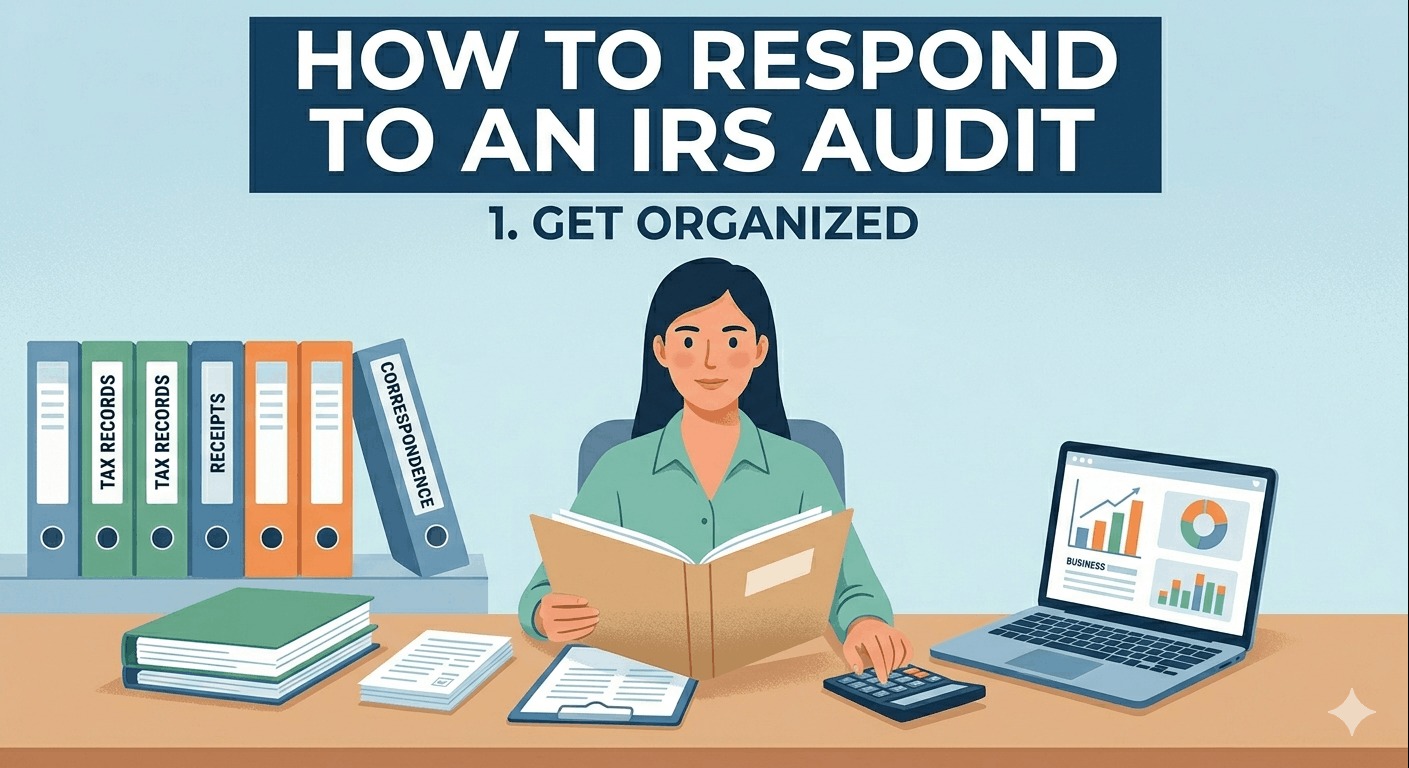
Step 4: Organize Everything Clearly
This step is often overlooked but makes a huge difference.
Use a simple structure:
- Group documents by category
- Label everything clearly
- Match each document to the IRS request
Example:
If the IRS questions business expenses, separate:
- Travel expenses
- Office supplies
- Software subscriptions
Clarity speeds up the process and builds credibility.
Step 5: Respond on Time
Deadlines matter.
If you need more time, you can request an extension—but don’t ignore the deadline completely.
Late responses can:
- Escalate the audit
- Add penalties
- Increase scrutiny
Real-World Example
Imagine you’re a freelancer earning $60,000.
You claimed:
- $20,000 in business expenses
The IRS asks for proof.
You respond with:
- Receipts for software tools
- Bank statements showing payments
- Invoices from vendors
If everything aligns, the audit ends quickly.
If not, you may need to adjust your return.
To better understand this area, see:
How Business Expenses Reduce Taxes
What NOT to Do During an Audit
Some mistakes can make things worse.
Avoid these:
- Ignoring IRS letters
- Sending incomplete or messy documents
- Guessing numbers instead of showing proof
- Volunteering extra information not requested
Think of it this way: answer the question asked—nothing more, nothing less.
When Should You Get Professional Help?
Not every audit requires an expert, but some situations do.
Consider hiring a CPA or tax professional if:
- The audit involves large amounts
- You own a business
- You don’t understand the issue
- You disagree with IRS findings
A professional can help you communicate clearly and protect your interests.
Possible Outcomes of Your Response
Once you submit your documents, the IRS will review everything.
Here’s what can happen:
| Outcome | What It Means | What You Can Do |
|---|---|---|
| No Change | Everything is correct | Nothing further required |
| Agreed Change | IRS suggests changes you accept | Pay any additional tax |
| Disagreed Change | You don’t agree with IRS findings | File an appeal |
If penalties are involved, learn more here:
Tax Penalties Explained
How to Handle Disagreements
If you disagree with the IRS:
- Review their findings carefully
- Gather supporting evidence
- Respond with a clear explanation
- File an appeal if necessary
You have the right to challenge decisions—but your argument must be backed by documentation.
Staying Organized for Future Audits
The best way to handle an audit is to be prepared before it happens.
Here are some habits that make future audits easier:
- Keep records for 3–7 years
- Use digital tools to track expenses
- Separate personal and business finances
- Double-check your return before filing
You can also avoid common mistakes by reading:
Tax Filing Mistakes to Avoid
Using Financial Tools to Stay Prepared
Organization is your biggest advantage during an audit.
These tools can help:
- Track income: Paycheck Calculator
- Monitor overall finances: Net Worth Calculator
- Plan savings: Savings Goal Calculator
When your numbers are clear, audits become much easier to handle.
Final Thoughts
Responding to an IRS audit is less about stress and more about structure. If you stay calm, provide accurate documentation, and follow instructions carefully, most audits resolve without major issues.
The process rewards organization and honesty. And once you go through it, you’ll likely find it far less intimidating than you expected.
In the end, the goal isn’t just to survive an audit—it’s to build habits that make future audits almost effortless.