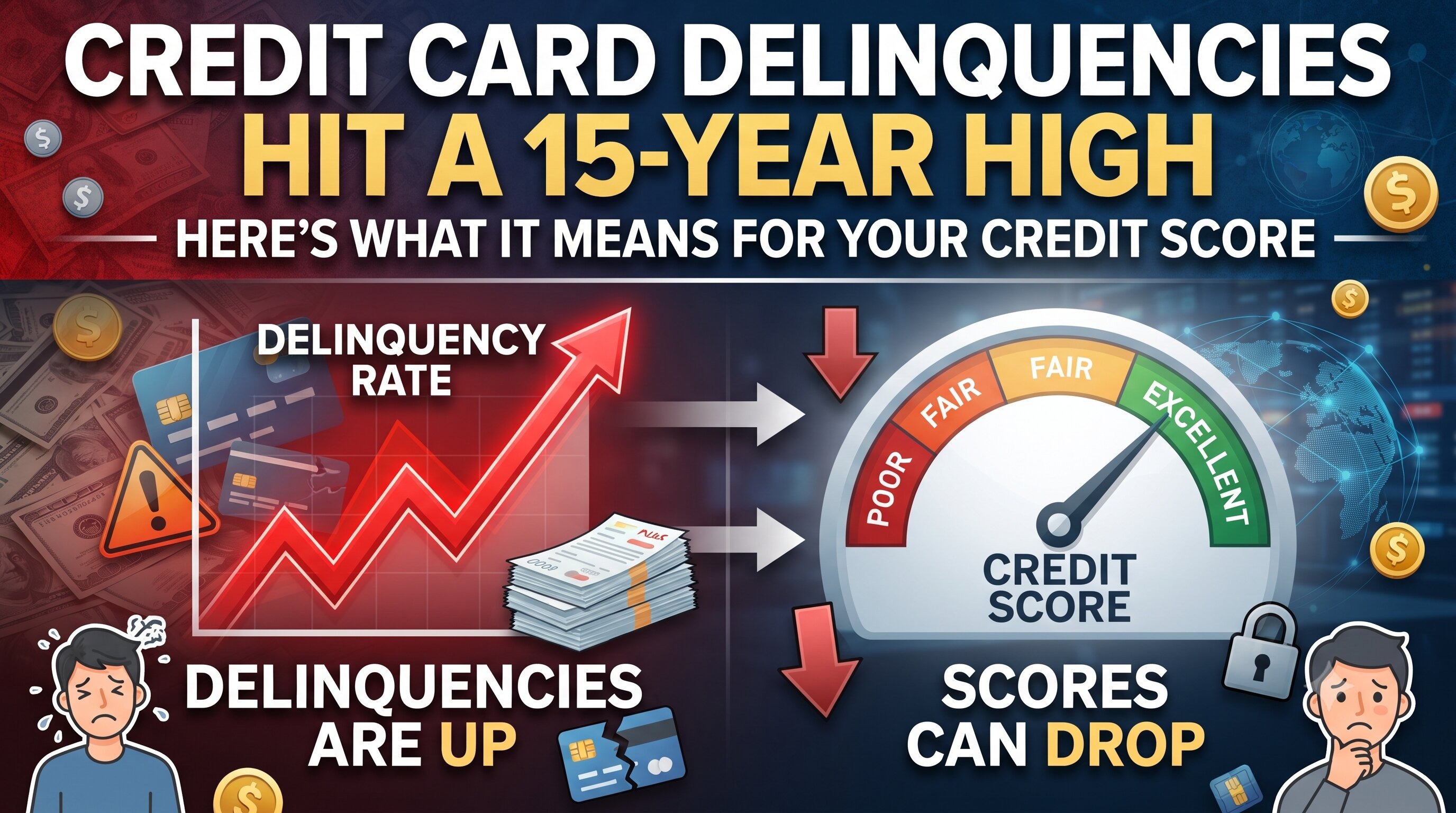
Credit card debt is becoming an increasingly serious financial burden for consumers, and a growing number of cardholders are struggling to keep up with their monthly payments.
Recent data showing credit card delinquencies at their highest level in roughly 15 years has raised concerns about household finances and the potential impact on consumers' credit profiles.
For anyone carrying a balance from month to month, the trend is worth paying attention to. A single missed payment can have consequences, while repeated or prolonged delinquency can make borrowing significantly more expensive.
But rising delinquency rates across the economy do not automatically mean your credit score will fall. What matters most is your own payment history and how you manage your accounts.
Here's what the increase in credit card delinquencies means for your credit score—and what you can do if you're struggling to make payments.
What Is a Credit Card Delinquency?
A credit card account becomes delinquent when the required minimum payment is not made by its due date.
There is an important distinction between being late and having a late payment reported to the credit bureaus.
Many card issuers provide a short grace period before charging certain fees or taking further action. However, once a payment is generally 30 days or more past due, the issuer may report the delinquency to the major credit bureaus.
Delinquencies can become more serious as they age:
- 30 days late: The payment may be reported as delinquent.
- 60 days late: The account is considered more seriously delinquent.
- 90 days late: The risk of additional penalties and collection activity increases.
- 120–180+ days late: The issuer may charge off the account, depending on its policies and applicable rules.
The exact consequences depend on the card issuer, account terms and applicable laws.
Why Are Credit Card Delinquencies Rising?
Several factors can contribute to an increase in credit card delinquencies.
1. Higher household expenses
Consumers are dealing with the cumulative effect of housing, food, insurance, utilities and other everyday expenses. When monthly budgets become tighter, credit cards can become a source of short-term financing.
2. High interest rates
Credit card interest rates are typically variable and can be extremely expensive compared with many other forms of borrowing.
When a balance is carried from one month to the next, interest can make it harder to reduce the principal. A consumer who makes only the minimum payment may therefore remain in debt for years.
3. Rising credit card balances
Higher balances can increase the minimum payment and leave households with less financial flexibility.
The bigger concern isn't simply how much someone owes. It is whether the debt is becoming difficult to manage relative to their income and other obligations.
4. Consumers with weaker credit may be particularly vulnerable
Borrowers with lower credit scores often have fewer inexpensive borrowing options. If an unexpected expense occurs, they may rely more heavily on credit cards or other high-cost forms of credit.
How Does a Late Credit Card Payment Affect Your Credit Score?
Payment history is one of the most important factors used in many credit-scoring models.
A payment that is only a few days late may result in a late fee or other consequences under the card's terms, but it generally isn't the same as a delinquency reported to the credit bureaus.
Once a late payment is reported, however, it can have a significant negative effect on your credit profile.
The impact depends on several factors, including:
- How high your credit score was before the missed payment
- How recently the delinquency occurred
- How severe the delinquency is
- Whether you have other late payments
- Your overall credit history
- The scoring model being used
Someone with an otherwise excellent credit history may experience a substantial score decline after a serious late payment.
How Long Does a Late Payment Stay on Your Credit Report?
A reported late payment can generally remain on a consumer's credit report for up to seven years.
That doesn't mean your credit score will remain damaged for seven years.
The effect of a late payment can diminish over time as you establish a consistent record of on-time payments and add positive information to your credit history.
In other words, a late payment can be long-lasting, but it doesn't permanently define your creditworthiness.
What Happens If You Miss a Credit Card Payment?
The consequences can become progressively more serious the longer the account remains unpaid.
You could be charged a late fee
Your card issuer may charge a late fee according to the terms of your account and applicable regulations.
Your interest rate could be affected
Depending on the card agreement and circumstances, a missed payment can potentially trigger a higher interest rate or other account consequences.
The delinquency could be reported
Once a payment becomes sufficiently past due, the issuer may report it to the credit bureaus.
Collection or charge-off could follow
If payments remain unpaid for an extended period, the account may eventually be charged off or sent to collections. That can cause additional damage to your credit profile.
Does a 15-Year High in Delinquencies Mean Your Credit Score Will Drop?
Not necessarily.
A national increase in credit card delinquency rates is an economic indicator. It does not directly change your individual credit score.
Credit scores are calculated using information associated with your credit profile.
If you continue paying your bills on time, maintain manageable balances and avoid taking on excessive debt, a rise in delinquency rates elsewhere does not by itself lower your score.
However, broader economic stress can indirectly affect consumers.
For example, if household finances deteriorate and you begin missing payments, increasing balances or applying for additional credit, your own credit profile could suffer.
Credit Utilization Matters Too
Late payments aren't the only credit-card issue to watch.
Credit utilization—the percentage of your available revolving credit that you're using—can also influence many credit scores.
For example, suppose you have:
- $10,000 in total credit limits
- $3,000 in credit card balances
Your overall utilization would be 30%.
If your balances rise to $8,000 while your credit limits remain unchanged, utilization jumps to 80%.
High utilization can put downward pressure on credit scores even if every payment is made on time.
That's why consumers trying to protect their credit should pay attention to both payment history and outstanding balances.
What Should You Do If You're Struggling to Pay Your Credit Card?
If you're having trouble making your minimum payment, don't wait until the account is seriously delinquent.
1. Contact the card issuer
Call the issuer before missing a payment and explain your situation.
Ask whether the company offers hardship programs, payment arrangements, reduced-interest options or other assistance.
Availability varies by issuer and individual circumstances.
2. Prioritize at least the minimum payment
If possible, make at least the required minimum payment by the due date.
Paying more is usually necessary to reduce expensive revolving debt, but avoiding a reported late payment can be particularly important for your credit history.
3. Stop adding to the balance
If you're struggling to repay existing debt, continuing to make new purchases on the card can make the problem worse.
Consider using a budget to identify expenses that can temporarily be reduced or eliminated.
4. Consider nonprofit credit counseling
A reputable nonprofit credit counseling organization may be able to help you review your budget and debt-management options.
Be cautious of companies that promise to erase legitimate negative information from your credit report or guarantee a dramatic increase in your score.
5. Check your credit reports
Review your credit reports regularly for inaccurate balances, payment histories or accounts that don't belong to you.
If you find an error, you can dispute inaccurate information with the appropriate credit reporting agency and the company that furnished the information.
How Can You Rebuild Your Credit After a Delinquency?
A late payment doesn't mean you're stuck with poor credit forever.
The most important step is establishing a new pattern of responsible credit use.
Try to:
- Pay every bill on time going forward.
- Set up automatic payments or calendar reminders.
- Keep credit card balances as low as practical.
- Avoid applying for multiple new accounts in a short period.
- Keep older accounts open when appropriate and affordable.
- Monitor your credit reports for errors.
- Create an emergency fund so unexpected expenses don't automatically become credit card debt.
Over time, consistent positive payment behavior can help strengthen your credit profile.
The Bigger Lesson for Consumers
The rise in credit card delinquencies is a warning sign about financial pressure on households, but it isn't a reason to panic about your own credit score.
The most useful response is to focus on the factors you can control.
Make payments on time. Keep balances manageable. Avoid borrowing more than you can comfortably repay. And if you're already struggling, contact your lender before a missed payment turns into a longer-term delinquency.
A strong credit score isn't built by reacting to economic headlines. It's built through consistent financial habits over time.