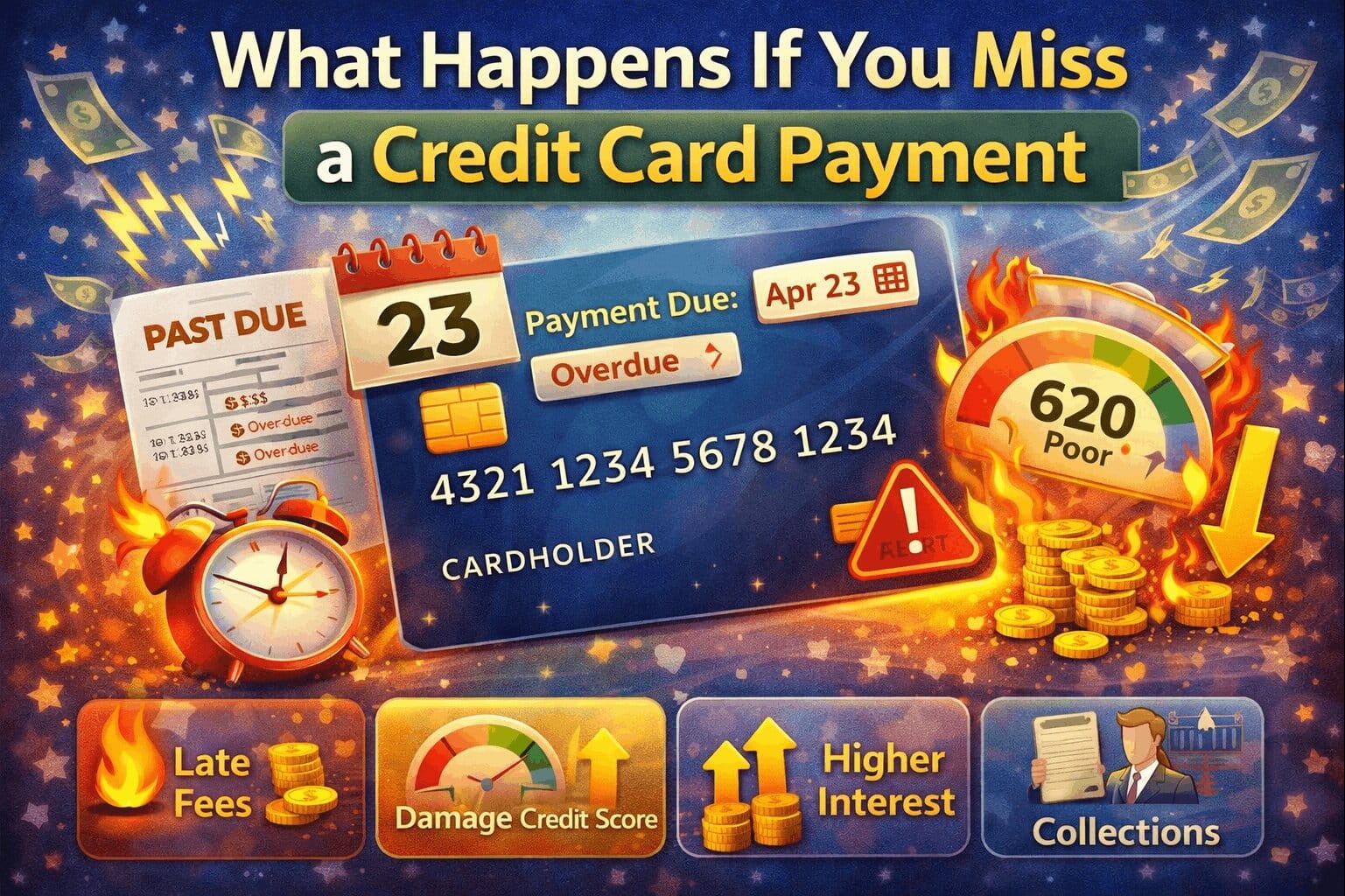
Missing a credit card payment might seem like a small mistake—but it can have bigger consequences than most people expect. From late fees to credit score damage, even one missed payment can create a ripple effect on your financial health.
The good news is that understanding what happens—and what to do next—can help you minimize the damage and get back on track quickly.
Let’s break it down clearly and practically.
What Counts as a Missed Payment?
A missed payment happens when you don’t pay at least the minimum amount due by your credit card’s due date.
Even if you pay one day late, your issuer may still consider it late (depending on the grace period and policies).
At first, the consequences may seem minor—but they can escalate over time.
Immediate Consequences of Missing a Payment
When you miss a payment, a few things can happen almost right away.
Late Fees
Most credit card issuers charge a late fee, typically around $25 to $40.
This fee is added to your balance, increasing the amount you owe.
Interest Continues to Accumulate
If you were already carrying a balance, interest continues to build. If you weren’t, you may lose your grace period, meaning new purchases could start accruing interest immediately.
To understand how interest works:
How Credit Card Interest Works
https://statush.com/credit-cards-banking/how-credit-card-interest-works
Penalty APR
In some cases, your issuer may apply a penalty APR, which is a higher interest rate triggered by missed payments.
This can significantly increase your borrowing costs going forward.
Timeline of a Missed Payment
The impact of a missed payment depends on how long it goes unpaid.
1–29 Days Late
- Late fee is charged
- Interest continues to accrue
- Credit score is usually not affected yet
If you pay within this window, the long-term damage can be minimal.
30+ Days Late
- Payment is reported to credit bureaus
- Credit score may drop significantly
- Negative mark stays on your credit report
This is when the situation becomes more serious.
60–90 Days Late
- Additional late fees may apply
- Penalty APR may be triggered
- Credit score damage increases
120+ Days Late
- Account may be sent to collections
- Severe credit damage
- Legal action is possible in extreme cases
Simple Timeline Table
| Time Late | Consequences |
|---|---|
| 1–29 days | Late fee, interest |
| 30+ days | Credit score impact |
| 60–90 days | Higher penalties |
| 120+ days | Collections risk |
Real-World Example
Let’s look at a practical situation.
Ankit forgets to pay his $500 credit card bill.
- After a few days: He’s charged a $30 late fee
- After 30 days: The missed payment is reported to credit bureaus
- His credit score drops by 50–100 points
Even though the original amount was small, the impact becomes significant.
How It Affects Your Credit Score
Payment history is the most important factor in your credit score.
Missing a payment—especially one that’s over 30 days late—can:
- Lower your score significantly
- Stay on your credit report for up to 7 years
- Affect your ability to get loans or better credit cards
This is why even one missed payment should be taken seriously.
What to Do If You Miss a Payment
If you miss a payment, acting quickly can reduce the damage.
First, pay the amount as soon as possible. The sooner you pay, the better.
Next, consider contacting your credit card issuer. If this is your first missed payment, they may waive the late fee as a courtesy.
If the payment is not yet reported (within 30 days), resolving it quickly can prevent credit score damage.
Can You Remove a Late Payment?
In some cases, yes—but it’s not guaranteed.
You can request a goodwill adjustment from your issuer, especially if you have a strong payment history.
Explain your situation and ask politely. Some issuers may remove the late mark, but this depends on their policies.
How to Avoid Missing Payments
Avoiding missed payments is easier than fixing them.
One of the most effective strategies is setting up automatic payments. Even setting auto-pay for the minimum amount ensures you never miss a due date.
Another approach is setting reminders a few days before your payment is due.
Tracking your spending regularly also helps ensure you’re prepared when the bill arrives.
To build better habits:
How to Use Credit Cards Responsibly
https://statush.com/credit-cards-banking/how-to-use-credit-cards-responsibly
The Cost of Repeated Missed Payments
Missing one payment is manageable. Missing multiple payments can lead to serious financial problems.
Repeated missed payments can:
- Damage your credit score long-term
- Increase your interest rates
- Make it harder to qualify for future credit
In extreme cases, accounts may be closed or sent to collections.
Minimum Payment vs Missed Payment
It’s important to understand that paying the minimum is very different from missing a payment.
- Minimum payment → Keeps your account in good standing
- Missed payment → Triggers penalties and credit damage
However, relying on minimum payments long-term can still lead to debt.
Learn more:
How Minimum Payments Affect Credit Card Debt
https://statush.com/credit-cards-banking/how-minimum-payments-affect-credit-card-debt
A Simple Way to Think About It
Missing a payment is like breaking trust with your lender.
One mistake may be forgiven, but repeated issues can have lasting consequences.
The goal is consistency—paying on time, every time.
Final Thoughts
Missing a credit card payment can happen to anyone—but the impact depends on how quickly you respond.
The key takeaways are simple:
- Pay as soon as you realize the mistake
- Act before 30 days to avoid credit score damage
- Set up systems to prevent it from happening again
With the right habits, you can avoid missed payments entirely—and keep your financial life running smoothly.