Credit cards can be one of the most powerful financial tools available—but only if used responsibly. When handled correctly, they help you build credit, earn rewards, and manage cash flow. When misused, they can quickly lead to debt and financial stress.
The difference isn’t in the card—it’s in how you use it.
This guide breaks down what responsible credit card usage actually looks like in real life, with practical strategies you can apply immediately.
What Does “Using Credit Responsibly” Mean?
Using a credit card responsibly means borrowing money and paying it back in a way that avoids interest, fees, and long-term debt.
In simple terms:
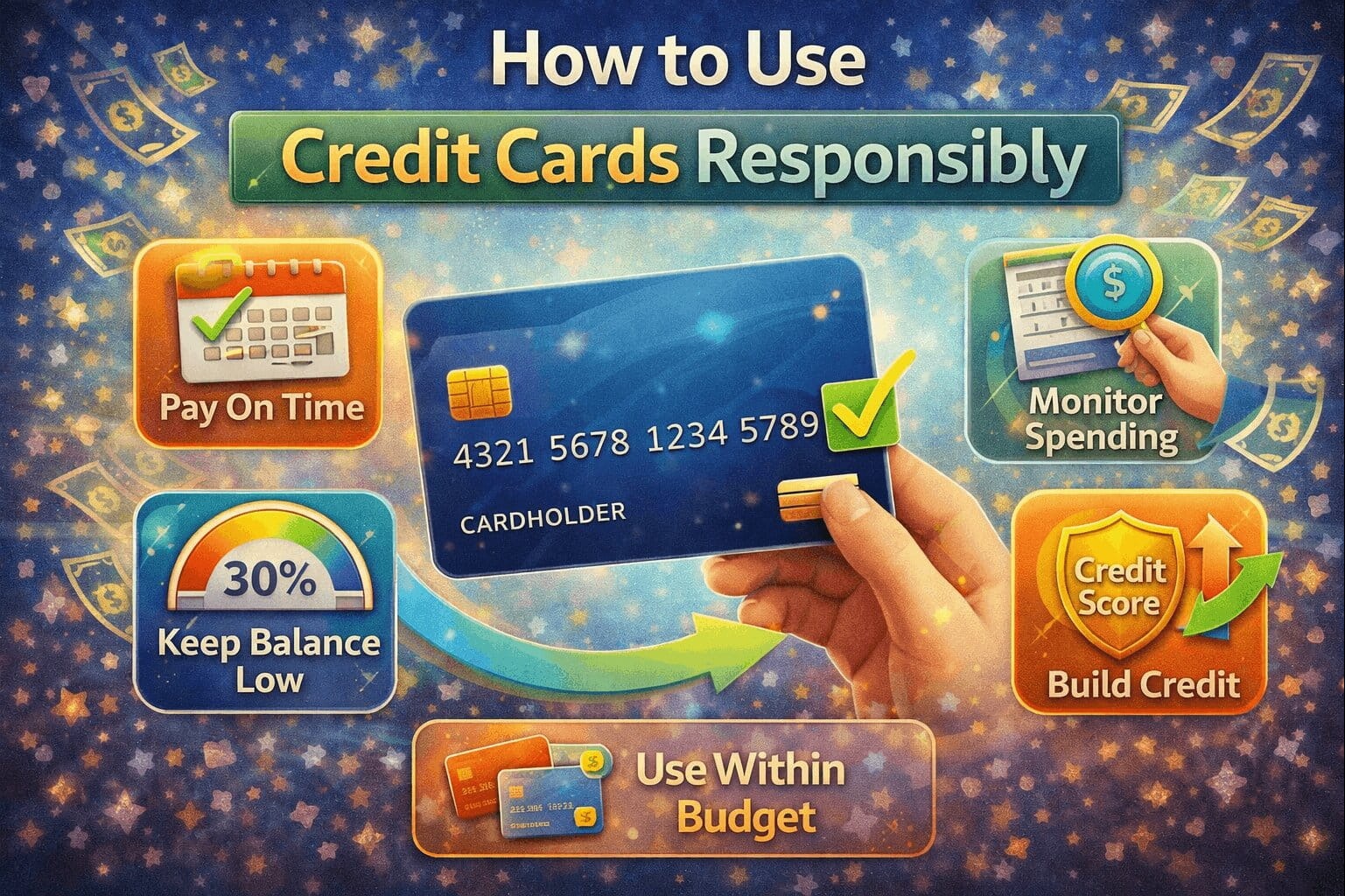
- Spend within your means
- Pay on time
- Keep balances low
That’s it. There’s no complicated formula—just consistent habits.
If you want to understand the basics first:
How Credit Cards Work in the USA
https://statush.com/credit-cards-banking/how-credit-cards-work-in-the-usa
Always Pay Your Balance in Full
The most important rule of responsible credit card use is to pay your full statement balance every month.
When you do this:
- You avoid interest completely
- Your debt never grows
- You maintain financial control
Credit cards often come with high interest rates, so carrying a balance can quickly become expensive.
To understand why:
How Credit Card Interest Works
https://statush.com/credit-cards-banking/how-credit-card-interest-works
Never Miss a Payment
Payment history is the biggest factor in your credit score. Even one missed payment can have a lasting impact.
Missing a payment can lead to:
- Late fees
- Higher interest rates
- Credit score damage
To avoid this, consider setting up automatic payments or reminders.
Learn more:
What Happens If You Miss a Credit Card Payment
https://statush.com/credit-cards-banking/what-happens-if-you-miss-a-credit-card-payment
Keep Your Credit Utilization Low
Credit utilization is the percentage of your credit limit that you’re using.
For example:
- Limit: $5,000
- Balance: $1,500
- Utilization: 30%
Experts recommend keeping this below 30%, and ideally below 10% for the best credit impact.
Lower utilization shows lenders that you’re not overly dependent on credit.
Use Your Card for Planned Spending
One of the easiest ways to stay in control is to use your credit card only for expenses you already planned.
This includes:
- Groceries
- Bills
- Gas
- Subscriptions
Avoid using your card for impulse purchases or things you can’t afford to pay off immediately.
This simple habit prevents debt before it starts.
Understand Minimum Payments
Minimum payments are designed to keep your account in good standing—but they are not a good long-term strategy.
When you pay only the minimum:
- Most of your payment goes toward interest
- Your balance decreases slowly
- You end up paying more over time
To understand this better:
How Minimum Payments Affect Credit Card Debt
https://statush.com/credit-cards-banking/how-minimum-payments-affect-credit-card-debt
Monitor Your Spending Regularly
Responsible credit use requires awareness.
Instead of waiting for your monthly statement, check your transactions every few days. This helps you:
- Stay within budget
- Catch errors or fraud early
- Avoid surprises
Even a quick check can make a big difference.
Choose the Right Credit Card
Using credit responsibly also means choosing a card that fits your needs.
If you’re a beginner, a simple card with low fees is better.
If you’re experienced, a rewards card may offer more value.
Guide:
How to Choose the Right Credit Card
https://statush.com/credit-cards-banking/how-to-choose-the-right-credit-card
Avoid Unnecessary Fees
Credit cards can come with various fees, including:
- Late payment fees
- Annual fees
- Foreign transaction fees
Understanding these fees helps you avoid unnecessary costs.
More details:
Credit Card Fees Explained
https://statush.com/credit-cards-banking/credit-card-fees-explained
Real-World Example
Let’s look at two different approaches.
Responsible User
Sneha uses her credit card for groceries and bills, spending about $800 per month. She pays the full balance every month.
Result:
- No interest
- Positive credit history
- Rewards earned
Irresponsible User
Vikram spends $800 but pays only $100 each month.
Result:
- Interest charges
- Growing debt
- Financial stress
Same spending—but completely different outcomes.
Build Good Financial Habits
Responsible credit card use is less about rules and more about habits.
Start small:
- Use your card for one or two categories
- Pay it off consistently
- Gradually increase usage as you gain confidence
Over time, these habits become automatic.
Avoid Using Credit for Emergencies Alone
Many people rely on credit cards for emergencies, which can lead to debt.
A better approach is to build an emergency fund so you don’t have to depend on credit.
You can plan your savings here:
Emergency Fund Calculator
https://statush.com/emergency-fund-calculator
Don’t Chase Rewards at the Cost of Discipline
Rewards are great—but they should never drive your spending.
Spending extra just to earn cashback or points defeats the purpose.
To understand rewards better:
How Credit Card Rewards Programs Work
https://statush.com/credit-cards-banking/how-credit-card-rewards-programs-work
Keep Learning and Improving
Responsible credit use isn’t something you master overnight. It’s a continuous process of learning and improving.
As your financial situation changes, your approach to credit should evolve as well.
A Simple Rule to Follow
If you want a simple way to stay responsible, follow this:
Only spend what you can pay off today.
This mindset eliminates most credit card problems before they start.
Final Thoughts
Using credit cards responsibly is not about avoiding them—it’s about using them wisely.
When used correctly, credit cards offer convenience, rewards, and the opportunity to build a strong financial future.
The key is consistency:
- Pay on time
- Keep balances low
- Stay within your means
Do that, and your credit card becomes a powerful financial tool—not a source of stress.