Best Credit Cards for Balance Transfers
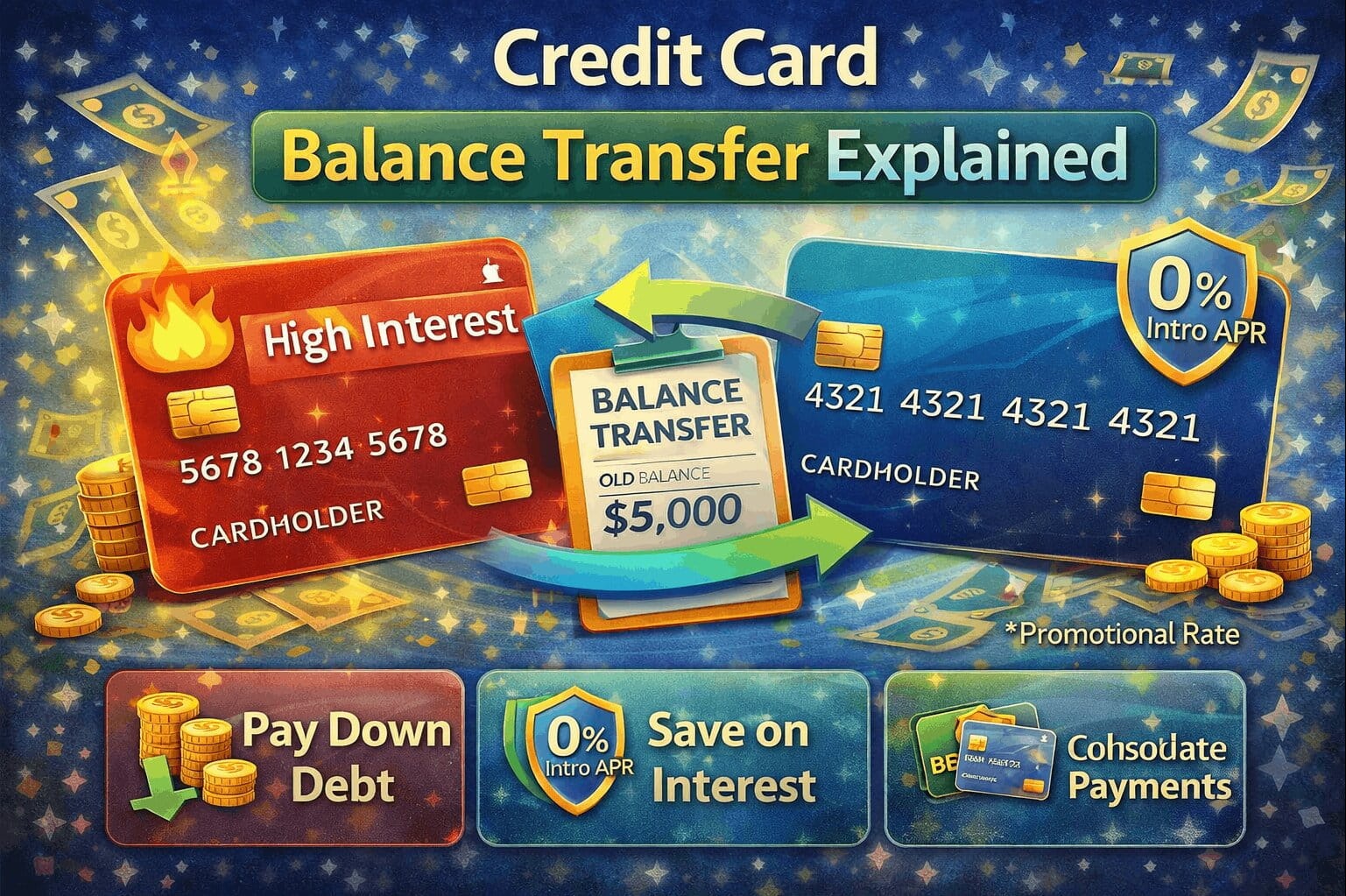
If you’re carrying high-interest credit card debt, a balance transfer credit card can be one of the smartest financial tools available. These cards are designed to give you breathing room—often with a 0% introductory APR—so you can pay down your balance without interest piling up.
But not all balance transfer cards are the same. The best ones combine a long 0% APR period, low transfer fees, and sometimes even extra rewards or perks.
Let’s break down the best options and how to choose the right one.
What Makes a Balance Transfer Card “Best”?
Before choosing a card, it’s important to understand what actually matters.
The most important factors are:
- Intro APR period – Longer is better (15–21 months is ideal)
- Balance transfer fee – Usually 3%–5% of the amount
- Regular APR – Important if you don’t pay off in time
- Annual fee – Most good options are $0
Cards with 0% APR for up to 21 months are considered among the best because they give you nearly two years to pay off debt interest-free
Best Balance Transfer Credit Cards (Top Picks)
Here are some of the most recommended balance transfer cards in the USA based on recent 2026 data.
1. Best Overall: Wells Fargo Reflect® Card
The Wells Fargo Reflect® Card is widely considered one of the best balance transfer cards available.
- 0% intro APR for up to 21 months
- No annual fee
- Longest intro period on the market
This card is ideal if your main goal is to pay off debt slowly over time without interest.
It doesn’t offer rewards—but that’s actually a good thing. It keeps you focused on paying off debt instead of spending more.
2. Best for Long-Term Repayment: Citi® Diamond Preferred® Card
This card is another strong option for long repayment periods.
- 0% APR for up to 21 months on balance transfers
- No annual fee
It’s designed specifically for balance transfers, making it a great “no-frills” option if your goal is purely debt reduction.
3. Best for Simplicity: Citi Simplicity® Card
The Citi Simplicity® Card stands out for its user-friendly features.
- Long 0% intro APR period
- No late fees or penalty APR
This makes it a safer option if you’re worried about missing payments while paying down debt.
4. Best for Rewards + Balance Transfer: Citi Double Cash® Card
This card combines debt repayment with rewards.
- 0% intro APR (shorter period, typically ~18 months)
- Earn cashback while paying off debt
It’s a good option if your balance isn’t too large and you want long-term value after paying it off.
5. Best for Cashback Perks: Blue Cash Everyday® Card (Amex)
This card offers a balance between rewards and balance transfer benefits.
- 0% intro APR (around 15 months)
- Cashback on everyday categories
- No annual fee
It’s ideal if you want a card you’ll keep using even after your debt is paid off.
Product Comparison Table
| Feature | Wells Fargo Reflect® | Citi Diamond Preferred® | Citi Simplicity® | Citi Double Cash® | Blue Cash Everyday® |
|---|---|---|---|---|---|
| Intro APR Period | ~21 months | ~21 months | ~21 months | ~18 months | ~15 months |
| Rewards | None | None | None | Cashback | Cashback |
| Annual Fee | $0 | $0 | $0 | $0 | $0 |
| Best For | Long payoff time | Pure debt payoff | Simplicity | Rewards + payoff | Everyday rewards |
Real-World Example
Let’s say you have a $4,000 balance at 20% APR.
Without a balance transfer:
- You could pay $800+ in interest
With a 0% APR balance transfer:
- You pay $0 interest (during promo period)
- Only a transfer fee (e.g., 3% = $120)
That’s a huge difference—and the main reason these cards are so powerful.
How to Choose the Right Card
Choosing the best balance transfer card depends on your situation.
If you have a large balance, go for the longest intro APR (like 21 months).
If your balance is smaller and you want long-term value, choose a card with rewards.
If you’re worried about missing payments, pick a card with fewer penalties.
For a full guide:
How to Choose the Right Credit Card
https://statush.com/credit-cards-banking/how-to-choose-the-right-credit-card
Important Things to Watch Out For
Balance transfer cards are powerful—but only if used correctly.
First, always check the transfer fee. Most cards charge 3%–5%.
Second, make sure you pay off the balance before the intro period ends. After that, regular APR applies.
Third, avoid using the card for new purchases while paying off your transferred balance.
Who Should Use a Balance Transfer Card?
Balance transfer cards are best for people who:
- Have existing high-interest credit card debt
- Can qualify for a good credit card (usually 670+ score)
- Have a plan to pay off debt within the intro period
They are not ideal if you continue adding new debt.
A Smarter Way to Pay Off Debt
To get the most benefit, create a repayment plan.
For example:
- Balance: $3,000
- Promo period: 12 months
- Monthly payment: $250
You can calculate this easily using:
Debt Payoff Calculator
https://statush.com/debt-payoff-calculator
This ensures you finish before interest kicks in.
Final Thoughts
The best credit cards for balance transfers are not about rewards or perks—they’re about saving money and getting out of debt faster.
If you choose a card with a long 0% APR period, stick to a repayment plan, and avoid new spending, you can eliminate debt without paying interest.
But the key is discipline.
A balance transfer doesn’t solve debt—it gives you a window of opportunity to solve it yourself.