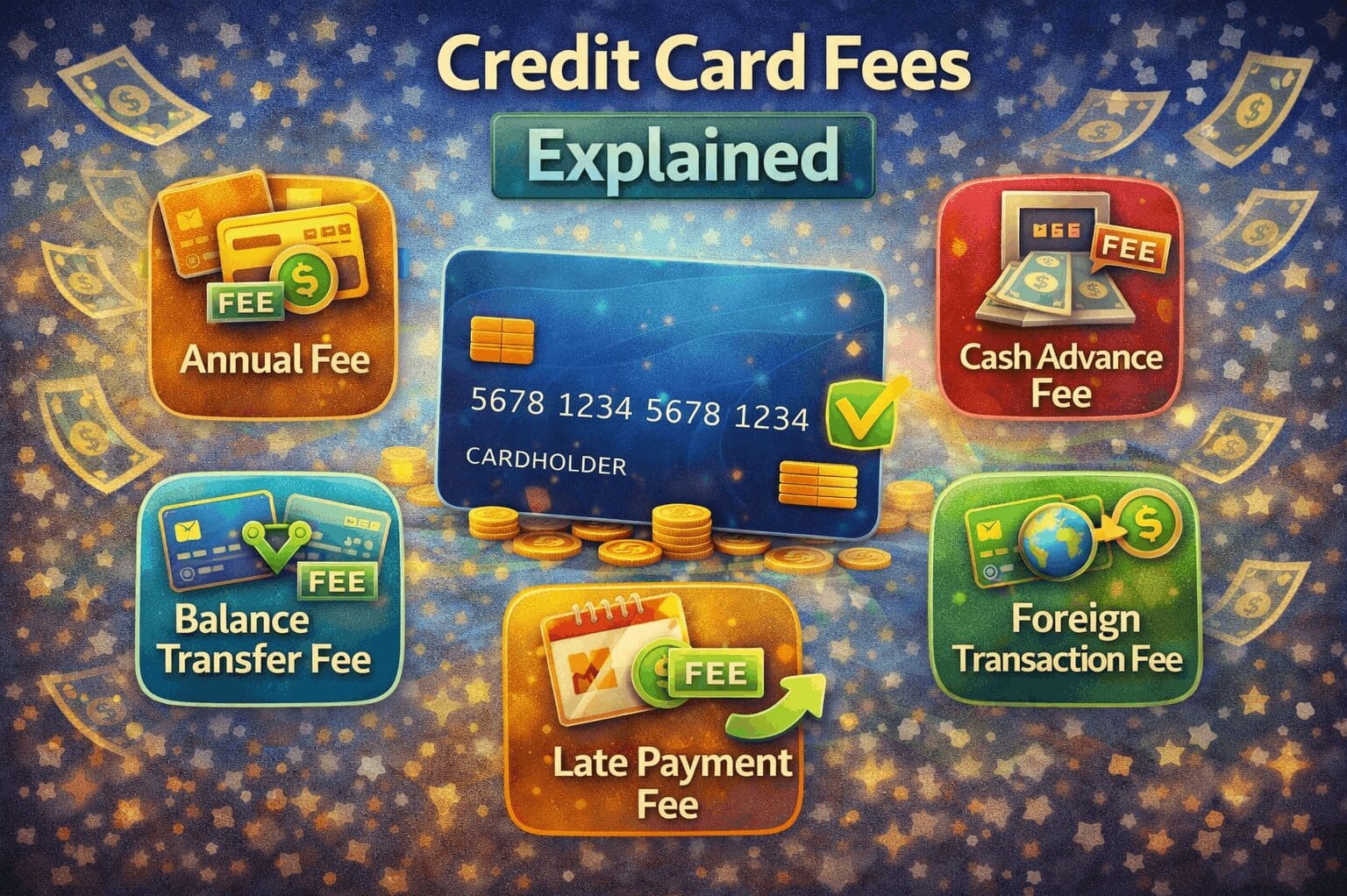
Credit cards can be incredibly useful—but they’re not free. Behind the convenience and rewards, there are various fees that can quietly add up if you’re not careful.
The good news is that most credit card fees are avoidable once you understand how they work. This guide breaks down the most common credit card fees in the United States, with simple explanations, real-world examples, and practical tips to avoid them.
Why Credit Card Fees Exist
Credit card companies make money in two main ways:
- Interest (when you carry a balance)
- Fees (when certain actions trigger charges)
Fees are essentially penalties or service charges tied to how you use your card. Some are optional, while others happen only when you make mistakes.
Understanding these fees puts you in control.
Most Common Credit Card Fees
Let’s look at the most important fees you’re likely to encounter.
Annual Fee
An annual fee is a yearly charge for using a credit card.
Some cards charge $0, while others may charge $95, $250, or even more—especially premium rewards cards.
These fees are usually justified by benefits like:
- Travel perks
- Cashback rewards
- Airport lounge access
But if you’re not using those benefits, the fee may not be worth it.
Learn more:
What Is an Annual Fee Credit Card
https://statush.com/credit-cards-banking/what-is-an-annual-fee-credit-card
Late Payment Fee
If you miss your payment due date, your card issuer may charge a late fee—typically between $25 and $40.
This fee is added to your balance, and interest may also apply.
Even worse, repeated late payments can increase your interest rate and damage your credit score.
To understand the impact:
What Happens If You Miss a Credit Card Payment
https://statush.com/credit-cards-banking/what-happens-if-you-miss-a-credit-card-payment
Interest Charges
While not always called a “fee,” interest is one of the biggest costs associated with credit cards.
If you carry a balance, interest is charged based on your APR and compounds daily.
Over time, this can significantly increase your total debt.
Learn more:
How Credit Card Interest Works
https://statush.com/credit-cards-banking/how-credit-card-interest-works
Foreign Transaction Fee
If you use your credit card for purchases outside the U.S., you may be charged a foreign transaction fee.
This is typically around 2%–3% of the transaction amount.
For example:
- Purchase: $100
- Fee: $2–$3
If you travel frequently, choosing a card with no foreign transaction fees can save money.
Balance Transfer Fee
When you transfer a balance from one card to another, most issuers charge a fee.
This is usually:
- 3%–5% of the transferred amount
For example:
- Transfer: $2,000
- Fee: $60–$100
Even with this fee, balance transfers can still save money if they reduce your interest.
Learn more:
Credit Card Balance Transfer Explained
https://statush.com/credit-cards-banking/credit-card-balance-transfer-explained
Cash Advance Fee
A cash advance allows you to withdraw cash using your credit card—but it comes at a cost.
Typical charges include:
- Fee: 3%–5% of the amount
- Higher APR than regular purchases
- No grace period (interest starts immediately)
This makes cash advances one of the most expensive ways to use a credit card.
Over-the-Limit Fee (Less Common Today)
Some cards may charge a fee if you exceed your credit limit.
However, many modern cards simply decline transactions instead of allowing over-limit spending.
Still, it’s best to stay within your limit to avoid issues.
Simple Fee Overview Table
| Fee Type | Typical Cost | When It Applies |
|---|---|---|
| Annual Fee | $0–$500+ | Yearly |
| Late Fee | $25–$40 | Missed payment |
| Foreign Transaction | 2%–3% | International purchases |
| Balance Transfer | 3%–5% | Moving debt |
| Cash Advance | 3%–5% + interest | Withdrawing cash |
Real-World Example
Let’s say Rahul uses his credit card carelessly for a month.
- Misses a payment → $35 late fee
- Makes an international purchase → $10 foreign transaction fee
- Carries a balance → $25 interest
Total extra cost: $70
This shows how small fees can add up quickly.
How to Avoid Most Credit Card Fees
The good news is that most fees are completely avoidable with a few simple habits.
Pay your bill on time every month to avoid late fees.
Pay your full balance to avoid interest.
Choose cards with no annual fee if you don’t need premium benefits.
Avoid cash advances unless absolutely necessary.
If you travel, use a card with no foreign transaction fees.
Fees vs Rewards: What Matters More?
Many people focus on rewards but ignore fees.
For example:
- Rewards earned: $200
- Fees paid: $150
Your actual benefit is only $50.
This is why it’s important to look at the net value—rewards minus fees.
Choosing a Card with the Right Fee Structure
Different cards are designed for different users.
If you’re a beginner, a no-annual-fee card is usually the best choice.
If you travel frequently, a card with an annual fee might still be worth it if the perks outweigh the cost.
The key is matching the card to your usage.
Guide:
How to Choose the Right Credit Card
https://statush.com/credit-cards-banking/how-to-choose-the-right-credit-card
A Simple Way to Think About Fees
Credit card fees are not random—they’re triggered by behavior.
Good habits → fewer or no fees
Poor habits → more fees
Once you understand this, avoiding fees becomes much easier.
Final Thoughts
Credit card fees can seem frustrating, but they’re also predictable—and mostly avoidable.
By understanding how they work and making small adjustments to your habits, you can eliminate most of them entirely.
The key is simple:
- Pay on time
- Pay in full
- Choose the right card
- Avoid unnecessary actions
Do that consistently, and your credit card will cost you little to nothing—while still giving you all the benefits.