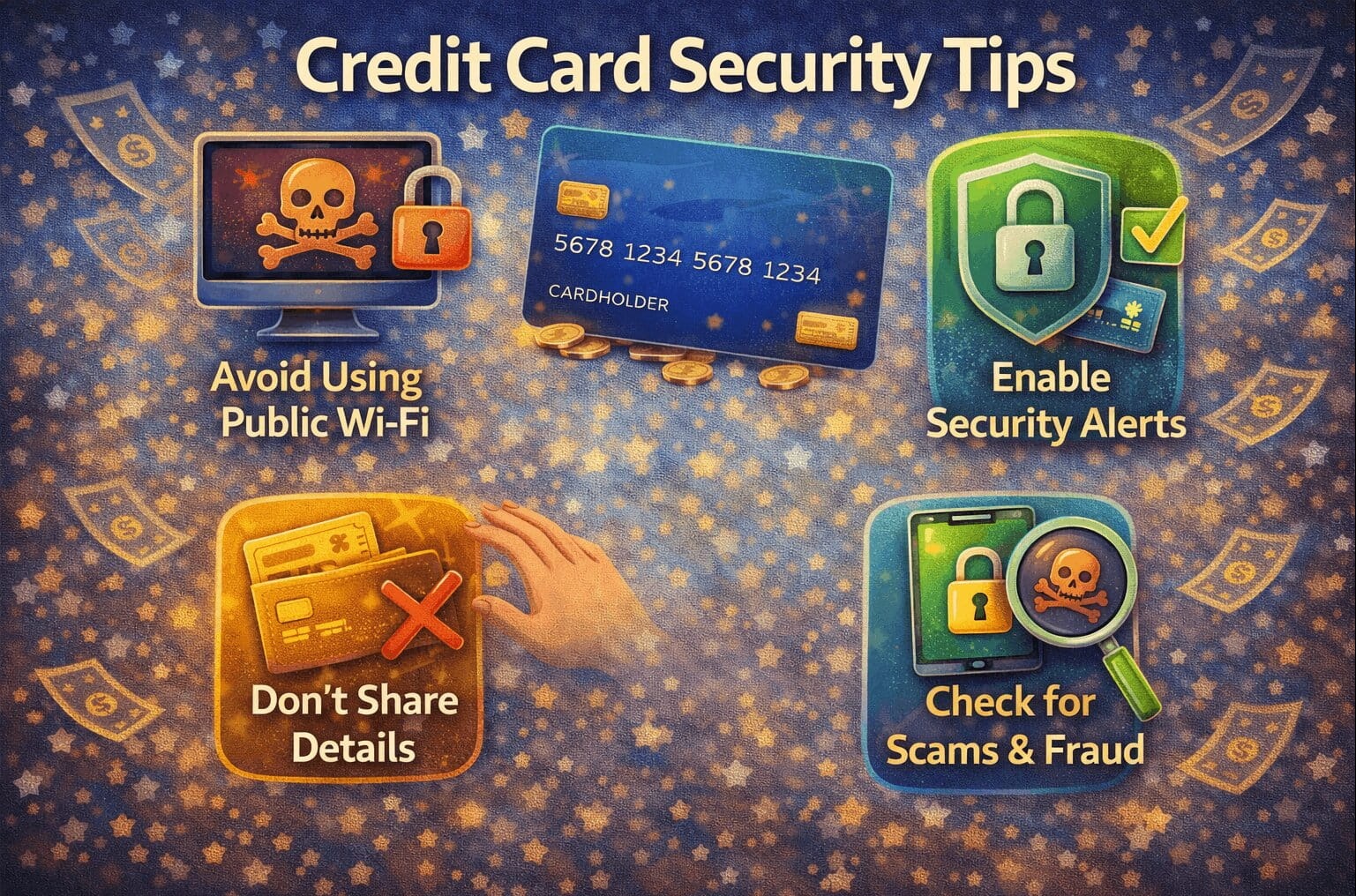
Credit cards make payments fast and convenient—but they also come with risks. Fraud, identity theft, and unauthorized transactions are real concerns in today’s digital world.
The good news is that most credit card fraud is preventable with the right habits. By staying alert and using a few simple strategies, you can protect your card, your money, and your personal information.
This guide covers practical credit card security tips that anyone can follow.
Why Credit Card Security Matters
Credit card fraud can happen in many ways:
- Stolen physical cards
- Data breaches from online stores
- Phishing emails or fake websites
- Skimming devices at ATMs or gas stations
Even though most banks offer fraud protection, dealing with unauthorized transactions can be stressful and time-consuming.
That’s why prevention is always better than recovery.
Keep Your Card Information Private
Your credit card number, CVV, and expiration date are sensitive details.
Never share this information over:
- Phone calls (unless you initiated them)
- Emails or messages
- Unsecured websites
Scammers often pose as banks or companies to trick you into revealing your details.
If something feels suspicious, it probably is.
Use Secure Websites for Online Payments
When shopping online, always check that the website is secure.
Look for:
- “https://” in the URL
- A padlock icon in the browser
Avoid entering your card details on unfamiliar or poorly designed websites.
If possible, stick to trusted platforms and retailers.
Enable Transaction Alerts
Most banks offer real-time alerts for transactions.
You can receive notifications for:
- Purchases
- Large transactions
- International activity
These alerts help you detect unauthorized activity immediately.
If you notice anything unusual, you can act quickly before the issue escalates.
Monitor Your Statements Regularly
Don’t wait until the end of the month to review your credit card statement.
Check your transactions frequently to ensure:
- All charges are legitimate
- No unknown transactions appear
Even small unauthorized charges should be reported, as they may indicate a larger issue.
Avoid Public Wi-Fi for Transactions
Public Wi-Fi networks are not always secure. Hackers can intercept data transmitted over these networks.
Avoid using your credit card on public Wi-Fi, especially for:
- Online shopping
- Banking
- Entering sensitive information
If necessary, use a secure connection or a VPN.
Use Strong Passwords and Two-Factor Authentication
If you manage your credit card through online banking, your account security is just as important as your card security.
Use:
- Strong, unique passwords
- Two-factor authentication (2FA)
This adds an extra layer of protection, making it harder for unauthorized users to access your account.
Be Careful with Saved Card Details
Saving your credit card information on websites can be convenient—but it also increases risk.
If a website is hacked, your saved details could be exposed.
Only save your card information on trusted platforms, and consider avoiding it altogether for added security.
Protect Your Physical Card
Your physical card is just as important as your digital information.
Keep your card in a safe place and avoid leaving it unattended.
When making payments:
- Don’t let your card out of sight
- Be cautious at restaurants or stores
If your card is lost or stolen, report it immediately.
Watch Out for Skimming Devices
Skimming devices are used to steal card information from ATMs or payment terminals.
To protect yourself:
- Use ATMs in secure, well-lit locations
- Check for unusual attachments on card slots
- Avoid machines that look tampered with
These small checks can prevent major problems.
Use Contactless and Digital Wallets
Contactless payments and digital wallets (like Apple Pay or Google Pay) add an extra layer of security.
They use tokenization, which means your actual card number is not shared during the transaction.
This makes them safer than traditional card swipes in many cases.
To learn more:
Digital Wallets Explained
https://statush.com/credit-cards-banking/digital-wallets-explained
Set Spending Limits and Controls
Some banks allow you to set limits on your card usage.
You can control:
- Maximum transaction amounts
- International usage
- Online transactions
These settings can reduce the risk of large unauthorized charges.
What to Do If Your Card Is Compromised
Even with precautions, issues can still happen. The key is acting quickly.
If you suspect fraud:
- Contact your bank immediately
- Block or freeze your card
- Review recent transactions
- File a dispute for unauthorized charges
Most credit cards offer zero liability protection, meaning you won’t be responsible for fraudulent transactions if reported promptly.
Real-World Example
Let’s say Priya receives a notification for a $200 purchase she didn’t make.
Because she enabled transaction alerts, she notices it instantly and contacts her bank.
Her card is blocked, and the transaction is reversed.
Without alerts, she might not have noticed until weeks later—making the situation more complicated.
Common Mistakes to Avoid
Many people unknowingly increase their risk.
Some common mistakes include:
- Sharing card details over phone or email
- Using public Wi-Fi for transactions
- Ignoring small suspicious charges
- Using weak passwords
Avoiding these habits can significantly improve your security.
A Simple Security Checklist
Here’s a quick checklist to stay safe:
- Keep your card details private
- Use secure websites
- Enable alerts
- Monitor transactions regularly
- Avoid public Wi-Fi for payments
- Use strong passwords and 2FA
Following these steps consistently can prevent most fraud cases.
A Simple Way to Think About It
Credit card security is not about paranoia—it’s about awareness.
Small habits make a big difference.
Just like locking your door at home, these actions become routine over time.
Final Thoughts
Credit cards are safe when used correctly, but they require attention and responsibility.
By staying alert, using secure practices, and acting quickly when something seems wrong, you can protect yourself from fraud and enjoy the benefits of credit cards without unnecessary risk.
In the end, security isn’t complicated—it’s consistent.