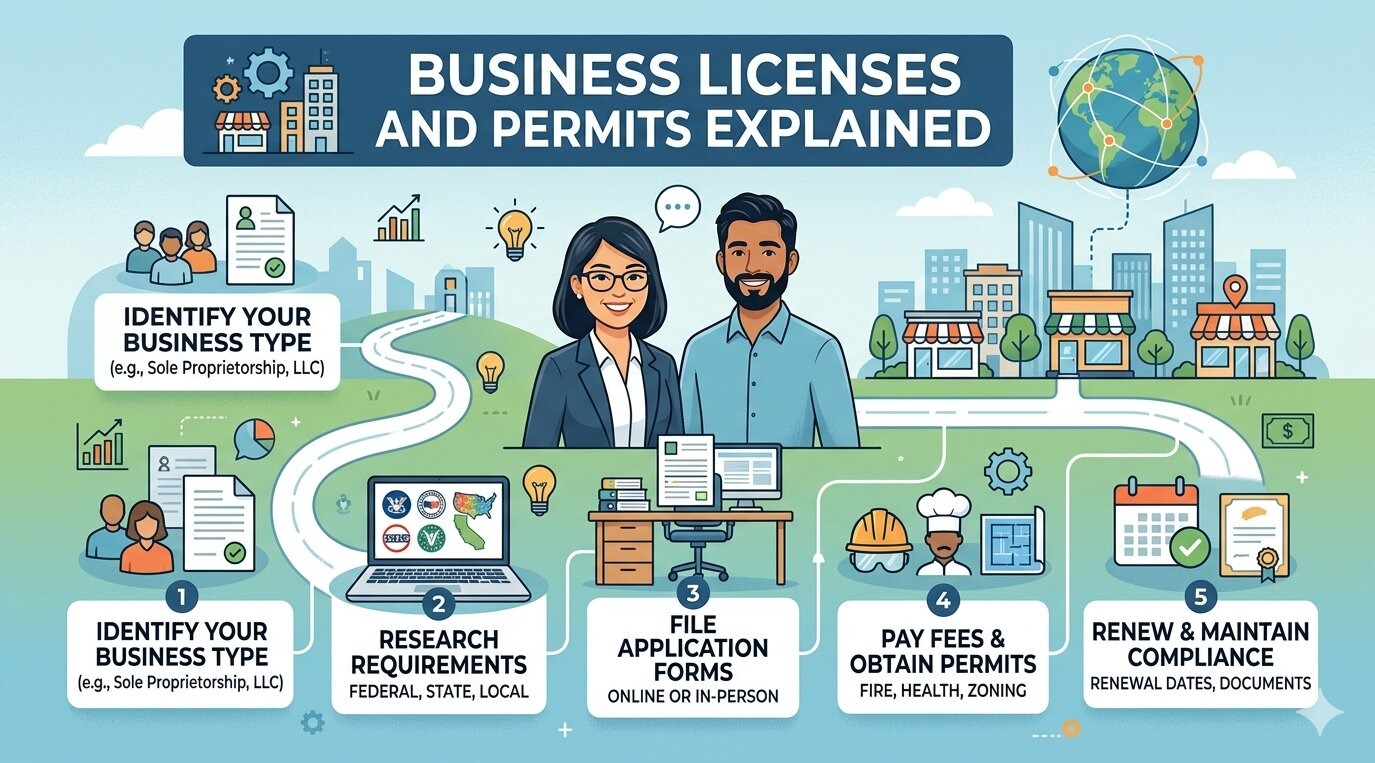
Starting a business is exciting—there’s the idea, the planning, the branding—but then comes the part most people don’t look forward to: licenses and permits. It can feel confusing, bureaucratic, and honestly, a bit overwhelming at first. But here’s the truth—once you understand the basics, it’s far more manageable than it seems.
Think of licenses and permits as your official “permission slip” to operate legally. Without them, even the best business idea can run into serious trouble.
Let’s break it down in a simple, practical way so you know exactly what to expect and how to handle it.
What Are Business Licenses and Permits?
At a basic level, business licenses and permits are approvals issued by government authorities that allow you to legally operate your business.
- License = General permission to run a business
- Permit = Specific approval for certain activities (like health, safety, or zoning)
Almost every business needs at least one license. Depending on what you do, you might need several permits too.
For example:
- A restaurant needs a health permit
- A construction company needs safety permits
- An online business might only need a basic registration
Why They Matter More Than You Think
It’s tempting to skip this step, especially when you’re just starting out. But that’s a risky move.
Operating without proper licenses can lead to:
- Heavy fines
- Business shutdowns
- Legal trouble
- Loss of credibility
On the flip side, having everything in place gives you:
- Peace of mind
- Trust from customers
- Easier access to funding
If you’re still in the early stages, it helps to understand the full process of setting up a business. You can explore that here:
How to Start a Small Business in the USA (Step-by-Step)
https://statush.com/business/how-to-start-a-small-business-in-the-usa-step-by-step
Types of Licenses and Permits
Not all businesses need the same approvals. It depends on your industry, location, and structure.
Here’s a simple breakdown:
| Type | What It Covers | Example |
|---|---|---|
| General Business License | Basic right to operate | Most businesses |
| Professional License | Skill-based professions | Doctors, lawyers |
| Health Permit | Food and hygiene standards | Restaurants |
| Sales Tax Permit | Selling taxable goods | Retail stores |
| Zoning Permit | Location approval | Home-based business |
| Environmental Permit | Impact on environment | Manufacturing units |
This table gives you a quick snapshot, but in reality, your exact requirements depend on your business model.
Real-World Example
Let’s say you want to open a small café.
Here’s what you’ll typically need:
- Business registration
- Food safety permit
- Fire safety clearance
- Local municipal license
- Signage permit (for your café board)
Now compare that with an online freelance business:
- Business registration
- Possibly a tax ID
That’s it. Huge difference, right?
This is why understanding your specific business type matters so much.
How to Figure Out What You Need
This is where many people get stuck. The process isn’t always straightforward, but there are practical ways to simplify it.
1. Start with Your Business Type
Are you selling products? Offering services? Working from home?
Each category has different rules.
If you’re still validating your idea, check this guide:
How to Validate a Business Idea Before Launch
https://statush.com/business/how-to-validate-a-business-idea-before-launch
2. Check Your Location
Licenses can come from:
- Federal (rare, industry-specific)
- State
- City or local authority
Most small businesses deal mainly with state and local requirements.
3. Understand Your Industry
Some industries are heavily regulated:
- Food
- Healthcare
- Finance
- Construction
Others are relatively simple:
- Freelancing
- Consulting
- Digital services
The Application Process (Step-by-Step)
Let’s make this practical.
Step 1: Register Your Business
Before anything else, your business must exist legally.
If you haven’t done this yet, start here:
How to Register a Business Name in the USA
https://statush.com/business/how-to-register-a-business-name-in-the-usa
Step 2: Apply for Basic License
This is usually your general business license.
Step 3: Get Industry-Specific Permits
Depending on your work:
- Food → Health permit
- Construction → Safety permits
- Retail → Sales tax permit
Step 4: Check Local Requirements
Cities often have additional rules:
- Zoning
- Signage
- Parking regulations
Step 5: Renew and Maintain
Licenses aren’t always one-time. Many need:
- Annual renewal
- Inspections
- Compliance checks
Common Mistakes to Avoid
This is where many new entrepreneurs slip up.
1. Assuming You Don’t Need One
Even home-based or online businesses often require registration.
2. Ignoring Local Rules
State approval doesn’t mean city approval.
3. Delaying Applications
Some permits take weeks. Plan ahead.
4. Not Budgeting for Costs
Licenses aren’t always cheap. Include them in your planning.
If you’re working on your financial planning, this can help:
How to Write a Business Plan That Works
https://statush.com/business/how-to-write-a-business-plan-that-works
Costs Involved
Costs vary widely, but here’s a rough idea:
- Basic license: $50 – $400
- Industry permits: $100 – $1,000+
- Renewals: Annual fees
Some businesses spend very little, while others (like restaurants or manufacturing units) invest significantly more.
Practical Tips (From Experience)
Let’s keep this real—this process can feel tedious. But a few smart moves make it easier:
- Start early – Don’t wait until launch week
- Keep copies of everything – Digital + physical
- Use official websites only – Avoid scams
- Ask local experts – Accountants or consultants help
- Bundle applications when possible – Saves time
How Licenses Connect to Other Business Steps
Licenses don’t exist in isolation—they’re part of a bigger system.
For example:
- You need them before opening a bank account
- They’re required for loans or funding
- Investors often check compliance
If you’re planning funding, explore:
How to Get a Small Business Loan in the USA
https://statush.com/business/how-to-get-a-small-business-loan-in-the-usa
Or if you’re building from scratch:
How to Build a Business from Scratch
https://statush.com/business/how-to-build-a-business-from-scratch
Final Thoughts
Licenses and permits might not be the most exciting part of starting a business, but they’re one of the most important.
Think of them as the foundation. Without them, everything else becomes unstable.
The good news? Once you go through the process once, it becomes much easier to handle in the future. And more importantly, it puts you in a position where you can grow your business confidently—without worrying about legal surprises.
Take it step by step, stay organized, and don’t rush through it. It’s one of those areas where doing things properly really pays off.