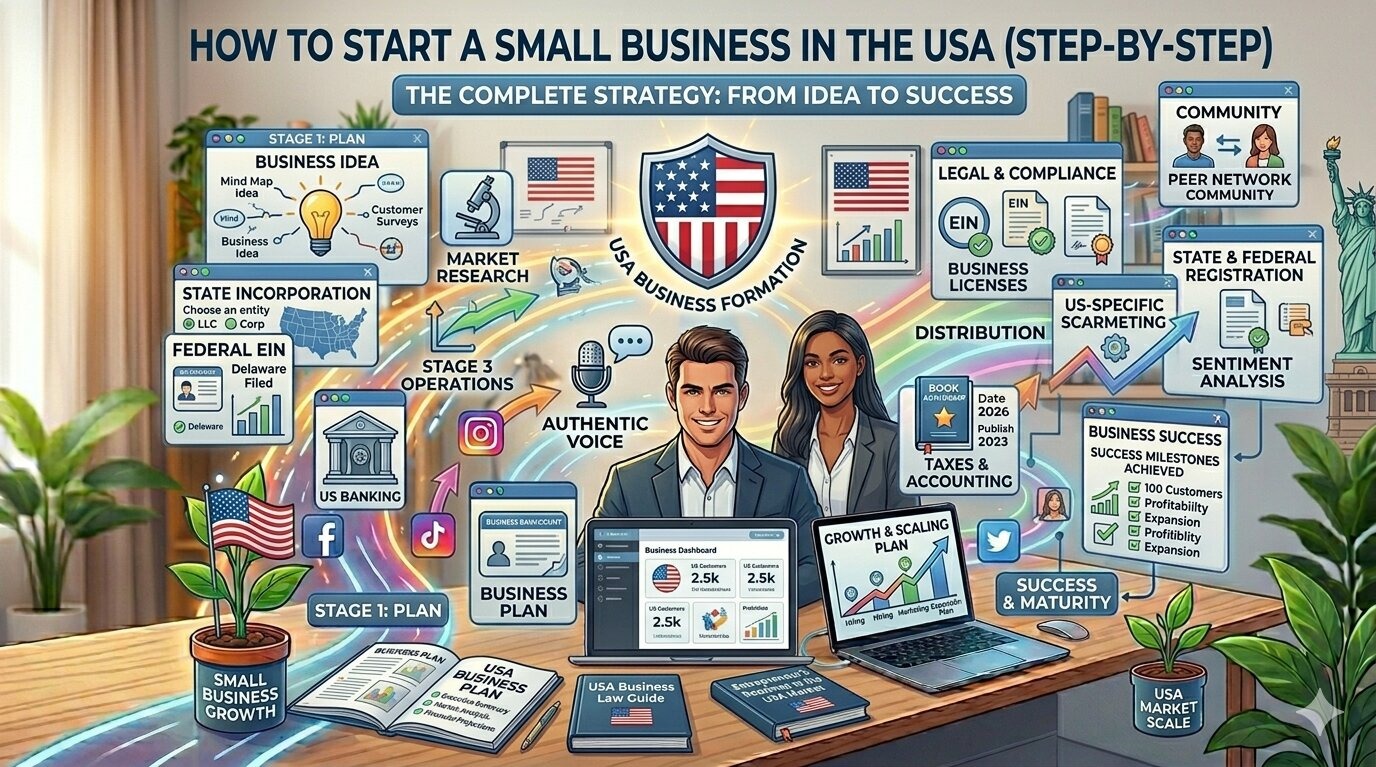
Starting a small business in the USA sounds exciting—and it is—but it can also feel overwhelming if you don’t know where to begin. There are legal steps, financial decisions, and practical realities to consider. The good news? If you break it down step by step, it becomes much more manageable.
This guide walks you through the entire process in a simple, practical way—no fluff, just what actually matters.
Step 1: Start With a Clear Business Idea
Before anything else, you need a business idea that makes sense—not just something trendy.
Ask yourself:
- What problem am I solving?
- Who will pay for this?
- Why would they choose me?
For example, instead of saying “I want to start a clothing brand,” think more specifically:
- Affordable gym wear for beginners
- Sustainable fashion for eco-conscious buyers
The clearer your idea, the easier everything else becomes.
If you’re unsure, you can explore ideas from
Best Profitable Small Business Ideas in the USA
https://statush.com/business/best-profitable-small-business-ideas-in-the-usa
Step 2: Validate Your Idea Before Spending Money
This is where most beginners go wrong—they jump straight into building without testing.
Validation simply means checking if people are actually willing to pay.
Simple validation methods:
- Ask potential customers directly
- Create a basic landing page
- Sell before building (pre-orders)
- Run small ads and track interest
Real-world example:
A person planning to open a bakery started by selling homemade cakes through Instagram. Within 2 months, they had regular orders—proof that demand existed.
Before investing heavily, read
How to Validate a Business Idea Before Launch
https://statush.com/business/how-to-validate-a-business-idea-before-launch
Step 3: Choose the Right Business Structure
This step is about legality and taxes. In the USA, the most common structures are:
| Structure | Best For | Key Benefit | Drawback |
|---|---|---|---|
| Sole Proprietorship | Beginners | Easy to start | No liability protection |
| LLC | Small businesses | Personal asset protection | Slightly higher cost |
| Corporation | Larger startups | Investment-friendly | Complex setup |
Most small business owners start with an LLC because it balances simplicity and protection.
Tip: Don’t overthink this—start simple, you can always upgrade later.
Step 4: Pick and Register Your Business Name
Your business name matters more than you think—it’s your brand identity.
What makes a good name:
- Easy to remember
- Easy to spell
- Not too long
- Available as a domain
Once finalized, you need to register it officially.
Follow this guide
How to Register a Business Name in the USA
https://statush.com/business/how-to-register-a-business-name-in-the-usa
Practical tip:
Before locking your name, check:
- Domain availability (.com preferred)
- Social media handles
- Trademark conflicts
Step 5: Get Required Licenses and Permits
Depending on your business type and location, you may need:
- Local business license
- Sales tax permit
- Health permits (for food businesses)
- Professional licenses (for services)
For example:
- A food truck needs health inspection approval
- An online store may need a sales tax ID
This step varies by state, so always check your local government website.
Step 6: Open a Business Bank Account
Mixing personal and business money is a mistake many beginners regret later.
Open a separate business account to:
- Track income and expenses clearly
- Build financial credibility
- Simplify tax filing
Real-world example:
A freelancer who didn’t separate accounts struggled during tax season because every transaction had to be manually sorted.
Step 7: Create a Simple Business Plan
You don’t need a 50-page document. Keep it practical.
Your plan should answer:
- What are you selling?
- Who are your customers?
- How will you make money?
- What are your costs?
Here’s a simple breakdown:
| Section | What to Include |
|---|---|
| Idea | What your business does |
| Market | Target customers |
| Revenue | Pricing and income model |
| Costs | Startup and monthly expenses |
| Strategy | How you’ll grow |
For a deeper guide, read
How to Write a Business Plan That Works
https://statush.com/business/how-to-write-a-business-plan-that-works
Step 8: Set Up Your Online Presence
Today, almost every business needs an online presence—even local ones.
Start with:
- A basic website (even a one-page site works)
- Social media profiles
- Google Business listing (for local businesses)
Tip:
Don’t aim for perfection. A simple website that clearly explains your offer is enough to start.
Step 9: Focus on Your First Customers
Your first 10–50 customers are more important than scaling.
How to get them:
- Personal network (friends, family, referrals)
- Social media posts
- Local communities
- Direct outreach
Example:
A cleaning service owner got their first clients by posting in local Facebook groups—no ads, no website initially.
Step 10: Learn, Adjust, and Improve
No business starts perfectly. The key is to adapt quickly.
Pay attention to:
- Customer feedback
- What sells vs what doesn’t
- Where you’re losing money
Small improvements over time make a huge difference.
Honest opinion:
Most successful businesses didn’t start with a perfect plan—they improved along the way.
Common Mistakes to Avoid
Let’s keep this real—here are mistakes that can slow you down:
- Overplanning without action
- Spending too much before validation
- Ignoring customer feedback
- Trying to do everything alone
- Waiting for “perfect timing”
Starting imperfectly is better than not starting at all.
Final Thoughts
Starting a small business in the USA isn’t as complicated as it seems—if you follow a clear path.
Focus on:
- A real problem
- Validated demand
- Simple setup
- Consistent execution
Everything else can be figured out along the way.
And remember, most successful entrepreneurs didn’t have everything figured out on day one—they just started and kept going.