Setting the right rental price is one of the most important decisions you’ll make as a real estate investor. Price it too high, and your property sits vacant. Price it too low, and you leave money on the table every single month.
The goal isn’t just to “get tenants”—it’s to maximize long-term returns while maintaining consistent occupancy. That balance requires a mix of market research, financial analysis, and a bit of real-world judgment.
This guide walks you through how to set rental prices in the U.S., with practical examples, proven methods, and common mistakes to avoid.
Why Rental Pricing Matters
Rental pricing directly affects:
- Cash flow
- Vacancy rates
- Tenant quality
- Long-term profitability
Even a small pricing mistake can have a big impact.
Example:
- Rent set $150 too low → $1,800 lost per year
- Rent set too high → 2 months vacancy → $3,000+ lost
Pricing isn’t just about income—it’s about strategy.
If you're new to investing, start here:
How Real Estate Investing Works — https://statush.com/real-estate/how-real-estate-investing-works
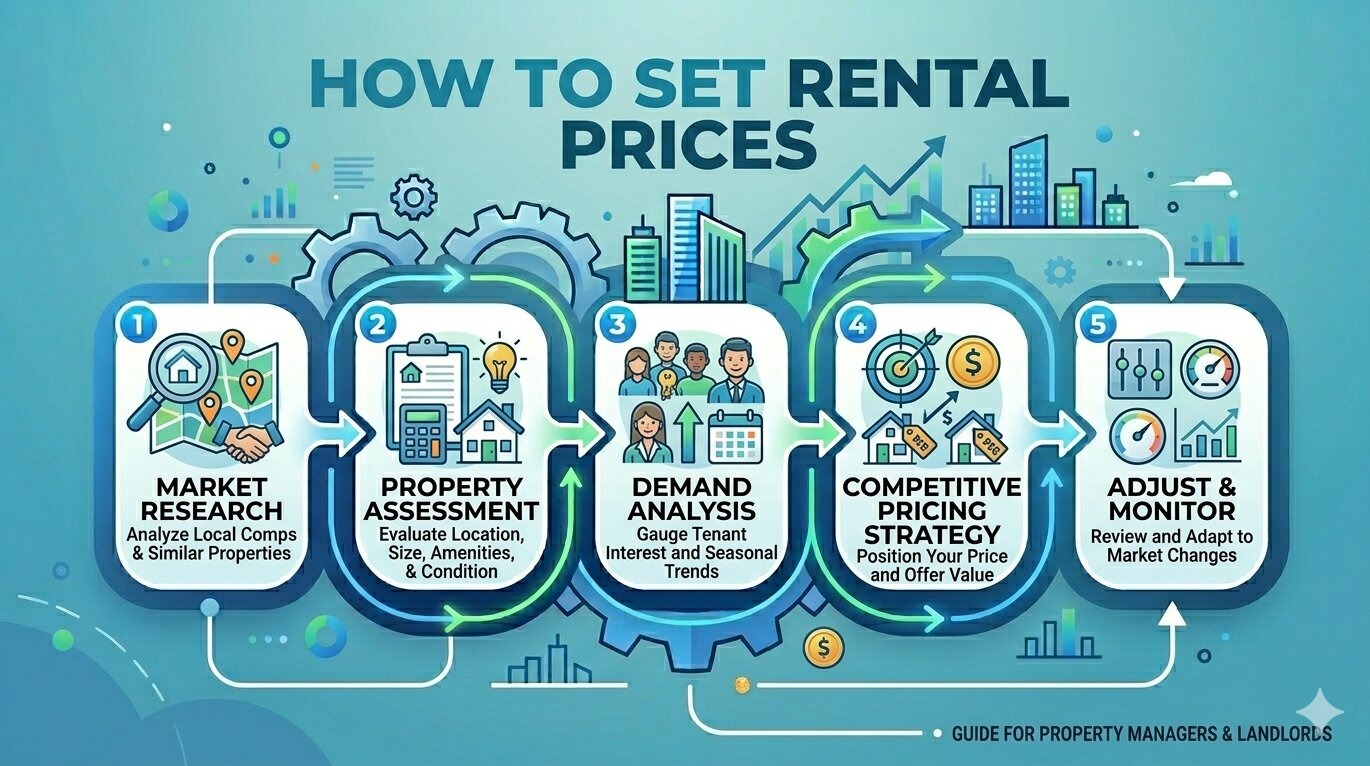
The Rental Pricing Process
Setting rent isn’t guesswork—it follows a structured approach.
| Step | What You Do | Purpose |
|---|---|---|
| Market Research | Analyze comparable rentals | Understand demand |
| Property Evaluation | Assess features and condition | Position your property |
| Financial Analysis | Calculate required returns | Ensure profitability |
| Price Testing | Adjust based on response | Optimize occupancy |
Each step helps you arrive at a realistic and competitive price.
Real-World Example: Pricing in Action
Let’s take a rental property in Austin, Texas:
Comparable Properties:
- Similar homes renting for: $1,800–$2,000
Your Property:
- Recently renovated
- Slightly better interior
Pricing Decision:
- List at $1,950
Outcome:
- Strong interest within 1 week
- Tenant secured at $1,925
This shows how pricing slightly below the top of the market can attract faster results while still maximizing income.
Step 1: Analyze Comparable Rentals (Comps)
This is the most important step.
Look for properties that match:
- Location (same neighborhood)
- Size (bedrooms, bathrooms, square footage)
- Condition and amenities
Where to Find Comps:
- Zillow
- Rentometer
- Local listings
Focus on actual rented prices, not just listed prices when possible.
Step 2: Evaluate Your Property
Your property may not be identical to others.
Factors that can increase rent:
- Renovated kitchen or bathrooms
- Modern appliances
- Parking or garage
- Good school district
Factors that can reduce rent:
- Older condition
- Poor location within neighborhood
- Limited amenities
Be honest—overestimating your property leads to longer vacancies.
Step 3: Understand Your Numbers
Rental pricing should always align with your financial goals.
Key factors to consider:
- Mortgage payment
- Property taxes
- Insurance
- Maintenance costs
Example:
| Item | Monthly Cost |
|---|---|
| Mortgage | $1,200 |
| Taxes & Insurance | $300 |
| Maintenance | $200 |
| Total Expenses | $1,700 |
If market rent is $1,900:
- Cash flow: $200/month
To understand profitability:
How to Analyze Rental Property Profitability — https://statush.com/real-estate/how-to-analyze-rental-property-profitability
Step 4: Adjust Based on Market Demand
Markets are dynamic—pricing must adapt.
High Demand Market:
- You can price at the higher end
- Properties rent quickly
Low Demand Market:
- Competitive pricing becomes critical
- Slight discounts can reduce vacancy time
Understanding supply and demand helps:
Housing Supply and Demand Explained — https://statush.com/real-estate/housing-supply-and-demand-explained
Pricing Strategies That Work
Experienced investors don’t just set a price—they use strategies.
1. Competitive Pricing
Set rent slightly below top competitors to attract more applicants quickly.
2. Psychological Pricing
Example:
- $1,995 instead of $2,000
Small difference, but it feels more affordable.
3. Value-Based Pricing
Charge higher rent if your property offers clear advantages.
When to Increase Rent
Rental prices shouldn’t stay static.
Consider increasing rent when:
- Market rents rise
- Lease renewals occur
- Property improvements are made
Be cautious—large increases can lead to tenant turnover.
Balancing Rent vs Vacancy
One of the biggest trade-offs in pricing is:
- Higher rent vs longer vacancy
Example:
| Scenario | Outcome |
|---|---|
| Rent at $2,000, 2-month vacancy | $20,000/year |
| Rent at $1,900, no vacancy | $22,800/year |
Lower rent with full occupancy often produces better returns.
Common Mistakes to Avoid
Overpricing Based on Emotion
Just because you invested more doesn’t mean the market will pay more.
Ignoring Market Data
Always rely on comps, not assumptions.
Not Adjusting Price Quickly
If there’s no interest after 2–3 weeks, the price is likely too high.
Underpricing Out of Fear
This leads to consistent income loss over time.
For broader mistakes:
Real Estate Investing Mistakes to Avoid in USA — https://statush.com/real-estate/real-estate-investing-mistakes-to-avoid-in-usa
Rental Pricing and Tenant Quality
Pricing also affects who applies for your property.
| Price Level | Tenant Type |
|---|---|
| Too Low | Higher risk tenants |
| Market Rate | Balanced applicants |
| Slightly Premium | Higher-quality tenants |
The goal is to attract reliable tenants—not just fill vacancies quickly.
To understand screening:
How to Screen Rental Tenants — https://statush.com/real-estate/how-to-screen-rental-tenants
Rental Pricing and Portfolio Growth
Consistent pricing strategy helps scale your portfolio.
- Better cash flow → More reinvestment
- Lower vacancy → Stable income
- Higher tenant quality → Fewer issues
This directly impacts long-term growth.
To learn more:
How to Build a Rental Property Portfolio — https://statush.com/real-estate/how-to-build-a-rental-property-portfolio
When Pricing Matters Most
Pricing becomes especially critical when:
- You operate in competitive markets
- You rely on rental income
- You manage multiple properties
It’s less sensitive when:
- Demand is extremely high
- Inventory is very limited
Final Thoughts
Setting rental prices is both a science and an art. The best investors combine:
- Data (market comps, expenses)
- Strategy (pricing approach)
- Experience (understanding demand)
The goal isn’t just to maximize rent—it’s to maximize long-term returns.
If you consistently price your properties correctly, you’ll benefit from:
- Stable occupancy
- Better tenants
- Stronger cash flow
Over time, these small pricing decisions compound into significant financial results.
To see how pricing fits into a broader strategy:
Best Real Estate Investment Strategies — https://statush.com/real-estate/best-real-estate-investment-strategies