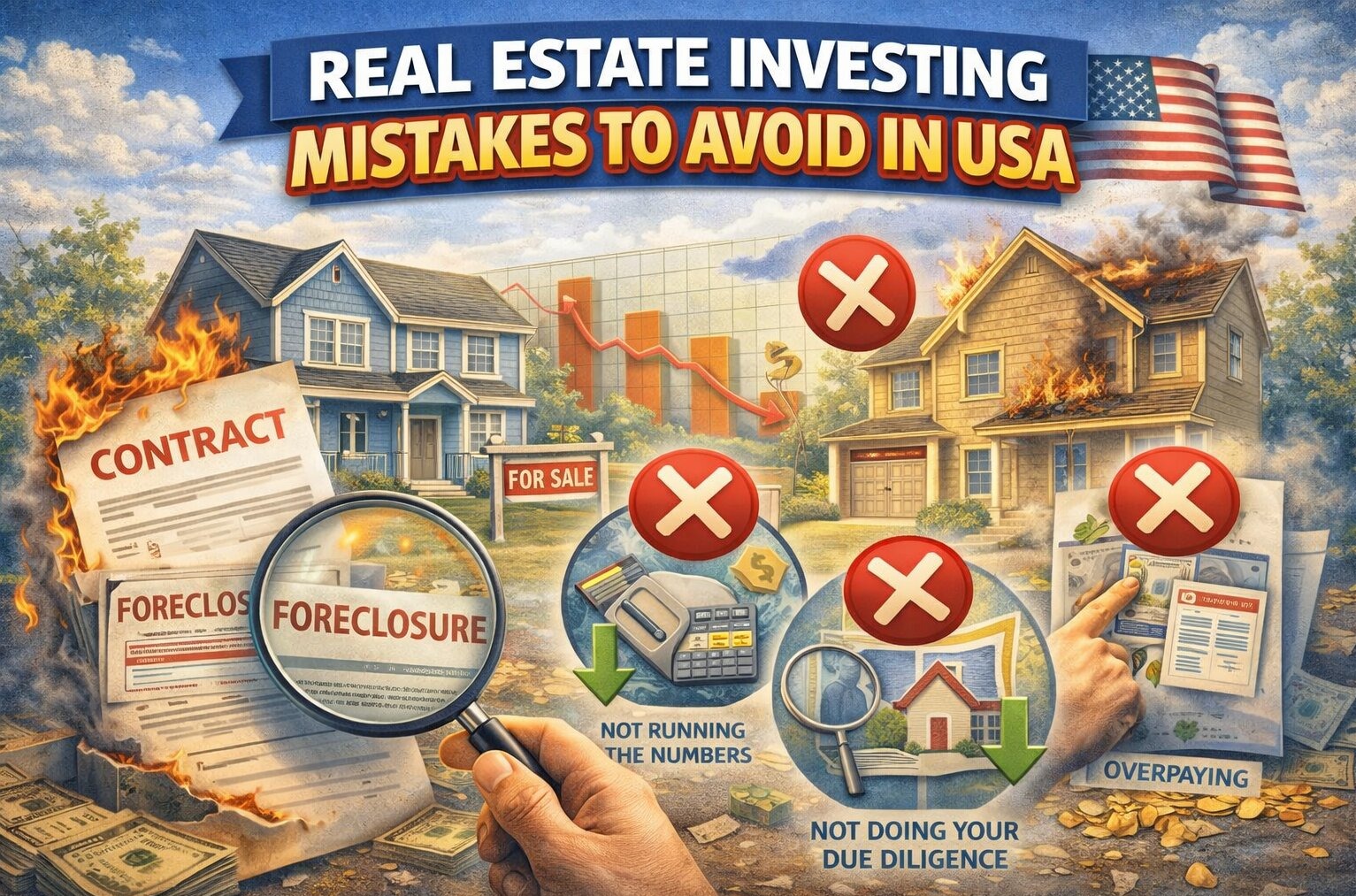
Real estate investing in the United States offers strong opportunities for building wealth—but it’s not without risk. Many beginners (and even experienced investors) make avoidable mistakes that can cost thousands of dollars, delay growth, or even lead to complete losses.
The truth is, success in real estate is less about finding “perfect deals” and more about avoiding costly errors consistently.
This guide breaks down the most common real estate investing mistakes in the U.S., with real-world examples, practical insights, and strategies to help you stay on track.
Why Avoiding Mistakes Matters
In real estate, mistakes are expensive—and often long-lasting.
Example:
- Overpaying by $20,000 on a deal
- Unexpected repairs: $15,000
- Vacancy loss: $5,000
Total impact: $40,000+ loss
Avoiding just one major mistake can make a bigger difference than finding one great deal.
If you're new to investing, start here:
How Real Estate Investing Works — https://statush.com/real-estate/how-real-estate-investing-works
The Most Common Real Estate Investing Mistakes
Let’s break down the key mistakes investors make—and how to avoid them.
1. Overpaying for a Property
This is one of the biggest and most common mistakes.
Why It Happens:
- Emotional decisions
- Competitive markets
- Poor deal analysis
Real-World Example:
An investor buys a property for $320,000 when comparable homes are selling for $290,000.
Result:
- Limited appreciation potential
- Lower ROI
- Difficult resale
How to Avoid:
- Analyze comparable sales (comps)
- Stick to your numbers
- Be willing to walk away
2. Underestimating Renovation Costs
Renovation budgets often go over—sometimes significantly.
Why It Happens:
- Hidden issues (plumbing, electrical)
- Poor contractor estimates
- Scope creep
Example:
- Estimated rehab: $25,000
- Actual cost: $40,000
How to Avoid:
- Add a 10–20% contingency buffer
- Get multiple contractor quotes
- Inspect properties thoroughly
3. Ignoring Cash Flow
Many investors focus only on appreciation and ignore monthly income.
Problem:
- Negative cash flow
- Financial stress
- Limited scalability
Solution:
- Ensure rent covers expenses
- Prioritize cash flow-positive deals
To understand this better:
Cash Flow vs Appreciation in Real Estate — https://statush.com/real-estate/cash-flow-vs-appreciation-in-real-estate
4. Poor Location Selection
Location is one of the most important factors in real estate.
Bad Location Issues:
- Low demand
- High vacancy
- Limited appreciation
Good Location Traits:
- Job growth
- Population growth
- Strong rental demand
For market insights:
Best Cities in the USA for Real Estate Investors — https://statush.com/real-estate/best-cities-in-the-usa-for-real-estate-investors
5. Skipping Proper Tenant Screening
Bad tenants can quickly turn a good investment into a bad one.
Risks:
- Missed rent payments
- Property damage
- Legal costs
Solution:
- Verify income
- Check credit history
- Contact previous landlords
Learn more:
How to Screen Rental Tenants — https://statush.com/real-estate/how-to-screen-rental-tenants
6. Underestimating Expenses
Many investors focus only on mortgage payments and ignore other costs.
Common Overlooked Expenses:
- Maintenance
- Property taxes
- Insurance
- Vacancy
Example:
| Expense Type | Monthly Cost |
|---|---|
| Mortgage | $1,200 |
| Taxes & Insurance | $400 |
| Maintenance | $300 |
| Total | $1,900 |
Accurate budgeting is essential.
7. Poor Property Management
Even a great property can perform poorly with bad management.
Problems:
- Delayed maintenance
- Poor tenant communication
- High turnover
Solution:
- Build systems
- Hire professionals if needed
To understand management:
Property Management Basics — https://statush.com/real-estate/property-management-basics
8. Lack of Financial Planning
Real estate requires more than just buying property.
Common Issues:
- No emergency fund
- Over-leveraging
- Poor cash reserves
Solution:
- Maintain reserves (3–6 months expenses)
- Avoid excessive debt
9. Not Understanding Market Cycles
Markets don’t always go up.
Risks:
- Buying at peak prices
- Selling during downturns
Solution:
- Study market trends
- Invest with long-term perspective
Learn more:
Real Estate Market Cycles Explained — https://statush.com/real-estate/real-estate-market-cycles-explained
10. Trying to Scale Too Quickly
Growth is good—but too fast can be dangerous.
Problems:
- Poor deal quality
- Financial stress
- Management issues
Solution:
- Scale gradually
- Focus on quality over quantity
For portfolio growth:
How to Build a Rental Property Portfolio — https://statush.com/real-estate/how-to-build-a-rental-property-portfolio
Mistake Summary Table
| Mistake | Impact | Solution |
|---|---|---|
| Overpaying | Lower returns | Analyze comps |
| Underestimating rehab | Budget overruns | Add contingency |
| Ignoring cash flow | Financial stress | Focus on income |
| Poor location | Low demand | Research markets |
| Bad tenants | Losses & damage | Screen properly |
| Underestimating expenses | Reduced profit | Budget accurately |
Real-World Scenario: Multiple Mistakes Combined
Let’s look at a realistic situation:
- Property bought above market value
- Rehab costs underestimated
- Poor tenant screening
- High vacancy
Result:
- Negative cash flow
- Unexpected expenses
- Stress and financial loss
This is how small mistakes compound into major problems.
Practical Tips to Avoid Mistakes
1. Do Thorough Research
Never rush into a deal.
2. Stick to Your Numbers
Emotions should not drive decisions.
3. Build a Strong Team
Agents, contractors, and property managers matter.
4. Learn Continuously
Markets and strategies evolve.
5. Start Small
Gain experience before scaling.
Mistakes vs Experience
Here’s an important perspective:
- Beginners make mistakes due to lack of knowledge
- Experienced investors make fewer mistakes—but still stay cautious
The goal isn’t perfection—it’s continuous improvement.
When Mistakes Are Most Likely
Mistakes are more common when:
- You’re new to investing
- Markets are highly competitive
- You rush decisions
- You lack proper systems
Awareness is your first line of defense.
Final Thoughts
Real estate investing is one of the most effective ways to build wealth—but only if you avoid the common pitfalls.
The most successful investors are not the ones who never make mistakes—they’re the ones who:
- Learn quickly
- Stay disciplined
- Focus on fundamentals
By avoiding the mistakes outlined in this guide, you can protect your capital, improve your returns, and build a more sustainable real estate portfolio.
To explore proven strategies:
Best Real Estate Investment Strategies — https://statush.com/real-estate/best-real-estate-investment-strategies