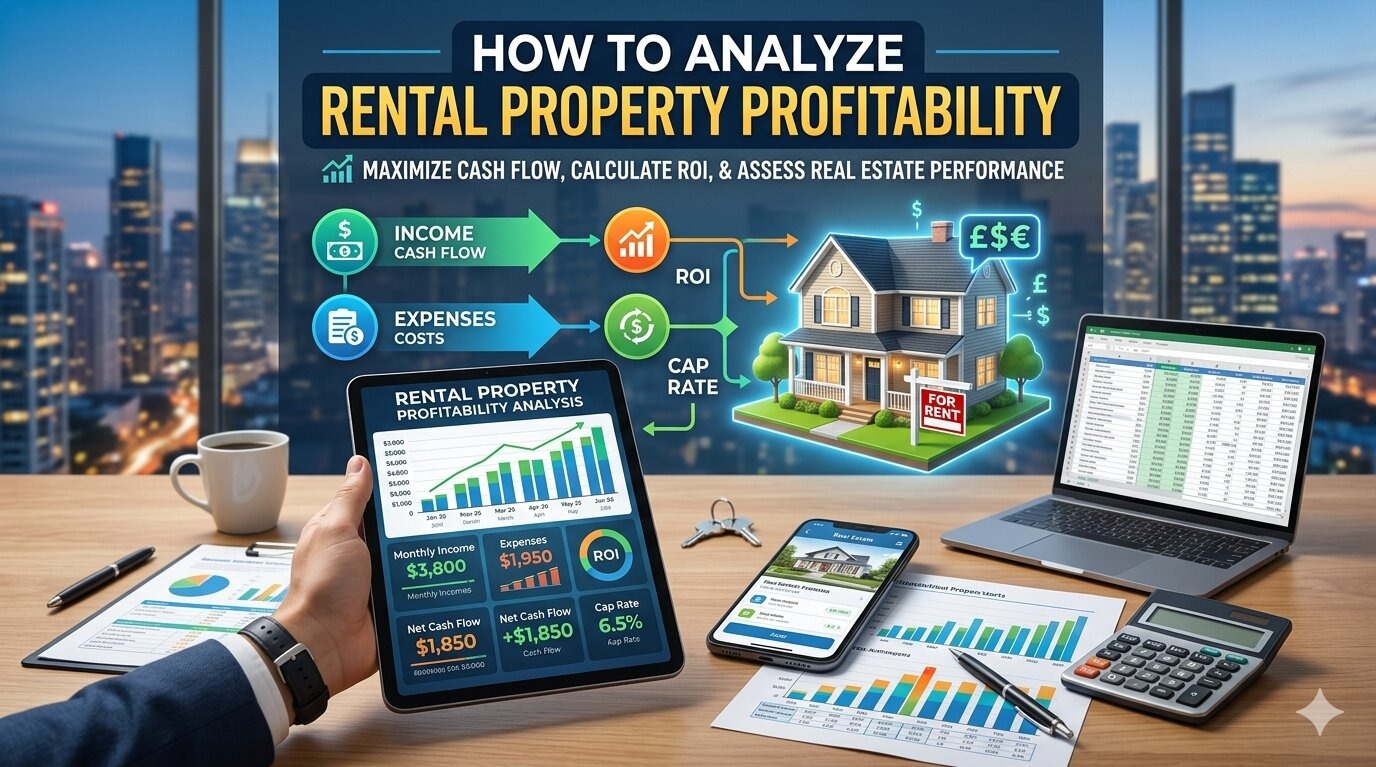
Analyzing rental property profitability is the step that separates smart investors from risky ones. A property might look attractive—but unless the numbers work, it can quickly become a financial burden.
The goal is simple: understand how much money a property will make, how risky it is, and whether it fits your investment strategy.
If you're new to real estate, start here:
How Real Estate Investing Works
https://statush.com/real-estate/how-real-estate-investing-works
Let’s break down how to analyze rental property profitability in a clear, practical way.
What Does Profitability Mean in Real Estate?
Profitability is the ability of a property to generate financial returns over time.
It includes:
- Monthly cash flow
- Long-term appreciation
- Tax benefits
- Equity growth
A profitable deal doesn’t just look good—it performs well across these factors.
Step 1: Calculate Rental Income
Start by estimating how much income the property will generate.
How to Estimate Rent
- Compare similar properties in the area
- Check rental listings and platforms
- Consult local property managers
Example
If similar properties rent for $1,800/month, use that as your baseline.
Be conservative—overestimating rent can lead to poor decisions.
Step 2: Calculate Total Expenses
Expenses have a major impact on profitability. Many beginners underestimate them.
| Expense | Example |
|---|---|
| Mortgage | Monthly loan payment |
| Property Tax | Annual taxes |
| Insurance | Property coverage |
| Maintenance | Repairs and upkeep |
| Property Management | 8–10% of rent |
| Vacancy | 5–10% buffer |
Quick Rule
Assume expenses are 40–50% of rental income if you’re unsure.
Step 3: Determine Cash Flow
Cash flow is your monthly profit after expenses.
Example
- Rent: $1,800
- Expenses: $1,400
- Cash Flow: $400/month
Positive cash flow means the property pays you.
To understand this concept deeper, read:
Cash Flow vs Appreciation in Real Estate
https://statush.com/real-estate/cash-flow-vs-appreciation-in-real-estate
Step 4: Analyze Key Metrics
Metrics help you measure profitability more accurately.
| Metric | What It Shows |
|---|---|
| Cap Rate | Property return |
| Cash-on-Cash Return | Return on invested cash |
| ROI | Overall profitability |
| GRM | Quick deal screening |
Learn more here:
Real Estate Investment Metrics Explained
https://statush.com/real-estate/real-estate-investment-metrics-explained
Step 5: Consider Appreciation Potential
Profitability isn’t just about monthly income.
What to Look For
- Growing population
- Job opportunities
- Infrastructure development
- Neighborhood improvements
To understand this better, read:
Real Estate Appreciation Explained
https://statush.com/real-estate/real-estate-appreciation-explained
Step 6: Factor in Financing
Your loan structure affects profitability.
Key Considerations
- Interest rate
- Loan term
- Down payment
- EMI (monthly payment)
Better financing can improve cash flow and returns.
Step 7: Account for Risks
Every investment has risks that impact profitability.
Common Risks
- Vacancy periods
- Unexpected repairs
- Market downturns
- Bad tenants
Understanding market trends helps reduce risk:
Real Estate Market Cycles Explained
https://statush.com/real-estate/real-estate-market-cycles-explained
Real-World Examples
Example 1: Strong Profitability Deal
An investor buys a property for $220,000 and rents it for $2,000/month. Expenses total $1,500, leaving $500/month in cash flow. With steady income and moderate appreciation, the property delivers strong overall profitability.
Example 2: Low Cash Flow but High Growth
Another investor purchases a property in a fast-growing city with minimal cash flow. Over time, property value increases significantly, resulting in strong long-term returns despite low monthly income.
Quick Profitability Checklist
Before investing, check the following:
- ✔ Rental income is realistic
- ✔ All expenses are included
- ✔ Positive cash flow (or clear strategy)
- ✔ Strong location fundamentals
- ✔ Acceptable risk level
This checklist helps you avoid poor investments.
Practical Tips for Beginners
1. Be Conservative
Underestimate income and overestimate expenses.
2. Focus on Data
Use numbers, not assumptions.
3. Compare Multiple Deals
This helps you identify the best opportunity.
4. Think Long-Term
Profitability improves over time with appreciation and rent growth.
5. Keep Learning
Every deal you analyze improves your skills.
Common Mistakes to Avoid
Ignoring Hidden Costs
Repairs and vacancies can reduce profits.
Overestimating Rent
Always base rent on real market data.
Skipping Metrics
Without metrics, you’re guessing.
Emotional Buying
A nice property doesn’t guarantee profitability.
When Profitability Analysis Matters Most
You should carefully analyze profitability when:
- Buying your first investment property
- Comparing multiple deals
- Investing in unfamiliar markets
- Using financing
It ensures you make informed decisions.
Final Thoughts
Analyzing rental property profitability is the foundation of successful real estate investing. It helps you understand whether a deal truly makes sense—beyond just appearances.
By focusing on income, expenses, metrics, and long-term potential, you can confidently choose properties that build wealth over time.
The key is consistency. Analyze every deal carefully, stay disciplined, and rely on data—not emotion.
Because in real estate, profitable investors don’t just buy properties—they understand exactly how those properties make money.