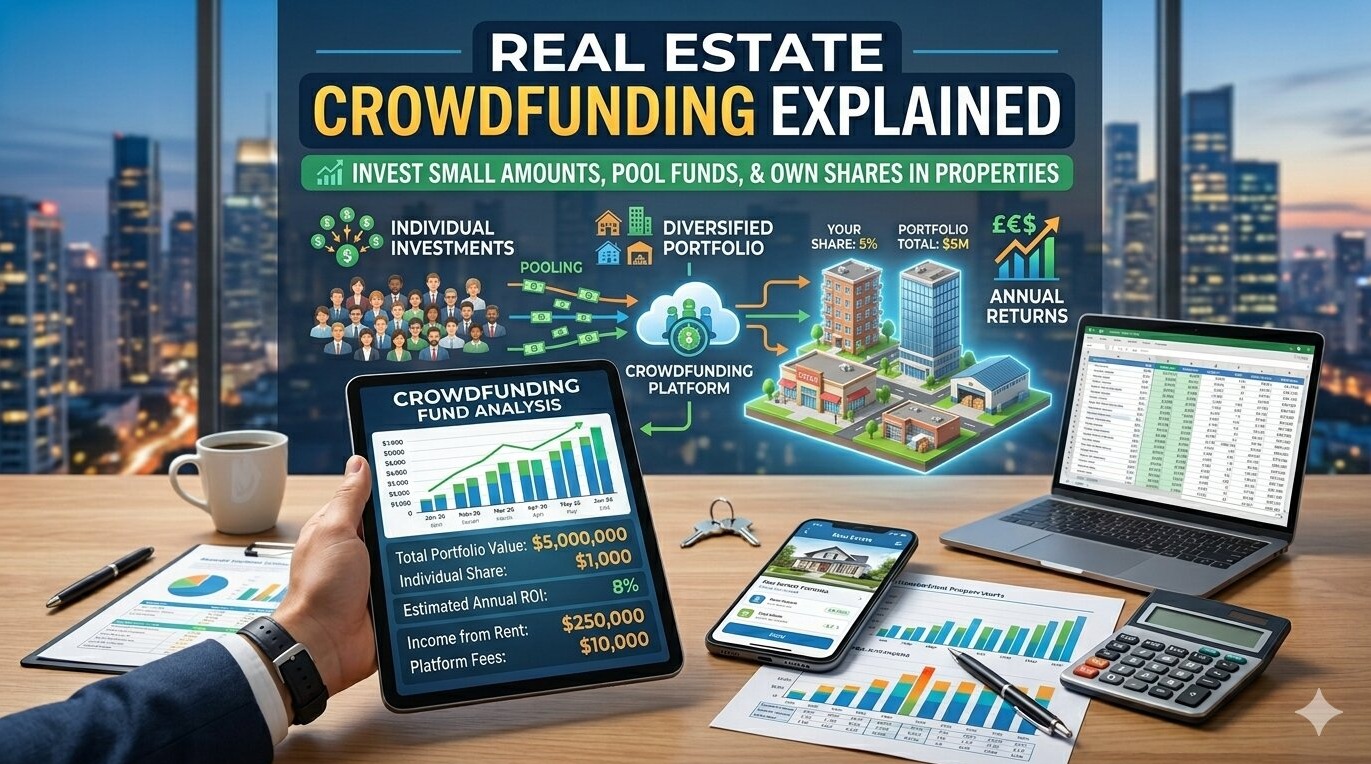
Real estate investing has traditionally required large amounts of capital—but that’s changing. With real estate crowdfunding, you can invest in properties with relatively small amounts of money and still benefit from income and appreciation.
It’s become especially popular among beginners and passive investors who want exposure to real estate without directly owning property.
If you're new to real estate, start here:
How Real Estate Investing Works
https://statush.com/real-estate/how-real-estate-investing-works
Let’s break down how real estate crowdfunding works, its benefits, risks, and whether it’s right for you.
What Is Real Estate Crowdfunding?
Real estate crowdfunding is a method of investing where multiple investors pool their money together to fund a real estate project.
Instead of buying an entire property, you invest a smaller amount alongside others.
Simple Example
- A project needs $1,000,000
- 100 investors each invest $10,000
- Each investor owns a share of the investment
Returns are distributed based on your investment percentage.
How Real Estate Crowdfunding Works
Here’s a step-by-step overview:
- A developer or sponsor lists a project on a crowdfunding platform
- Investors review the opportunity
- Multiple investors contribute funds
- The project is developed or managed
- Profits are distributed (rent, sale, or both)
This structure allows investors to participate in larger deals that would otherwise be inaccessible.
Types of Real Estate Crowdfunding
There are two main types of crowdfunding investments.
| Type | Description | Return Type |
|---|---|---|
| Equity Investment | You own a share of the property | Rental income + appreciation |
| Debt Investment | You lend money to the project | Fixed interest payments |
Key Difference
- Equity = higher potential returns, higher risk
- Debt = lower risk, more predictable returns
Benefits of Real Estate Crowdfunding
Crowdfunding offers several advantages, especially for new investors.
1. Low Entry Barrier
You can start with relatively small investments compared to buying property directly.
2. Passive Income
No need to manage tenants or handle maintenance.
3. Diversification
Invest in multiple properties across different locations.
4. Access to Large Deals
Participate in commercial or large-scale projects.
Real-World Examples
Example 1: Passive Income Through Debt Investment
An investor puts $5,000 into a crowdfunding debt deal offering 8% annual returns. The investor receives regular interest payments without managing any property, making it a simple passive income source.
Example 2: Equity Investment in a Growth Project
Another investor contributes $15,000 to a residential development project. Over several years, the property value increases, and the investor earns returns from both rental income and appreciation when the project is sold.
Risks of Real Estate Crowdfunding
While crowdfunding is accessible, it’s not risk-free.
1. Illiquidity
Your money may be locked in for several years.
2. Project Risk
If the project underperforms, returns may be lower—or lost.
3. Platform Risk
The platform itself may face issues.
4. Limited Control
You don’t manage or control the investment decisions.
Understanding risk is crucial:
Real Estate Market Cycles Explained
https://statush.com/real-estate/real-estate-market-cycles-explained
Crowdfunding vs Traditional Real Estate Investing
Here’s a simple comparison:
| Factor | Crowdfunding | Direct Ownership |
|---|---|---|
| Capital Required | Low | High |
| Control | None | Full |
| Effort | Passive | Active |
| Risk | Shared | Individual |
| Returns | Moderate to high | Varies |
Both approaches have their place depending on your goals.
How to Evaluate Crowdfunding Deals
Even though it’s passive, you still need to analyze deals carefully.
What to Look For
- Sponsor track record
- Project location
- Expected returns
- Risk factors
- Investment timeline
To improve your analysis skills, read:
How to Evaluate Rental Property Deals
https://statush.com/real-estate/how-to-evaluate-rental-property-deals
Who Should Consider Crowdfunding?
Crowdfunding is ideal for:
- Beginners with limited capital
- Passive investors
- Those looking to diversify
- Investors who don’t want property management responsibilities
It’s less suitable for those who want full control or hands-on investing.
Practical Tips for Beginners
1. Start Small
Test the platform with a small investment first.
2. Diversify Investments
Don’t put all your money into one project.
3. Research Sponsors
Experienced developers reduce risk.
4. Understand the Timeline
Be prepared to keep your money invested for years.
5. Read the Fine Print
Know fees, risks, and return structures.
Common Mistakes to Avoid
Investing Without Research
Always evaluate the deal and the sponsor.
Ignoring Risks
Crowdfunding is not guaranteed.
Overconcentration
Diversify across projects and platforms.
Expecting Quick Returns
Most projects take time to deliver results.
When Crowdfunding Makes Sense
Crowdfunding works best when:
- You want passive exposure to real estate
- You don’t have large capital
- You want to diversify your portfolio
- You prefer low involvement
Final Thoughts
Real estate crowdfunding has opened the door for more people to invest in real estate without needing large capital or hands-on involvement.
It offers accessibility, diversification, and passive income opportunities—but also comes with risks that require careful evaluation.
The key is to approach crowdfunding like any other investment: research thoroughly, diversify wisely, and invest with a long-term perspective.
Because in real estate, even passive investing requires active decision-making.