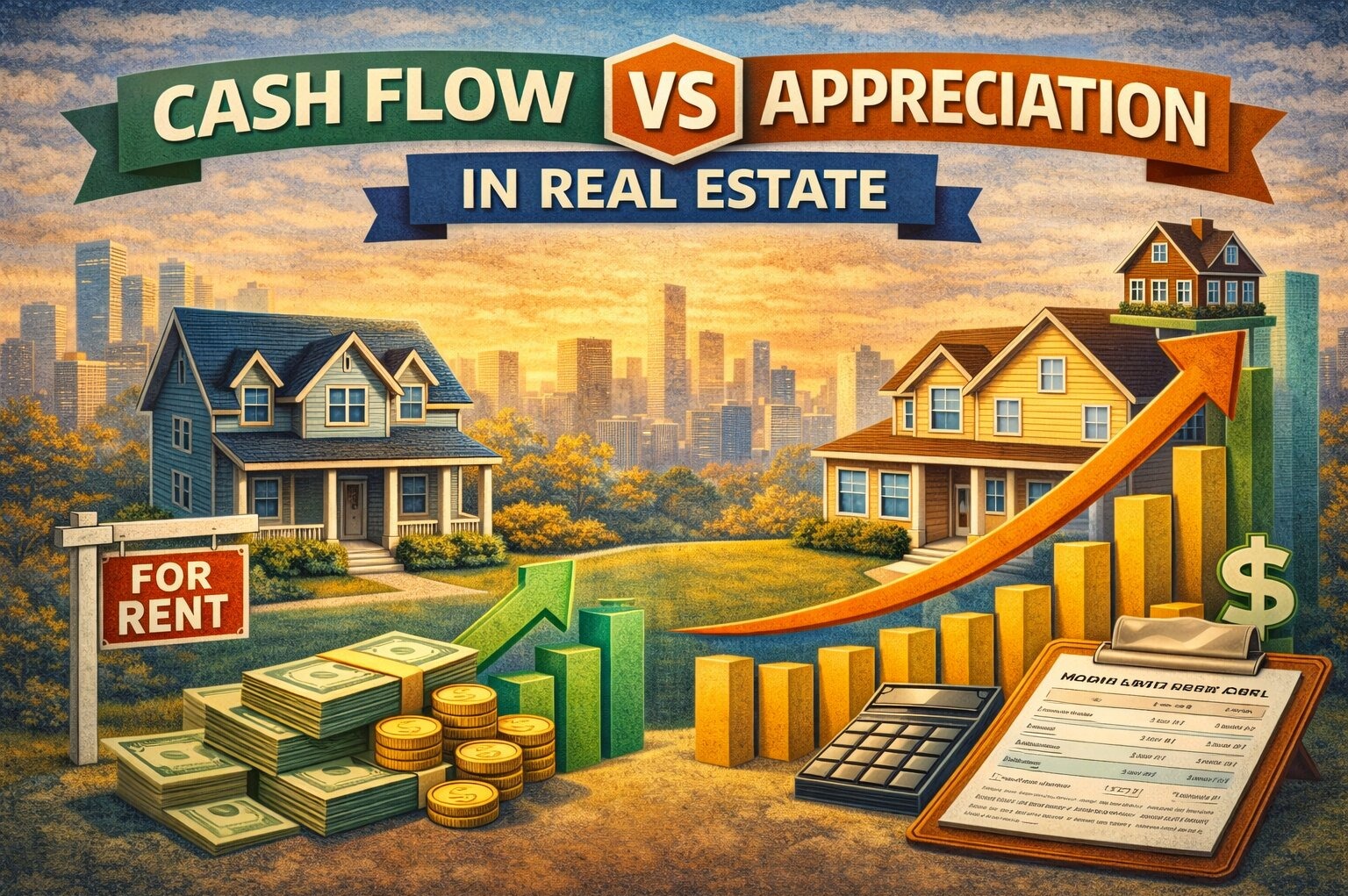
When it comes to real estate investing, one of the biggest decisions you’ll face is this: should you focus on cash flow or appreciation?
Both strategies can build wealth—but they work in very different ways. Some investors prefer steady monthly income, while others aim for long-term property value growth. The right choice depends on your goals, risk tolerance, and timeline.
If you're new to investing, start with the basics here:
How Real Estate Investing Works
https://statush.com/real-estate/how-real-estate-investing-works
Let’s break down both strategies in a simple, practical way so you can decide what works best for you.
What Is Cash Flow in Real Estate?
Cash flow is the money you earn each month after all expenses are paid.
Simple Example
- Rental income: $1,500/month
- Expenses (mortgage, taxes, maintenance): $1,200/month
- Cash flow: $300/month profit
Positive cash flow means your property generates income. Negative cash flow means you’re paying out of pocket.
Cash flow is often the primary goal for investors seeking passive income.
What Is Appreciation in Real Estate?
Appreciation is the increase in a property’s value over time.
Simple Example
- Purchase price: $250,000
- Value after 5 years: $350,000
- Gain: $100,000
Unlike cash flow, appreciation doesn’t pay monthly. You typically benefit when you sell or refinance.
To understand this concept deeper, read:
Real Estate Appreciation Explained
https://statush.com/real-estate/real-estate-appreciation-explained
Key Differences Between Cash Flow and Appreciation
Here’s a quick comparison to simplify things:
| Factor | Cash Flow | Appreciation |
|---|---|---|
| Income Timing | Monthly | Long-term |
| Risk Level | Lower | Medium |
| Liquidity | Regular income | Locked until sale/refinance |
| Best Markets | Affordable cities | High-growth cities |
| Goal | Passive income | Wealth building |
In reality, most investors try to balance both—but usually lean toward one depending on their strategy.
Real-World Examples
Example 1: Cash Flow Strategy in the Midwest
An investor buys a rental property in Ohio for $120,000 and rents it for $1,200/month. After expenses, they earn about $300/month in positive cash flow. Over time, the property value increases slowly, but the main benefit is consistent monthly income.
Example 2: Appreciation Strategy in California
Another investor purchases a property in California for $500,000. Monthly rent barely covers expenses, but after 6–7 years, the property value rises to $750,000. The investor gains significant equity, even with minimal cash flow.
Which Strategy Is Better?
There’s no universal answer—it depends on your financial goals.
Choose Cash Flow If:
- You want regular monthly income
- You prefer lower risk
- You’re building passive income streams
- You want quicker returns
Choose Appreciation If:
- You’re focused on long-term wealth
- You can handle market fluctuations
- You’re investing in high-growth areas
- You don’t need immediate income
Many experienced investors combine both strategies to balance risk and reward.
Best Markets for Each Strategy
Different cities favor different strategies.
| Strategy | Ideal Market Type | Example Cities |
|---|---|---|
| Cash Flow | Affordable, stable | Atlanta, Cleveland |
| Appreciation | High-growth, expensive | Austin, San Francisco |
| Hybrid | Balanced growth | Tampa, Nashville |
Understanding market behavior is key. Learn more here:
Real Estate Market Cycles Explained
https://statush.com/real-estate/real-estate-market-cycles-explained
How to Balance Cash Flow and Appreciation
You don’t always have to choose one over the other. Here are practical ways to combine both:
1. Buy in Emerging Markets
Look for areas that are still affordable but showing signs of growth.
2. Improve Properties
Renovations can increase both rental income and property value.
3. Diversify Your Portfolio
Own properties in different cities with different strategies.
4. Use Smart Financing
Leverage can improve cash flow while still benefiting from appreciation.
To explore more strategies, read:
Best Real Estate Investment Strategies
https://statush.com/real-estate/best-real-estate-investment-strategies
Common Mistakes to Avoid
Focusing Only on Appreciation
Markets can slow down or decline. Without cash flow, you may struggle to hold the property.
Ignoring Expenses
Many beginners overestimate rental income and underestimate costs.
Overpaying in Hot Markets
Buying at peak prices reduces both cash flow and appreciation potential.
Lack of Research
Every market behaves differently—always analyze before investing.
To improve your analysis skills, check:
How to Analyze Rental Property Profitability
https://statush.com/real-estate/how-to-analyze-rental-property-profitability
Practical Tips for Beginners
Start with Your Goal
Decide whether you want income, growth, or both.
Run the Numbers
Always calculate cash flow, ROI, and potential appreciation.
Think Long-Term
Real estate rewards patience and consistency.
Avoid Emotional Decisions
Focus on data, not hype.
Learn Continuously
Markets evolve, and so should your strategy.
Final Thoughts
Cash flow and appreciation are both powerful wealth-building tools—but they serve different purposes.
Cash flow provides steady income and financial stability, while appreciation creates long-term wealth through rising property values. The most successful investors understand both and use them strategically.
The key is not choosing one blindly—but aligning your investment approach with your financial goals, risk tolerance, and time horizon.
Because in real estate, true success often comes from balancing income today with growth tomorrow.