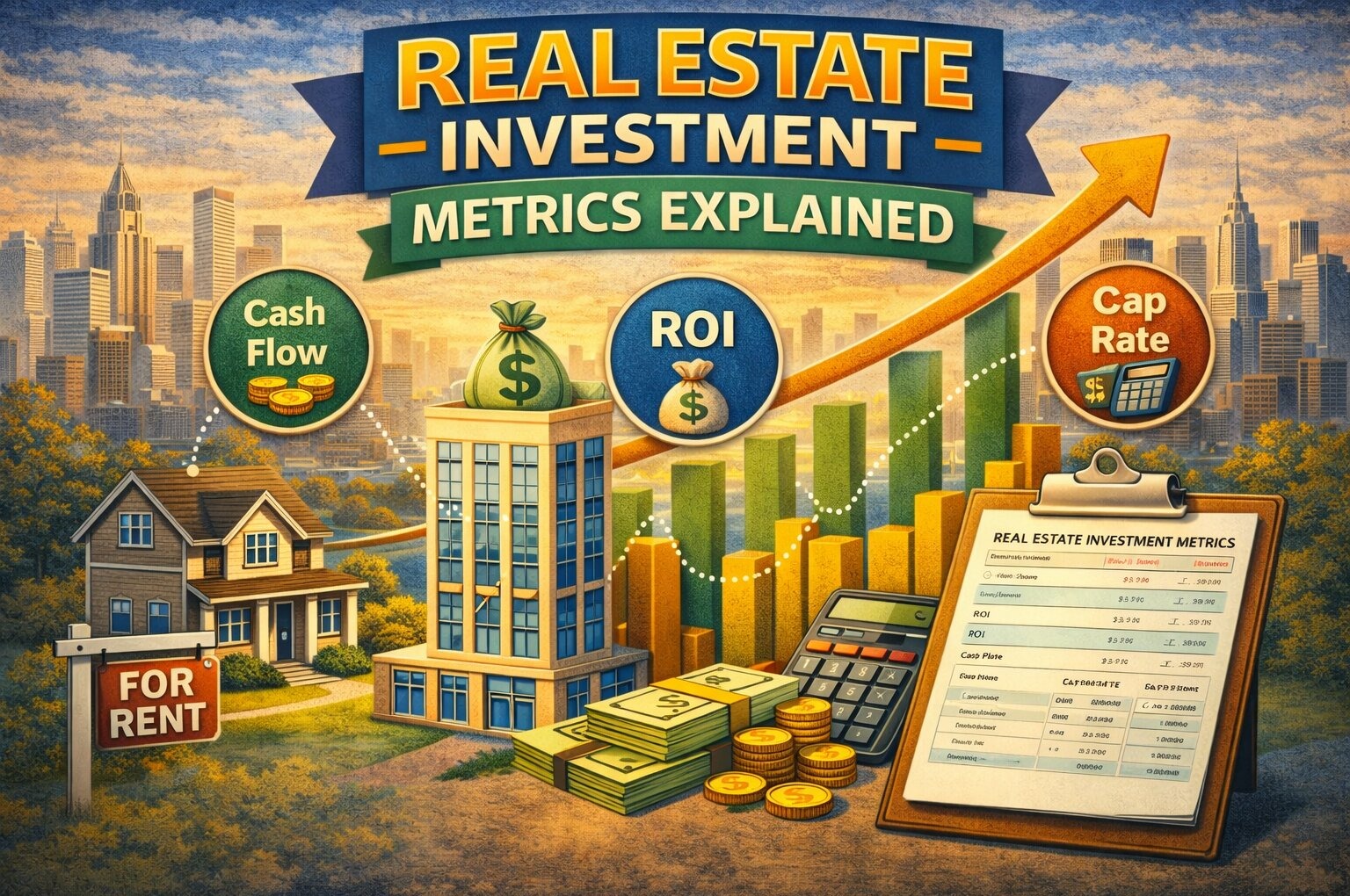
Understanding real estate investment metrics is essential if you want to make smart, profitable decisions. Without numbers, you’re just guessing—and in real estate, guessing can be expensive.
The good news is that you don’t need to be a financial expert. Once you understand a few key metrics, you can quickly analyze and compare deals with confidence.
If you're new to investing, start here:
How Real Estate Investing Works
https://statush.com/real-estate/how-real-estate-investing-works
Let’s break down the most important real estate investment metrics in a simple and practical way.
What Are Real Estate Investment Metrics?
Real estate investment metrics are numbers used to evaluate the profitability and performance of a property.
They help you answer questions like:
- Is this property a good deal?
- How much return will I earn?
- Is it better than other opportunities?
Instead of relying on intuition, these metrics give you clear, objective insights.
Why Metrics Matter
Many beginners make the mistake of buying properties based on appearance or location alone. While those factors matter, the numbers tell the real story.
Key Benefits of Using Metrics
- Compare multiple properties easily
- Identify profitable deals quickly
- Avoid bad investments
- Make data-driven decisions
To apply these concepts in real scenarios, read:
How to Evaluate Rental Property Deals
https://statush.com/real-estate/how-to-evaluate-rental-property-deals
The Most Important Real Estate Metrics
Let’s go through the key metrics every investor should understand.
| Metric | What It Measures | Why It’s Important |
|---|---|---|
| Cap Rate | Return based on property value | Quick deal comparison |
| Cash Flow | Monthly profit | Income stability |
| Cash-on-Cash Return | Return on invested cash | True ROI |
| GRM | Price-to-rent ratio | Fast screening |
| ROI | Overall return | Long-term performance |
1. Cap Rate (Capitalization Rate)
Cap rate measures the return on a property based on its purchase price.
Simple Explanation
If a property generates $10,000/year and costs $200,000:
Cap Rate = 5%
Why It Matters
- Helps compare properties quickly
- Higher cap rate = higher return (usually higher risk)
To learn more, read:
Cap Rate vs Cash-on-Cash Return
https://statush.com/real-estate/cap-rate-vs-cash-on-cash-return
2. Cash Flow
Cash flow is the money left after all expenses are paid.
Example
- Rent: $1,800
- Expenses: $1,400
- Cash Flow: $400/month
Why It Matters
- Provides monthly income
- Reduces financial risk
Understand how it compares with growth strategies:
Cash Flow vs Appreciation in Real Estate
https://statush.com/real-estate/cash-flow-vs-appreciation-in-real-estate
3. Cash-on-Cash Return
This metric shows how much return you’re getting on the actual cash you invested.
Example
- Annual cash flow: $6,000
- Cash invested: $50,000
- Cash-on-Cash Return: 12%
Why It Matters
- Reflects real performance
- Useful when using financing
4. Gross Rent Multiplier (GRM)
GRM is a quick way to evaluate a property based on its price and rental income.
Example
- Property price: $200,000
- Annual rent: $20,000
- GRM = 10
Why It Matters
- Helps screen deals quickly
- Lower GRM is generally better
Learn more here:
Gross Rent Multiplier Explained
https://statush.com/real-estate/gross-rent-multiplier-explained
5. Return on Investment (ROI)
ROI measures the overall return on your investment over time.
Example
- Total profit: $50,000
- Investment: $200,000
- ROI = 25%
Why It Matters
- Shows long-term profitability
- Includes both cash flow and appreciation
Real-World Examples
Example 1: High Cash Flow Property
An investor buys a property for $180,000 and earns $400/month in cash flow. The cap rate is solid, and the cash-on-cash return is above 10%. Even with moderate appreciation, the property performs well due to strong income.
Example 2: Appreciation-Focused Investment
Another investor purchases a property in a fast-growing city for $400,000. Cash flow is minimal, but property value increases significantly over time. ROI becomes strong due to appreciation rather than monthly income.
How to Use Metrics Together
No single metric tells the full story. Smart investors use multiple metrics together.
Example Approach
- Use GRM to quickly screen deals
- Use cap rate for comparison
- Use cash-on-cash return for real profitability
- Analyze ROI for long-term performance
This layered approach gives a clearer picture of the investment.
Practical Tips for Beginners
1. Start Simple
Focus on a few key metrics before learning advanced ones.
2. Don’t Ignore Expenses
Accurate expense estimates are critical for correct calculations.
3. Compare Multiple Deals
Metrics are most useful when comparing options.
4. Use Conservative Estimates
Always assume slightly lower income and higher costs.
5. Practice Regularly
Analyze multiple properties to build confidence.
Common Mistakes to Avoid
Relying on One Metric
No single number can determine a good deal.
Ignoring Market Conditions
Metrics don’t replace local market research.
Overestimating Returns
Be realistic with projections.
Skipping Due Diligence
Always verify data before making decisions.
When Metrics Matter Most
Metrics are especially important when:
- Comparing multiple properties
- Investing in unfamiliar markets
- Using financing or leverage
- Scaling your portfolio
They help remove emotion and bring clarity to your decisions.
Final Thoughts
Real estate investment metrics are your decision-making tools. They turn complex deals into clear, measurable insights.
By understanding and using metrics like cap rate, cash flow, and ROI, you can confidently evaluate opportunities and avoid costly mistakes.
The key is consistency—use the same metrics for every deal, stay disciplined, and focus on data-driven decisions.
Because in real estate, successful investors don’t guess—they calculate.