When analyzing real estate deals, investors often look for quick ways to determine whether a property is worth a deeper look. One of the simplest tools for this is the Gross Rent Multiplier (GRM).
GRM won’t give you the full picture—but it’s incredibly useful for quickly screening properties and comparing opportunities.
If you're new to real estate, start here:
How Real Estate Investing Works
https://statush.com/real-estate/how-real-estate-investing-works
Let’s break down GRM in a simple, practical way so you can start using it effectively.
What Is Gross Rent Multiplier (GRM)?
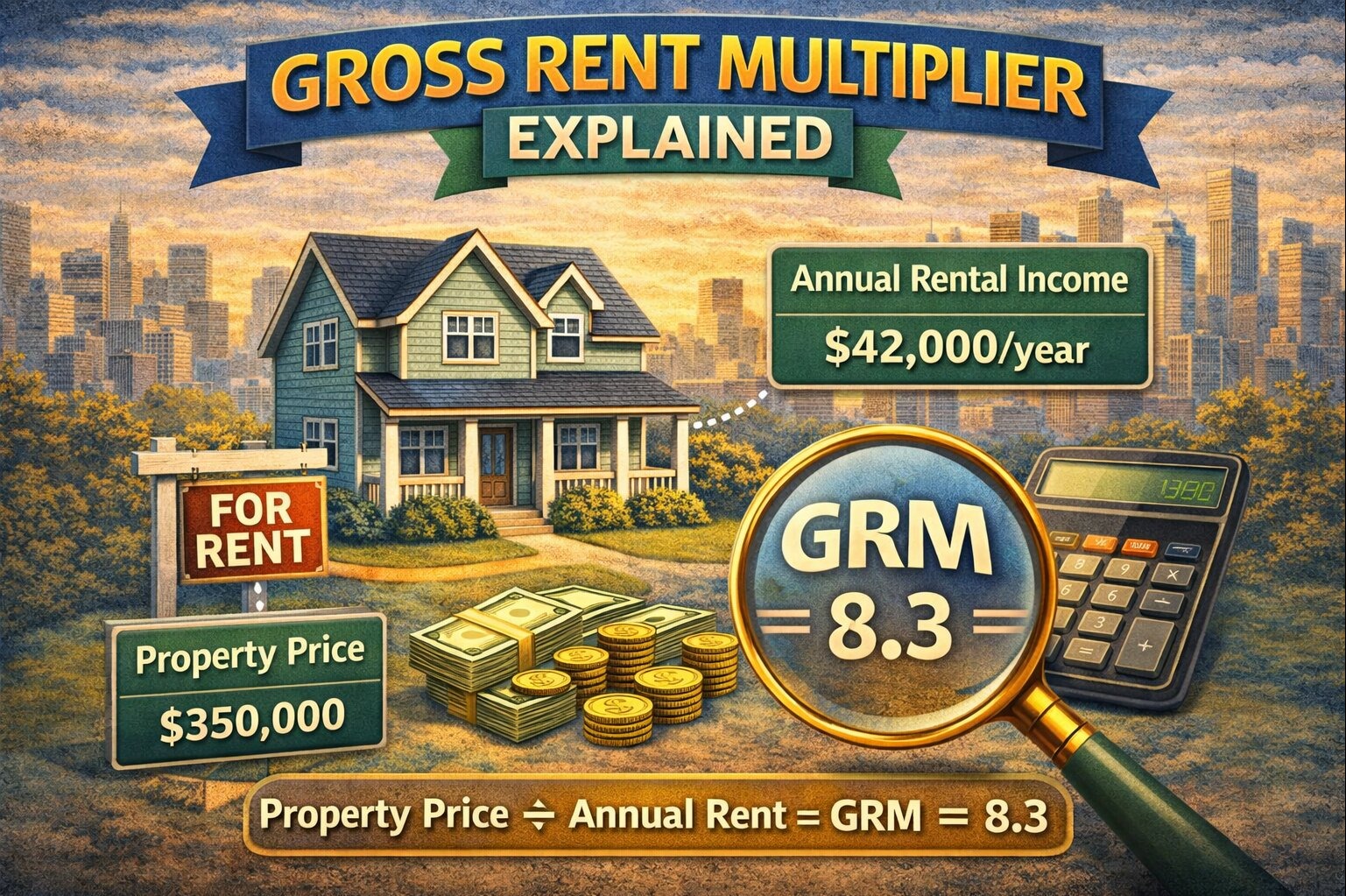
Gross Rent Multiplier is a metric that compares a property’s price to its rental income.
Simple Definition
GRM tells you how many years it would take for a property’s gross rental income to equal its purchase price.
Basic Formula
GRM = Property Price ÷ Annual Rental Income
Why GRM Matters
GRM is popular because it’s fast and easy to calculate.
Key Benefits
- Quickly screens investment properties
- Helps compare multiple deals
- Requires minimal data
- Useful for beginners
However, GRM should never be used alone—it doesn’t include expenses.
To understand full deal analysis, read:
How to Evaluate Rental Property Deals
https://statush.com/real-estate/how-to-evaluate-rental-property-deals
How to Calculate GRM
Let’s look at a simple example.
Example
- Property price: $240,000
- Monthly rent: $2,000
- Annual rent: $24,000
GRM = 240,000 ÷ 24,000 = 10
This means it would take about 10 years of gross rent to equal the purchase price.
How to Interpret GRM
GRM values vary depending on the market, but here’s a general guideline:
| GRM Range | Meaning | Investor Insight |
|---|---|---|
| Below 8 | Very good | Strong income potential |
| 8 – 12 | متوسط | Balanced deal |
| Above 12 | Expensive | Lower income potential |
Important Note
A lower GRM is generally better—but only if other factors (like expenses and location) are also favorable.
GRM vs Other Metrics
GRM is just one tool. Here’s how it compares with other key metrics:
| Metric | What It Includes | Use Case |
|---|---|---|
| GRM | Price & rent only | Quick screening |
| Cap Rate | Income & expenses | Deal comparison |
| Cash Flow | Monthly profit | Income analysis |
| ROI | Overall return | Long-term evaluation |
To understand these metrics better, read:
Real Estate Investment Metrics Explained
https://statush.com/real-estate/real-estate-investment-metrics-explained
Real-World Examples
Example 1: Low GRM Deal
An investor finds a property priced at $150,000 generating $18,000 annually in rent.
GRM = 8.3
This indicates a relatively strong deal, prompting the investor to analyze it further. After checking expenses, the property also delivers solid cash flow—making it a good investment.
Example 2: High GRM in a Growth Market
Another investor evaluates a property priced at $500,000 with annual rent of $30,000.
GRM = 16.6
At first glance, the deal looks weak. However, the property is located in a high-growth area where appreciation potential is strong. The investor proceeds, focusing on long-term gains rather than immediate income.
To understand this strategy, read:
Cash Flow vs Appreciation in Real Estate
https://statush.com/real-estate/cash-flow-vs-appreciation-in-real-estate
When Should You Use GRM?
GRM is most useful in the early stages of deal analysis.
Ideal Use Cases
- Screening multiple properties quickly
- Comparing similar rental properties
- Identifying overpriced deals
- Shortlisting investment opportunities
Once a property passes the GRM test, you should move to deeper analysis.
Limitations of GRM
While GRM is helpful, it has important limitations.
What GRM Doesn’t Include
- Operating expenses
- Property taxes
- Maintenance costs
- Vacancy rates
- Financing details
This means a property with a good GRM might still perform poorly after expenses.
That’s why you should always follow up with detailed analysis:
How to Analyze Rental Property Profitability
https://statush.com/real-estate/how-to-analyze-rental-property-profitability
How to Use GRM Effectively
To get the most value from GRM, follow these practical tips:
1. Use It as a First Filter
Don’t spend hours analyzing every deal—use GRM to narrow down options.
2. Compare Within the Same Market
GRM varies by location. Always compare properties in similar areas.
3. Combine with Other Metrics
Use GRM alongside cap rate, cash flow, and ROI.
4. Watch for Outliers
Very low GRM could indicate hidden problems.
5. Stay Conservative
Ensure rental income estimates are realistic.
Common Mistakes to Avoid
Relying Only on GRM
It’s a screening tool—not a decision-making tool.
Ignoring Expenses
A low GRM doesn’t guarantee profitability.
Comparing Different Markets
GRM benchmarks vary widely by location.
Overestimating Rent
Inflated rent estimates lead to misleading GRM values.
Practical Tips for Beginners
Start Simple
Use GRM to quickly evaluate deals before diving deeper.
Learn Market Benchmarks
Understand typical GRM ranges in your target area.
Practice Regularly
Analyze multiple properties to improve your judgment.
Be Patient
Not every deal will meet your criteria—wait for the right one.
Keep Learning
Real estate success comes from continuous improvement.
Final Thoughts
Gross Rent Multiplier is one of the simplest tools in real estate investing—but it’s also one of the most useful when used correctly.
It helps you quickly identify promising deals and avoid wasting time on overpriced properties. However, it should always be combined with deeper analysis to ensure long-term profitability.
The key is balance—use GRM for speed, then rely on detailed metrics for accuracy.
Because in real estate, smart investors don’t just find deals fast—they evaluate them wisely.