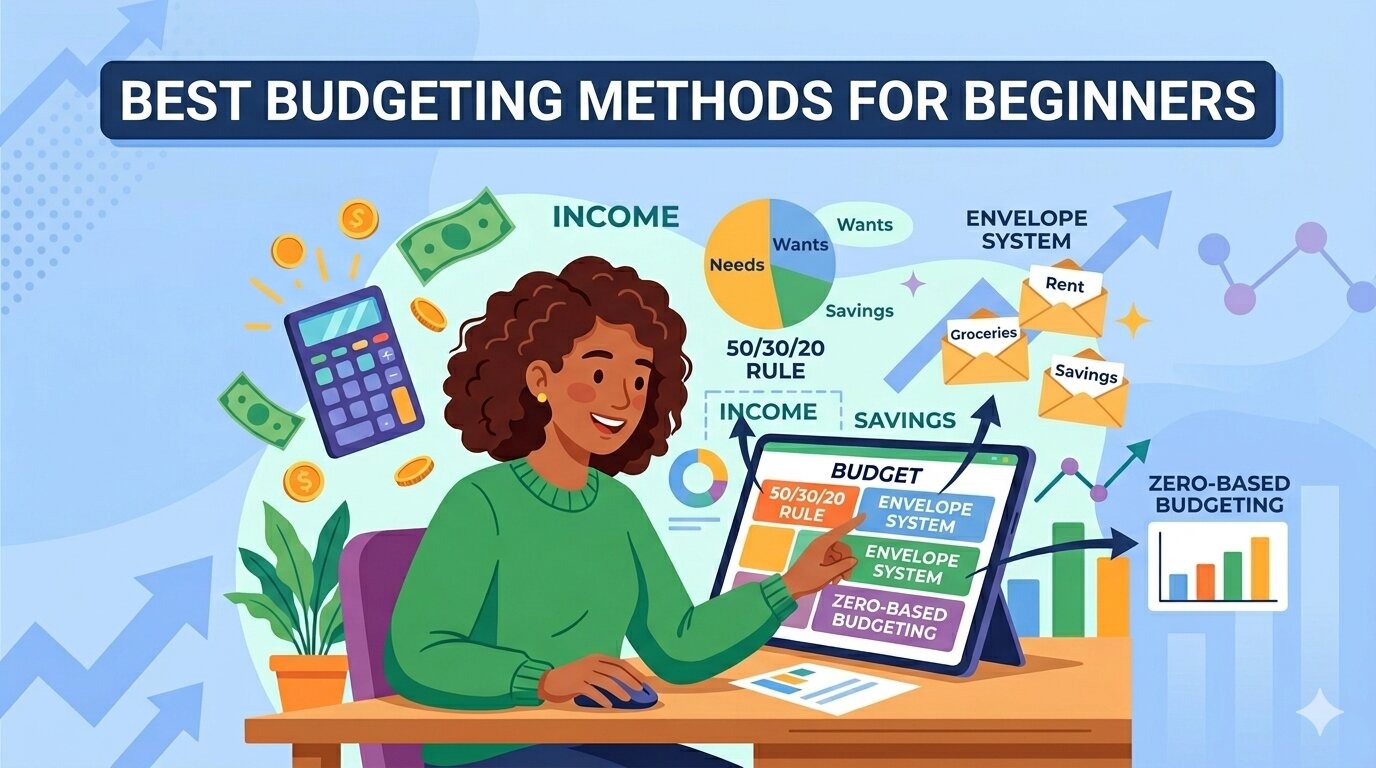
If you’ve ever tried budgeting and given up halfway, you’re not alone. Most beginners struggle not because budgeting is hard—but because they start with the wrong method.
There isn’t a “perfect” budgeting system that works for everyone. The key is finding one that fits your lifestyle, income, and personality.
In this guide, we’ll break down the best budgeting methods for beginners in a simple, practical way—so you can actually stick to one.
Why Choosing the Right Method Matters
A budgeting method is like a framework. Without it, you’re just guessing where your money goes.
For example:
- Some people need strict control
- Others prefer flexibility
- Some like tracking every rupee
- Others want automation
If your method doesn’t match your habits, you’ll quit within weeks.
Before choosing, it helps to understand the basics of
https://statush.com/money/how-to-create-a-monthly-budget-that-works
1. The 50/30/20 Rule (Best for Simplicity)
This is one of the easiest and most beginner-friendly budgeting methods.
How it works:
- 50% → Needs (rent, bills, groceries)
- 30% → Wants (entertainment, dining)
- 20% → Savings or debt repayment
Example:
| Category | Percentage | Amount (₹40,000 income) |
|---|---|---|
| Needs | 50% | ₹20,000 |
| Wants | 30% | ₹12,000 |
| Savings | 20% | ₹8,000 |
Why it works:
- Simple to follow
- Flexible
- No detailed tracking required
Where it fails:
- Not ideal if your income is low
- Doesn’t account for high rent cities
Real-world example:
A fresher earning ₹30,000 can quickly divide expenses without overthinking. It gives structure without complexity.
2. Zero-Based Budget (Best for Full Control)
This method is more detailed—but very powerful.
How it works:
Every rupee is assigned a job.
Income – Expenses = 0
You plan:
- Rent
- Food
- Savings
- Entertainment
- Even small expenses
Example:
| Category | Amount (₹50,000 income) |
|---|---|
| Rent | ₹15,000 |
| Groceries | ₹6,000 |
| Transport | ₹3,000 |
| Savings | ₹10,000 |
| Misc | ₹16,000 |
| Total | ₹50,000 |
Why it works:
- Complete control over money
- No “mystery spending”
- Great for reducing waste
Where it fails:
- Time-consuming
- Requires discipline
If you’re trying to cut expenses fast, combine this with
https://statush.com/money/how-to-reduce-monthly-expenses-quickly
3. Envelope System (Best for Overspenders)
This is a classic and very practical method.
How it works:
You divide money into categories using envelopes (physical or digital).
Example:
- ₹5,000 → groceries
- ₹3,000 → eating out
- ₹2,000 → transport
Once the envelope is empty—you stop spending.
Why it works:
- Prevents overspending
- Easy to understand
- Creates spending awareness
Where it fails:
- Not convenient for digital payments
- Requires manual effort
Real-world example:
Someone who constantly overspends on food delivery apps can set a fixed “food” budget and stop once it’s used.
4. Pay Yourself First (Best for Saving)
This method flips the traditional budgeting approach.
How it works:
Instead of saving what’s left—you save first.
For example:
- Income = ₹40,000
- Save ₹8,000 immediately
- Spend the remaining ₹32,000
Why it works:
- Builds savings habit
- Reduces dependency on willpower
- Great for long-term goals
Where it fails:
- Can feel restrictive initially
If you’re starting from zero, this pairs perfectly with
https://statush.com/money/how-to-build-an-emergency-fund-from-zero
5. The 80/20 Rule (Simplified Version)
A more relaxed version of budgeting.
How it works:
- 20% → Savings
- 80% → Everything else
No strict tracking—just one main goal: save consistently.
Why it works:
- Very easy
- Low stress
- Ideal for beginners
Where it fails:
- Less control over spending
- Not ideal for debt management
6. Reverse Budgeting (Best for Busy People)
If you don’t like tracking every expense, this method is for you.
How it works:
- Set savings goal
- Pay bills
- Spend the rest freely
No need to categorize every expense.
Why it works:
- Minimal effort
- Works for high-income individuals
- Reduces budgeting fatigue
Where it fails:
- Can lead to unnoticed overspending
Choosing the Right Method
Here’s a quick comparison to help you decide:
| Method | Best For | Difficulty | Control Level |
|---|---|---|---|
| 50/30/20 | Beginners | Easy | Medium |
| Zero-Based | Detail-oriented users | Medium | High |
| Envelope | Overspenders | Easy | High |
| Pay Yourself First | Saving-focused people | Easy | Medium |
| 80/20 | Simplicity lovers | Very Easy | Low |
| Reverse Budget | Busy professionals | Easy | Medium |
Common Beginner Mistakes
- Trying to follow a complicated system
- Switching methods too often
- Ignoring small expenses
- Not reviewing progress
- Setting unrealistic limits
Budgeting is not about perfection—it’s about consistency.
Practical Tips to Make It Work
- Start with one method—don’t mix too many
- Keep your system simple
- Review weekly
- Adjust as needed
- Focus on habits, not perfection
Also, managing money isn’t just about budgeting—it’s about behavior. If you’re in your early career stage, this guide helps a lot:
https://statush.com/money/how-to-manage-money-in-your-20s
And for working professionals:
https://statush.com/money/money-management-tips-for-young-professionals
Real-Life Perspective
Two people earning the same ₹50,000 can have completely different financial outcomes.
- One saves ₹10,000 monthly
- The other saves nothing
The difference isn’t income—it’s the system they follow.
Final Thoughts
The best budgeting method is the one you can stick to.
Start simple:
- Try 50/30/20 if you’re confused
- Switch to zero-based if you want control
- Use envelope if you overspend
And most importantly—give it time.
Budgeting is not a one-month fix. It’s a long-term habit that builds financial stability step by step.