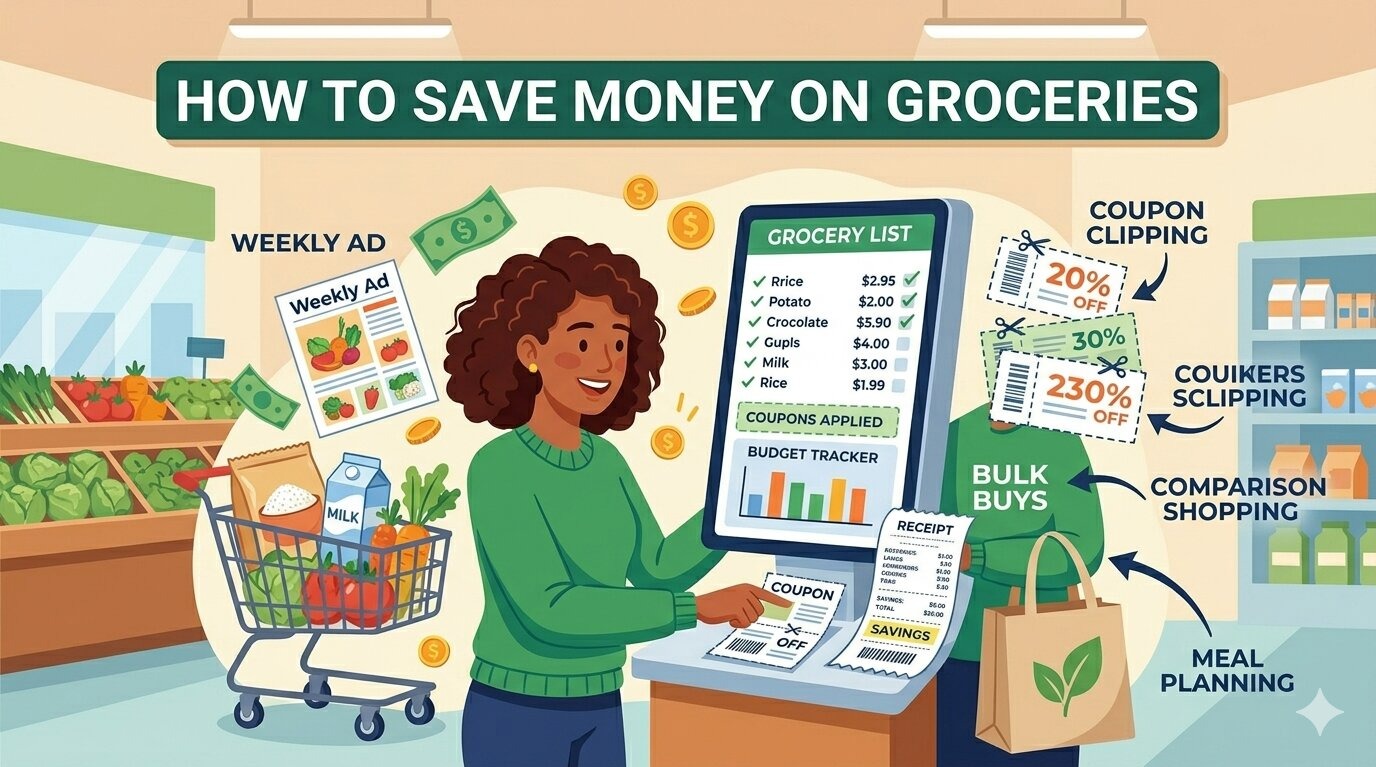
If you’ve ever looked at your monthly expenses and wondered where your money disappeared, groceries are usually one of the biggest hidden culprits.
The tricky part? Grocery spending doesn’t feel like overspending. You’re buying essentials—food, right? But small habits like impulse buying, food waste, and poor planning can quietly drain thousands every month.
The good news is, saving money on groceries doesn’t mean eating less or compromising on quality. It’s about being smarter with how you shop.
Let’s break it down step by step.
Why Grocery Bills Get Out of Control
Most people don’t overspend intentionally. It happens because of habits.
Common reasons include:
- Shopping without a list
- Buying in bulk unnecessarily
- Falling for discounts you don’t need
- Ordering food instead of cooking
- Wasting unused food
For example, buying “buy 1 get 1 free” snacks might feel like saving—but if you wouldn’t have bought them otherwise, it’s actually extra spending.
Understanding this behavior is the first step toward fixing it.
Step 1: Plan Your Meals in Advance
Meal planning is one of the simplest and most effective ways to reduce grocery costs.
Instead of randomly buying items, decide:
- What you’ll cook for the week
- How many meals you need
- What ingredients are required
This prevents:
- Overbuying
- Food waste
- Last-minute expensive purchases
Real-world example:
A family that plans weekly meals can reduce grocery expenses by 20–30% just by avoiding duplicate or unnecessary purchases.
Step 2: Always Shop with a List
Walking into a store without a list is like shopping blind.
A list:
- Keeps you focused
- Reduces impulse buying
- Saves time
You can create lists based on categories:
- Vegetables
- Dairy
- Pantry items
- Snacks
And most importantly—stick to the list.
Step 3: Set a Grocery Budget
If you don’t limit your grocery spending, it will keep increasing.
A good approach is to assign a fixed monthly or weekly budget.
| Household Size | Monthly Budget Range (₹) |
|---|---|
| 1 person | ₹3,000 – ₹6,000 |
| 2 people | ₹6,000 – ₹10,000 |
| Family (4) | ₹10,000 – ₹18,000 |
This varies by city and lifestyle, but having a limit creates awareness.
If you’re new to budgeting, start here:
https://statush.com/money/how-to-create-a-monthly-budget-that-works
Step 4: Avoid Shopping When Hungry
This sounds simple—but it works.
When you’re hungry:
- You buy more snacks
- You make impulsive choices
- You ignore your list
Studies and real-life behavior both show that people spend more when shopping hungry.
A quick snack before shopping can save you hundreds.
Step 5: Buy in Bulk (But Smartly)
Bulk buying can save money—but only if done correctly.
Good bulk purchases:
- Rice, flour, pulses
- Cooking oil
- Non-perishable items
Avoid bulk buying:
- Fresh vegetables
- Dairy products
- Items you rarely use
Tip: Bulk buying saves money only if you actually use everything.
Step 6: Compare Prices and Switch Brands
Brand loyalty can be expensive.
Often, store brands or local brands offer similar quality at lower prices.
For example:
- Packaged groceries
- Cleaning supplies
- Basic food items
Even a small difference of ₹20–₹50 per item adds up over a month.
Step 7: Reduce Food Waste
This is one of the biggest money leaks.
Food gets wasted because:
- You buy too much
- You forget what’s in your fridge
- You don’t use leftovers
Simple fixes:
- Store food properly
- Use older items first
- Plan leftover meals
Real-world example:
Throwing away just ₹50 worth of food daily = ₹1,500/month lost.
Step 8: Limit Online Food Orders
This is where most grocery savings disappear.
Ordering food:
- Costs 2–3x more than cooking
- Becomes a habit quickly
- Adds hidden delivery and tax charges
Try this:
- Set a monthly limit
- Replace 2–3 orders with home-cooked meals
If you’re trying to cut overall expenses, this guide helps:
https://statush.com/money/how-to-reduce-monthly-expenses-quickly
Step 9: Use Discounts Wisely
Discounts are helpful—but only if used correctly.
Smart use:
- Buy essentials on sale
- Use coupons for planned purchases
Avoid:
- Buying unnecessary items just because they’re discounted
Remember: Saving ₹100 on something you don’t need is still overspending.
Step 10: Track Your Grocery Spending
If you don’t track it, you can’t improve it.
You don’t need anything complex:
- Write it down
- Use notes app
- Track weekly totals
If you prefer tools, explore:
https://statush.com/money/best-budgeting-apps-in-the-usa
Simple Grocery Saving Strategy
Here’s a quick summary you can follow:
| Step | Action | Result |
|---|---|---|
| Plan meals | Weekly planning | Less waste |
| Use a list | Stick to essentials | Avoid impulse buying |
| Set a budget | Fixed spending limit | Better control |
| Buy smart | Bulk + compare brands | Lower cost per item |
| Track spending | Weekly review | Continuous improvement |
Real-Life Scenario
Let’s say Priya spends ₹12,000/month on groceries.
After applying these steps:
- Meal planning reduces waste
- Fewer food orders
- Better brand choices
New spending = ₹9,000/month
That’s ₹3,000 saved every month → ₹36,000/year.
And the lifestyle didn’t change drastically—just the habits.
Common Mistakes to Avoid
- Shopping without a plan
- Overbuying perishable items
- Ignoring small daily purchases
- Falling for unnecessary deals
- Not tracking spending
These small mistakes add up faster than you think.
Final Thoughts
Saving money on groceries isn’t about cutting down your food—it’s about making smarter decisions.
Start with:
- Meal planning
- A fixed budget
- Awareness of your habits
Once you build consistency, saving becomes automatic.
And if your goal is bigger financial stability, combine this with
https://statush.com/money/how-to-stop-living-paycheck-to-paycheck