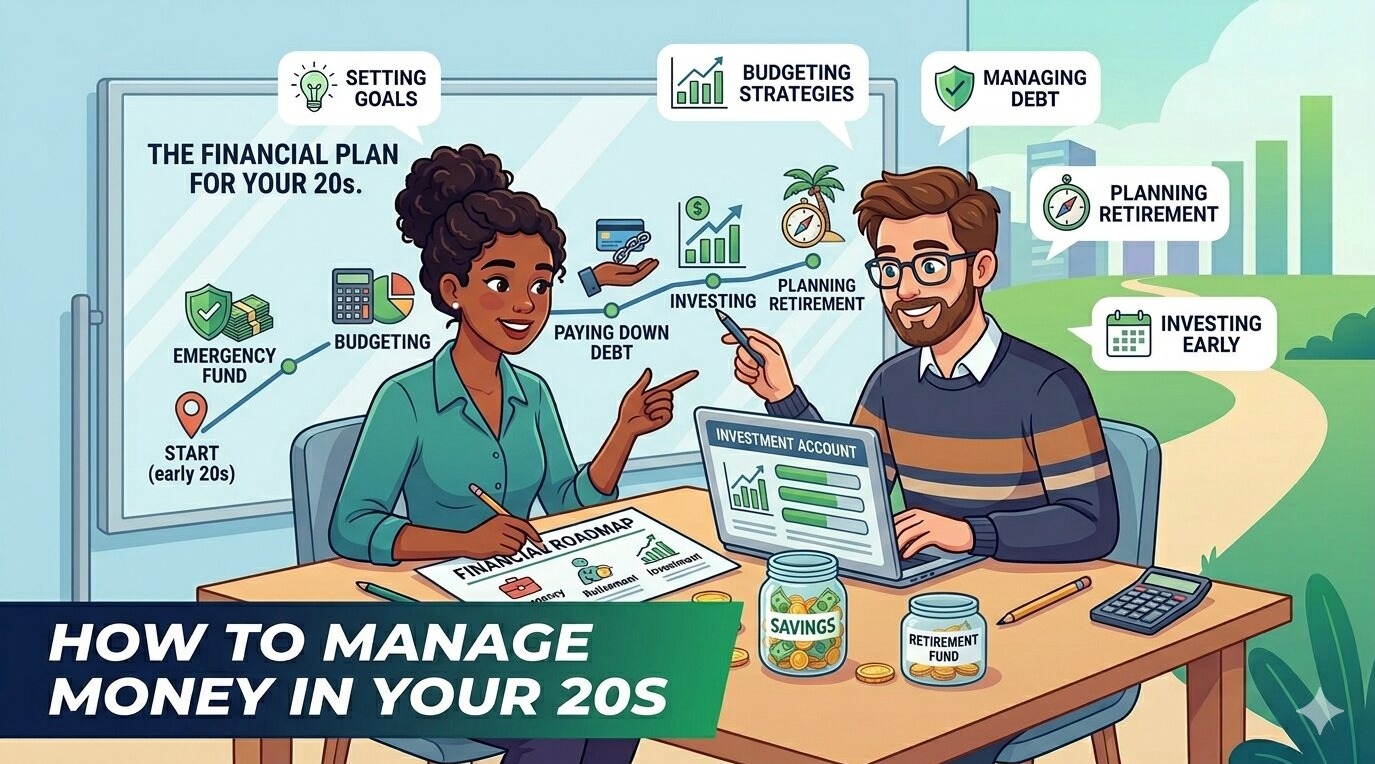
Your 20s are one of the most important decades for your financial life—even if it doesn’t feel like it right now.
This is usually the time when you start earning, gain independence, and make your first real financial decisions. The habits you build here can either set you up for long-term stability—or keep you stuck in a cycle of stress.
The good news? You don’t need to earn a huge salary to manage money well. You just need the right approach.
Let’s break it down.
Why Your 20s Matter Financially
In your 20s, you have something extremely valuable: time.
Time allows you to:
- Recover from mistakes
- Build habits
- Grow money through compounding
For example, someone who starts saving ₹5,000/month at 25 will be far ahead of someone who starts at 35—even if the second person earns more.
That’s the power of starting early.
Step 1: Understand Where Your Money Goes
Before improving your finances, you need awareness.
Track:
- Income
- Fixed expenses
- Variable spending
Most people in their 20s underestimate how much they spend on:
- Eating out
- Shopping
- Subscriptions
If you need a clear structure, start here:
https://statush.com/money/how-to-create-a-monthly-budget-that-works
Step 2: Build a Simple Budget (Not a Perfect One)
You don’t need a complicated system.
Start with something simple like:
- Needs
- Wants
- Savings
Or use beginner-friendly methods here:
https://statush.com/money/best-budgeting-methods-for-beginners
The goal is not perfection—it’s consistency.
Step 3: Start Saving Early (Even Small Amounts)
One of the biggest mistakes people make in their 20s is delaying saving.
You might think:
“I’ll save when I earn more.”
But that rarely happens.
Instead:
- Save ₹2,000–₹5,000/month
- Increase gradually
Real-world example:
Saving ₹3,000/month from age 23 can grow significantly over time—even without aggressive investing.
Step 4: Build an Emergency Fund
Life is unpredictable—especially in your early career.
An emergency fund protects you from:
- Job loss
- Medical expenses
- Unexpected situations
Start small and build gradually.
Here’s a step-by-step guide:
https://statush.com/money/how-to-build-an-emergency-fund-from-zero
Step 5: Avoid Unnecessary Debt
Credit cards and easy loans can be tempting.
But in your 20s:
- High-interest debt can slow your progress
- EMIs reduce flexibility
Use credit wisely:
- Only for planned expenses
- Pay full dues on time
Debt is useful only when managed properly.
Step 6: Control Lifestyle Inflation
As your income increases, your expenses will try to keep up.
For example:
- First salary → basic spending
- Salary increase → more dining, gadgets, travel
This is normal—but dangerous if uncontrolled.
Instead:
- Increase savings with income
- Keep lifestyle upgrades limited
This single habit can change your financial future.
Step 7: Start Investing Early
You don’t need to be an expert to begin investing.
Start with simple options:
- Mutual funds
- SIPs (Systematic Investment Plans)
- Fixed deposits
Even small investments grow over time due to compounding.
The earlier you start, the easier it becomes.
Step 8: Spend on What Actually Matters
Not all spending is bad.
It’s okay to:
- Travel
- Enjoy experiences
- Upgrade your lifestyle
But spend intentionally—not impulsively.
Ask yourself:
“Does this add value to my life?”
This mindset helps balance enjoyment and responsibility.
Step 9: Learn Basic Financial Skills
Your 20s are the best time to learn.
Focus on:
- Budgeting
- Saving
- Investing basics
- Expense tracking
If you want a broader understanding, explore:
https://statush.com/money/financial-planning-for-beginners
Step 10: Avoid Living Paycheck to Paycheck
This is one of the biggest traps.
Even with a decent income, poor habits can keep you stuck.
To avoid this:
- Save first
- Track spending
- Limit unnecessary expenses
If you’re already in this cycle, this guide can help:
https://statush.com/money/how-to-stop-living-paycheck-to-paycheck
Simple Money Plan for Your 20s
Here’s a practical structure you can follow:
| Step | Action | Priority |
|---|---|---|
| Budgeting | Track and plan spending | High |
| Saving | Save monthly (even small) | High |
| Emergency Fund | Build safety net | High |
| Investing | Start early | Medium |
| Lifestyle Control | Avoid overspending | High |
Real-Life Example
Rohit starts his career at 22 with ₹25,000/month.
Instead of spending everything:
- Saves ₹3,000/month
- Builds emergency fund
- Starts small investments
By 28:
- Strong savings habit
- Financial confidence
- No debt
The difference isn’t income—it’s discipline.
Common Mistakes to Avoid
- Not saving early
- Overspending on lifestyle
- Ignoring financial planning
- Taking unnecessary loans
- Not tracking expenses
These mistakes are common—but completely avoidable.
Final Thoughts
Managing money in your 20s isn’t about restriction—it’s about direction.
You don’t need to be perfect. You just need to start.
Focus on:
- Building habits
- Staying consistent
- Thinking long-term
The earlier you take control, the easier everything becomes later.