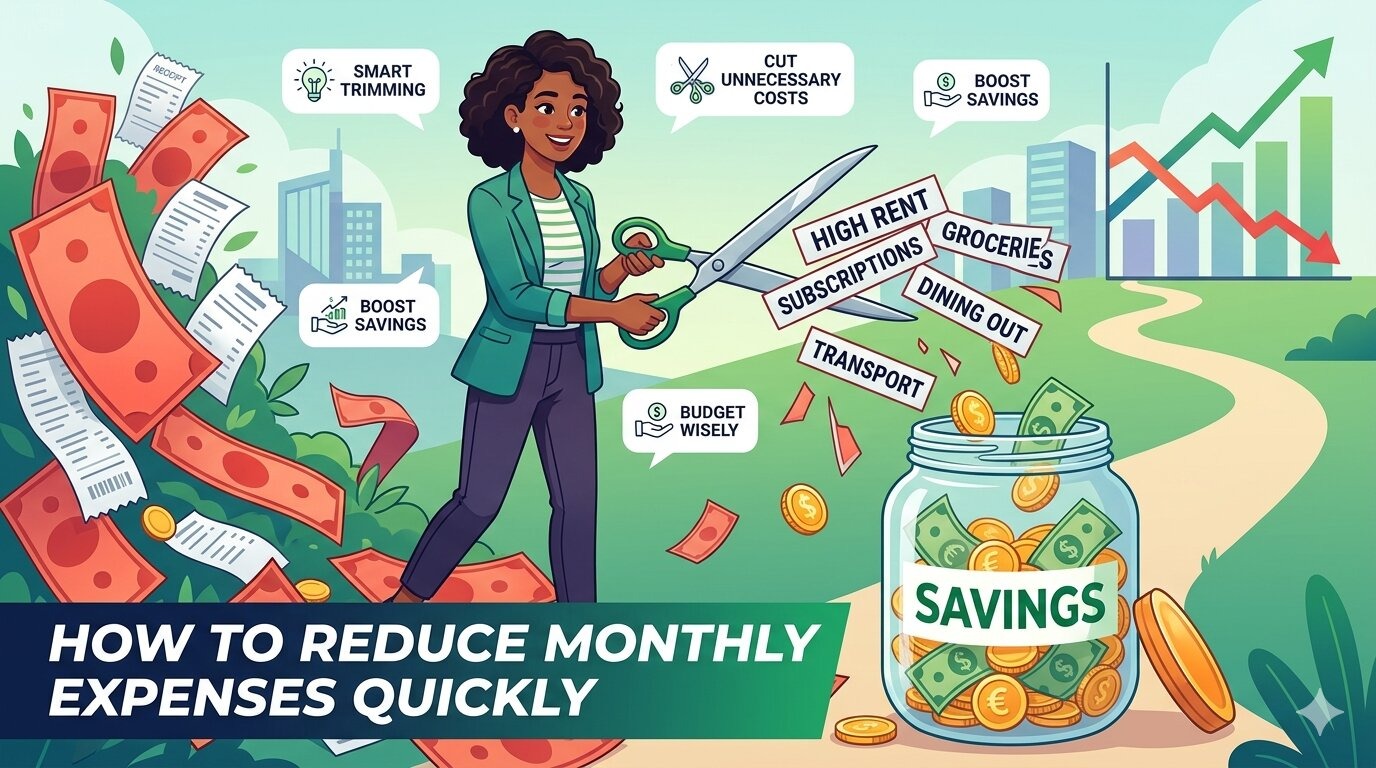
If you feel like your money disappears before the month ends, you’re not alone. For many people, expenses slowly creep up over time—subscriptions, food delivery, small purchases—and suddenly, there’s nothing left to save.
The good news? You don’t need a drastic lifestyle change to reduce your monthly expenses. With a few smart adjustments, you can free up a significant amount of money—often within the first month.
Let’s break it down into practical, real-world steps.
Why Expenses Increase Without Notice
Most expenses don’t grow overnight. They increase quietly through habits.
Common reasons include:
- Lifestyle upgrades (better phone, more eating out)
- Subscriptions you forget about
- Convenience spending (delivery, cabs)
- Lack of tracking
For example, spending ₹200 daily on small things doesn’t feel like much—but that’s ₹6,000 a month.
Awareness is the first step toward control.
Step 1: Track Every Expense (At Least for 7 Days)
Before reducing expenses, you need to know where your money is going.
Track everything:
- Tea/coffee
- Snacks
- Online orders
- Transport
You’ll quickly notice patterns.
If you’re not sure how to start, this guide helps:
https://statush.com/money/how-to-create-a-monthly-budget-that-works
Step 2: Identify “Low-Value” Spending
Not all expenses are bad. The goal is to remove spending that doesn’t add real value to your life.
Ask yourself:
- Do I really need this?
- Does this improve my life meaningfully?
Examples of low-value spending:
- Excess food delivery
- Unused subscriptions
- Impulse shopping
Cutting these doesn’t feel like sacrifice—it feels like clarity.
Step 3: Cut Subscriptions You Don’t Use
This is one of the fastest ways to save money.
Check for:
- OTT platforms
- Apps
- Gym memberships
- Software subscriptions
Many people pay for 4–5 services but actively use only 1–2.
Real-world example:
Canceling just 3 subscriptions of ₹299 each = ₹900/month saved.
Step 4: Reduce Food Delivery and Eating Out
This is often the biggest expense leak.
Instead of eliminating it completely:
- Set a monthly limit
- Replace some orders with home cooking
If groceries feel expensive, optimize them here:
https://statush.com/money/how-to-save-money-on-groceries
Step 5: Switch to Smarter Alternatives
You don’t always need to cut expenses—you can replace them.
Examples:
- Use public transport instead of daily cabs
- Switch to cheaper mobile plans
- Buy generic brands instead of premium ones
These changes don’t affect your lifestyle much—but reduce costs significantly.
Step 6: Set Spending Limits for Each Category
Without limits, spending expands automatically.
Create simple caps:
- Food → ₹5,000
- Entertainment → ₹2,000
- Shopping → ₹3,000
| Category | Before (₹) | After (₹) | Savings (₹) |
|---|---|---|---|
| Food Delivery | 6,000 | 3,500 | 2,500 |
| Subscriptions | 1,500 | 500 | 1,000 |
| Shopping | 5,000 | 3,000 | 2,000 |
| Total Savings | 5,500 |
Even small limits create big results.
Step 7: Delay Non-Essential Purchases
Impulse buying is one of the biggest reasons people overspend.
Use a simple rule:
Wait 24–48 hours before buying anything non-essential.
Most of the time, you’ll realize you don’t need it.
Step 8: Automate Your Savings
Here’s a powerful trick:
Save first, spend later.
For example:
- Income = ₹40,000
- Save ₹8,000 immediately
- Spend the rest
This method ensures your expenses adjust automatically.
To build a solid base, start here:
https://statush.com/money/how-to-build-an-emergency-fund-from-zero
Step 9: Review Weekly (Not Monthly)
Waiting until the end of the month is too late.
Instead:
- Check expenses every week
- Adjust spending if needed
This keeps your finances under control in real time.
Step 10: Focus on High-Impact Changes
Don’t waste energy cutting ₹50 expenses while ignoring ₹5,000 leaks.
Focus on:
- Rent (if adjustable)
- Food habits
- Subscriptions
- Shopping behavior
These areas create the biggest impact.
Quick Expense Reduction Plan
Here’s a simple action plan you can follow:
| Step | Action | Impact Level |
|---|---|---|
| Track spending | 7-day tracking | High |
| Cut subscriptions | Remove unused services | High |
| Reduce food orders | Limit monthly spending | High |
| Set limits | Category-based budgets | Medium |
| Delay purchases | 24-hour rule | Medium |
Real-Life Example
Aman earns ₹35,000/month but struggles to save.
After applying these steps:
- Reduced food delivery
- Canceled subscriptions
- Set spending limits
He saved ₹6,000 in the first month itself.
No income increase—just smarter spending.
Common Mistakes to Avoid
- Cutting everything at once
- Ignoring small daily expenses
- Not tracking spending
- Going back to old habits
- Being too strict and quitting
The goal is sustainability—not perfection.
Long-Term Perspective
Reducing expenses is not just about saving money—it’s about gaining control.
Once you stabilize your expenses, you can:
- Save more
- Invest
- Plan for bigger goals
If you’re struggling financially, this guide is worth reading:
https://statush.com/money/how-to-stop-living-paycheck-to-paycheck
Final Thoughts
You don’t need a complicated system to reduce expenses.
Start small:
- Track your spending
- Cut obvious waste
- Set simple limits
Within a month, you’ll start seeing real results.
And once you build this habit, managing money becomes much easier.