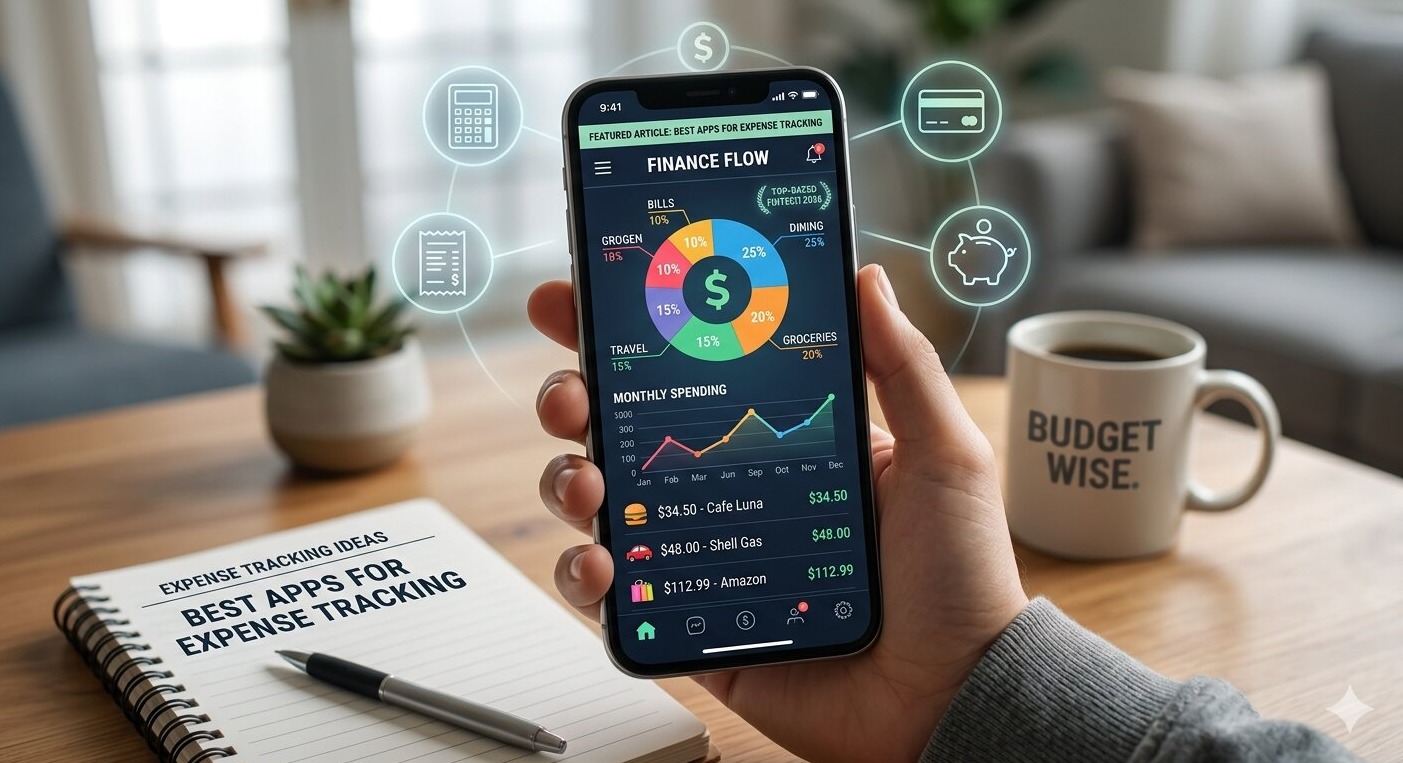
Managing money sounds simple in theory—earn, spend, save—but in reality, most people lose track of where their money actually goes. That’s where expense tracking apps step in. They don’t just record your spending; they reveal patterns, highlight waste, and help you make smarter decisions without overthinking every purchase.
If you’ve ever wondered why your bank balance drops faster than expected, this is exactly the tool you need.
Why Expense Tracking Apps Matter More Than You Think
Let’s be honest—most people don’t fail financially because they don’t earn enough. They struggle because they don’t track.
Expense tracking apps give you clarity. Instead of guessing, you know:
- How much you spend on food vs essentials
- Where small daily expenses add up
- Whether your lifestyle matches your income
For example, someone earning ₹50,000/month might feel broke simply because ₹200–₹300 daily spends (coffee, snacks, subscriptions) go unnoticed. An app makes these visible instantly.
If you're just starting your financial journey, pairing expense tracking with Financial Planning for Beginners (https://statush.com/money/financial-planning-for-beginners) can give you a solid foundation.
What Makes a Good Expense Tracking App?
Not all apps are equal. Some are too complicated, while others are too basic. A good app should balance simplicity with functionality.
Here’s a quick breakdown:
| Feature | Why It Matters |
|---|---|
| Automatic tracking | Saves time by syncing with bank accounts |
| Category breakdown | Helps you understand spending habits |
| Budget alerts | Prevents overspending |
| Reports & insights | Shows trends over time |
| Ease of use | Ensures consistency |
If an app feels like extra work, you’ll stop using it within a week.
Best Types of Expense Tracking Apps
Instead of focusing only on brand names, it’s more useful to understand the types of apps available—so you can choose what fits your lifestyle.
1. Automatic Expense Trackers
These apps connect to your bank accounts and track transactions automatically.
Best for: Busy professionals who don’t want manual work.
Example use case:
A working professional with multiple bank accounts can see all expenses in one dashboard without entering anything manually.
However, these apps work best when paired with habits from How to Track Your Spending Effectively (https://statush.com/money/how-to-track-your-spending-effectively).
2. Manual Expense Trackers
You manually enter every expense.
Best for: People who want full control and awareness.
Why it works:
When you manually log ₹100 spent on snacks, you become more conscious of spending.
It may feel tedious at first, but it builds strong discipline—something also discussed in How to Build Financial Discipline (https://statush.com/money/how-to-build-financial-discipline).
3. Budget-Based Apps
These apps focus on setting limits for categories like food, rent, entertainment.
Best for: People trying to reduce spending.
Real-world example:
You set a ₹5,000 monthly food budget. Once you reach ₹4,500, the app alerts you—forcing smarter decisions.
This approach aligns well with strategies in How to Reduce Monthly Expenses Quickly (https://statush.com/money/how-to-reduce-monthly-expenses-quickly).
4. All-in-One Financial Apps
These apps combine expense tracking, budgeting, goal setting, and savings tracking.
Best for: Long-term financial planning.
They’re especially useful when combined with goal-setting strategies from How to Set Financial Goals (https://statush.com/money/how-to-set-financial-goals).
Popular Expense Tracking Apps (Globally & India-Friendly)
While features matter more than names, here are some widely used apps you can explore:
- Walnut (India-focused, SMS-based tracking)
- Money Manager (manual tracking, simple UI)
- YNAB (You Need A Budget – advanced budgeting)
- Mint (automatic tracking, detailed insights)
- Spendee (visual and user-friendly)
If you're looking specifically for region-based tools, you can also explore Best Budgeting Apps in the USA (https://statush.com/money/best-budgeting-apps-in-the-usa) for comparison and ideas.
Real-World Example: How Expense Tracking Changes Behavior
Let’s take a simple case.
Rahul earns ₹40,000/month. He feels like he has no savings. After using an expense tracking app for 30 days, he discovers:
- ₹6,000 spent on food delivery
- ₹2,500 on subscriptions
- ₹3,000 on random small expenses
That’s ₹11,500—almost 30% of his income—going unnoticed.
Once he identifies this, he:
- Cuts food delivery by half
- Cancels unused subscriptions
- Sets a daily spending limit
Within 2 months, he starts saving ₹5,000/month without increasing income.
This is exactly how small awareness leads to big financial change.
Practical Tips to Get the Most Out of Expense Tracking Apps
Using an app is easy. Using it effectively is what makes the difference.
1. Track Everything (Even Small Expenses)
Skipping ₹50 or ₹100 entries defeats the purpose. Small expenses add up the fastest.
2. Review Weekly, Not Just Monthly
Most people check finances at month-end. That’s too late.
Weekly reviews help you adjust in real time.
3. Set Simple Categories
Avoid overcomplicating:
- Food
- Rent
- Transport
- Entertainment
- Miscellaneous
Too many categories create confusion.
4. Combine Tracking with Budgeting
Tracking alone shows the problem. Budgeting solves it.
You can combine both using methods from Best Budgeting Methods for Beginners (https://statush.com/money/best-budgeting-methods-for-beginners).
5. Use Insights to Take Action
Don’t just observe—change behavior.
For example:
- High grocery bill → read How to Save Money on Groceries (https://statush.com/money/how-to-save-money-on-groceries)
- High bills → check How to Lower Your Monthly Bills (https://statush.com/money/how-to-lower-your-monthly-bills)
Common Mistakes People Make
Even with the best apps, people often fail because of these habits:
- Tracking only for a few days and quitting
- Ignoring cash expenses
- Not reviewing reports
- Overcomplicating the system
- Expecting instant results
Avoiding these mistakes is crucial, especially if you want to stop living paycheck to paycheck. You can explore that deeper in How to Stop Living Paycheck to Paycheck (https://statush.com/money/how-to-stop-living-paycheck-to-paycheck).
How Expense Tracking Fits Into Bigger Financial Goals
Expense tracking is not the end goal—it’s the starting point.
Once you understand your spending, you can:
- Build an emergency fund
- Start saving consistently
- Reduce debt
- Plan large expenses
- Invest for the future
For example, if your goal is stability, combining tracking with How to Build a Financial Safety Net (https://statush.com/money/how-to-build-a-financial-safety-net) creates a powerful system.
Final Thoughts
Expense tracking apps are not just tools—they’re awareness machines.
They don’t restrict your spending; they give you control over it.
You don’t need the most advanced app. You just need one that you’ll use consistently. Start simple, stay consistent, and let the data guide your decisions.
Because once you truly understand where your money goes, managing it becomes surprisingly easy.